When former Blizzard creative mastermind Rob Pardo recently suggested video games should join the Olympic roster, the gaming world collectively raised an eyebrow. It's like watching your awkward uncle try to crash the cool kids' party—well-intentioned but fundamentally missing the point. The gaming community has spent decades fighting for mainstream acceptance, but begging for a seat at the Olympic table might just be the equivalent of bringing a plasma rifle to a fencing match.
The Olympic Illusion: Prestige or Pretension?
Why exactly do we treat Olympic recognition as the ultimate validation trophy? Let's be real—the Olympics already host plenty of sports that receive about as much attention as a loading screen tutorial. Consider these "prestigious" Olympic events that typically have viewers reaching for the fast-forward button:
-
Dressage : Essentially fancy horse dancing that makes everyone wonder if they're watching sports or animal ballet
-
Shooting 🎯: Where participants try to hit stationary targets with the excitement level of watching paint dry
-
Winter sports slower than 40 mph ❄️: Let's be honest, if it doesn't involve crashes or flips, does it even count as must-see TV?
If video games joined this lineup, they'd likely become the digital equivalent of rhythmic gymnastics—technically impressive but largely ignored between swimming and track events.
The Attention-Seeking Paradox
Watching game developers petition for Olympic inclusion feels like witnessing a billionaire beg for spare change. The gaming industry doesn't need validation from an organization that still struggles with scoring systems for subjective sports. Here's why the pursuit feels so backwards:
-
Video games already command audiences that dwarf traditional sports
-
The industry generates more revenue than Hollywood and music combined
-
Olympic recognition would come with bureaucratic baggage that could stifle innovation

By the Numbers: eSports Doesn't Need Permission
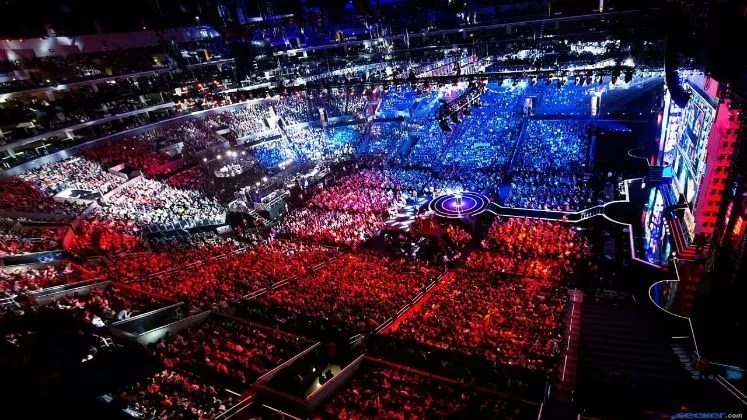
Let's crunch some numbers that would make any Olympic committee member spill their champagne. The League of Legends Season 3 World Championships in 2014 attracted 8 million concurrent viewers—that's 3 million more eyeballs than the Stanley Cup finals that same year. For context, hockey ranks as America's 6th most popular sport according to recent polls.
| Event | Concurrent Viewers | Cultural Impact |
|---|---|---|
| League of Legends Finals | 8 million | Global phenomenon |
| Stanley Cup Finals | 5 million | Traditional sports staple |
| Typical Olympic niche sport | <1 million | Who even watches this? |
The Blizzard Bias and Why It Matters
Of course a former Blizzard executive would champion Olympic eSports—the company's flagship competitive title StarCraft would be the obvious first choice for inclusion. But this reeks of corporate ambition rather than community benefit. The gaming world should avoid turning into that friend who starts name-dropping after getting a fancy job title.
The Organic Alternative: Growth Without Groveling
Instead of knocking on the Olympic committee's door like encyclopedia salesmen, the gaming community should continue doing what it does best: creating spectacular events that speak for themselves. Annual tournaments like The International (Dota 2), EVO (fighting games), and various League of Legends championships already operate at Olympic scale without needing permission slips.
The path forward is clear:
-
Continue building independent tournament circuits 🏆
-
Let viewership numbers do the talking 📊
-
Avoid bureaucratic entanglement that could dilute what makes eSports great
-
Wait for the Olympics to come begging when they need younger viewers
In 2025, video games stand as cultural titans that don't need validation from institutions struggling to stay relevant. The real victory isn't joining the Olympics—it's building something so powerful that the Olympics eventually have to come to us. And when they do, we can decide if we even want to let them in.