I've been playing League of Legends since season 3, and every preseason feels like unwrapping a massive gift box—you never quite know what you're going to get. Some changes shake up the meta in the best way possible, while others... well, let's just say they leave the community scratching their heads (or pulling out their hair). The arrival of the Chemtech Drake in season 12 was definitely one of those head-scratchers that quickly turned into a full-blown controversy. As someone who loves theorycrafting and keeping up with every patch note, I watched the whole drama unfold, and today I want to break down exactly what happened and why Riot made the rare decision to completely disable a core game feature.
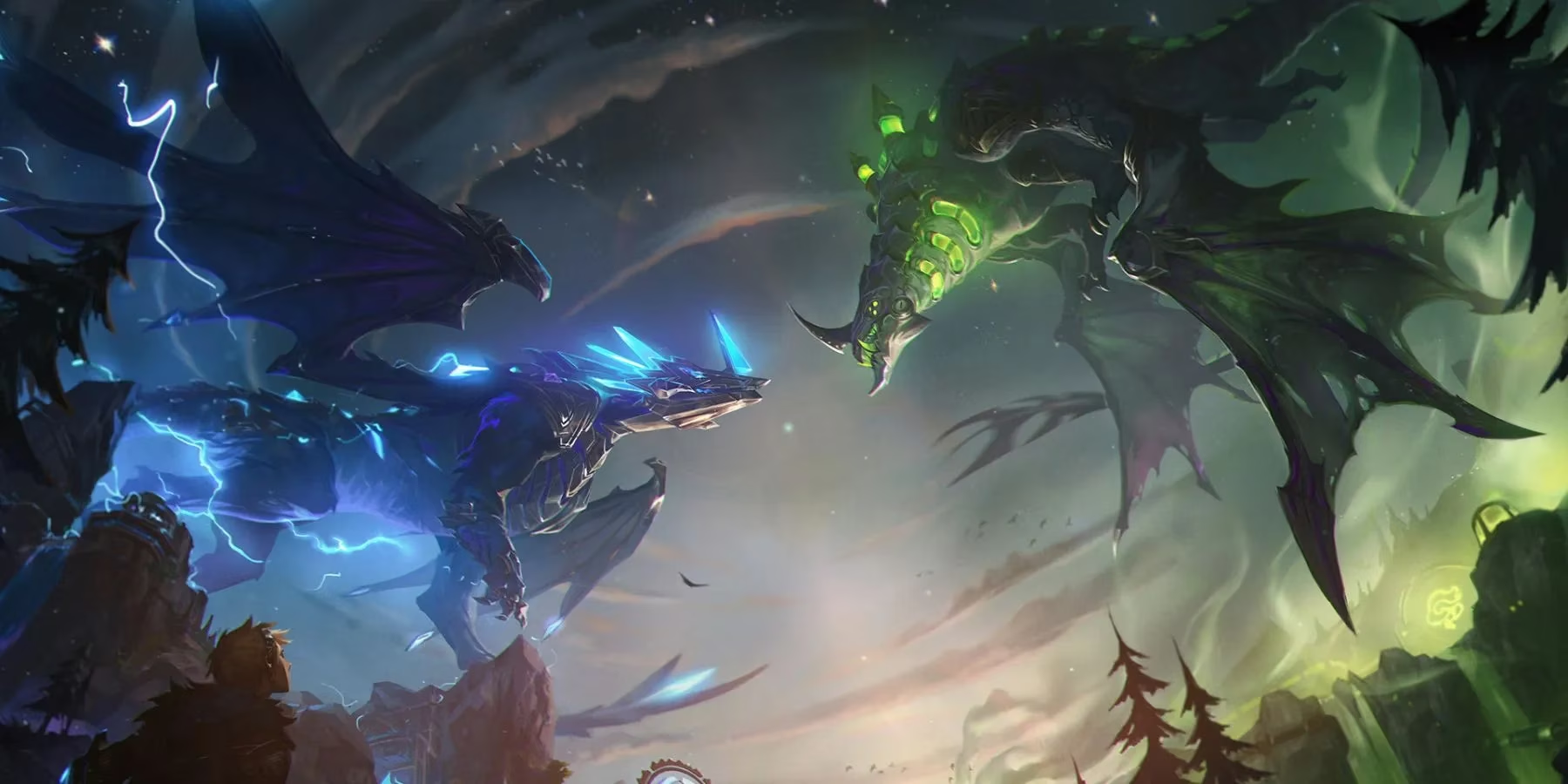
The Chemtech Drake was introduced alongside the Hextech Drake as part of a duo of new elemental dragons, expanding the already impressive elemental rift system. I remember booting up a normal game right after the patch dropped, and the loading screen was buzzing with excitement. On paper, both new drakes sounded like powerhouses. Killing the Hextech Drake granted your team ability haste, attack speed, and a spicy on-hit chain lightning effect—perfect for skirmish-heavy compositions. The Chemtech Dragon, however, offered something far more divisive: increased damage against high-health enemies and a resurrection passive that worked
like a mini-Sion passive after you died. I’ll admit, the first time I saw a teammate come back as a zombie and secure a kill, it felt incredible. But that feeling quickly soured as I realized how oppressive it could be, especially when you were on the losing side.
The problems went way beyond the soul itself. The Chemtech Dragon’s map transformation was the real nightmare. When the terrain shifted, it created these massive zones of camouflage fog—think chemtech Rift pits—that obscured vision and made navigating the jungle feel like a horror game. If your team was behind, trying to ward or contest objectives often felt like a suicide mission. I can’t count how many times I face-checked a bush only to find three enemies waiting because the fog had hidden all the clues I’d normally rely on. Riot specifically cited this frustration from players in losing situations as a major factor behind the decision to disable the dragon, soul, and terrain. And I can’t blame them for it.
Community backlash was immediate and overwhelming. Forums, Reddit, and Twitter were flooded with clips of unwinnable teamfights where the Chemtech resurrection turned a clean ace into an embarrassing reversal. Even after multiple hotfix nerfs to the drake’s power, the fundamental design still felt unfair to many. I remember sitting in Discord with my duo partner and both of us agreeing: when the game’s outcome felt determined by a single dragon spawn rather than skill, something was deeply broken. Riot listened.
In early 2022, the Summoner’s Rift Team announced that the Chemtech Drake would be temporarily disabled, effective immediately after the update went live. That announcement was a shockwave. In nearly a decade of League, I had rarely seen Riot outright yank a major gameplay element like that. But it was the right call. The team explained they would be working behind the scenes to address the issues while preserving the “spirit of the dragon’s original design philosophy.” The main focus, they noted, would be on the terrain, which had warped jungle pathing and vision control in ways that alienated a huge chunk of the player base. We were warned that the Chemtech Drake would be absent from Summoner’s Rift for a significant amount of time.
That “significant amount of time” turned into a massive rework, and by the time season 13 rolled around, Chemtech returned as a completely different beast. Now, fast-forwarding to 2026, I can look back and say that the disabling was a pivotal moment for League’s live development. It showed that Riot was willing to admit when a design experiment failed and pull the emergency brake, even mid-season. This set a precedent for how they’ve handled subsequent problematic mechanics—think of the Voidgrub reworks or the early iterations of the updated mythic items that were scrapped entirely.
What did the return look like? The modern Chemtech Drake no longer grants resurrection; instead, it offers tenacity, slow resistance, and a small heal-over-time when you’re below a health threshold. The terrain? Gone are the oppressive fog zones. Now, the chemtech rift spawns small toxic fruit plants that explode into a healing pool over time, rewarding coordinated teams without punishing vision-starved ones. It’s not as flashy, but it fits much better into the game’s ecosystem.
Looking back, I actually respect the original Chemtech Drake for what it tried to do. League of Legends thrives on pushing boundaries—without wild ideas, we’d never have gotten things like the elemental rift, the Hexgates, or the fantastic champion designs that followed. But there’s a thin line between innovative and unfun, and Chemtech season 12 crossed it hard. The disabling served as a community-driven course correction that made the game healthier in the long run.
And honestly, as a player who has clocked thousands of hours, I care about the long-term health of the game more than any flash-in-the-pan hype. League in 2026 feels more dynamic and fair than ever, partly because missteps like the original Chemtech Drake were caught early. If you’re a newer player who never experienced the zombie fog of death, count yourself lucky. For us veterans, it’s a war story we’ll tell in champ select for years to come.