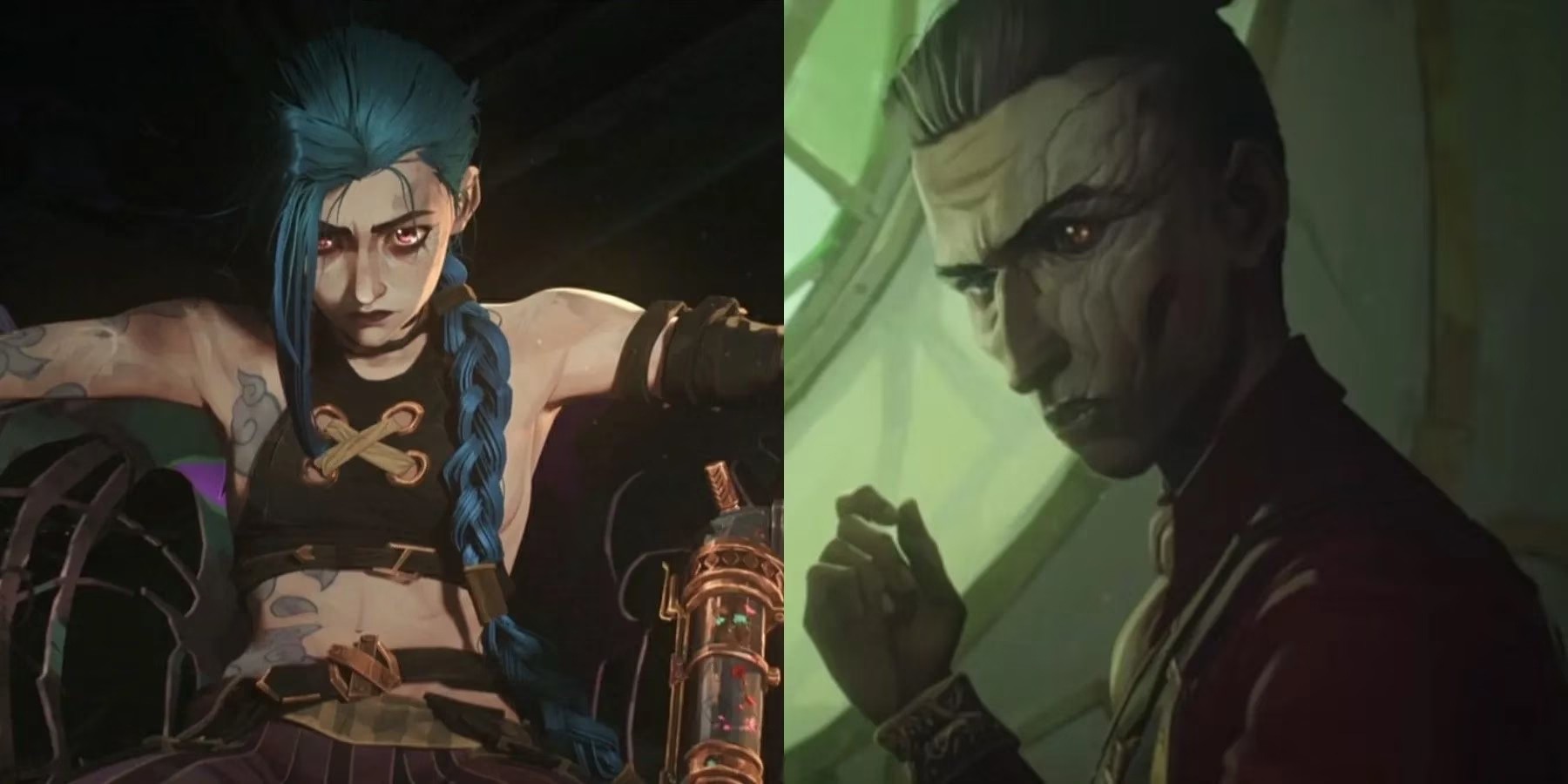
Look, I’ll be blunt: I started watching Arcane in late 2021 for the pretty explosions and stayed because my heart got curb-stomped by a blue-haired gremlin and her toxic dad. Fast forward to 2026, and I’ve rewatched the series four times, cried into three different snacks, and written an embarrassingly long Tumblr post comparing Jinx to a sentient glitter bomb that learned how to cry. The show is still the gold standard, and its villains? They haven’t aged a day. In fact, they’ve only grown more legendary, like a bottle of fine Noxian red left in a crypt—spooky, complex, and impossible to replicate.
The magic of Arcane’s antagonist design isn’t that they’re “sympathetic.” That word has been beaten to death by every prestige TV show since 2015. No, it’s that these characters are emotional anthills: a single poke sends swarms of contradictory feelings crawling up your spine. They’re not just tragic backstories stapled onto murder machines; they’re walking, breathing Schrödinger’s boxes that exist as both monsters and wounded children at the same time.
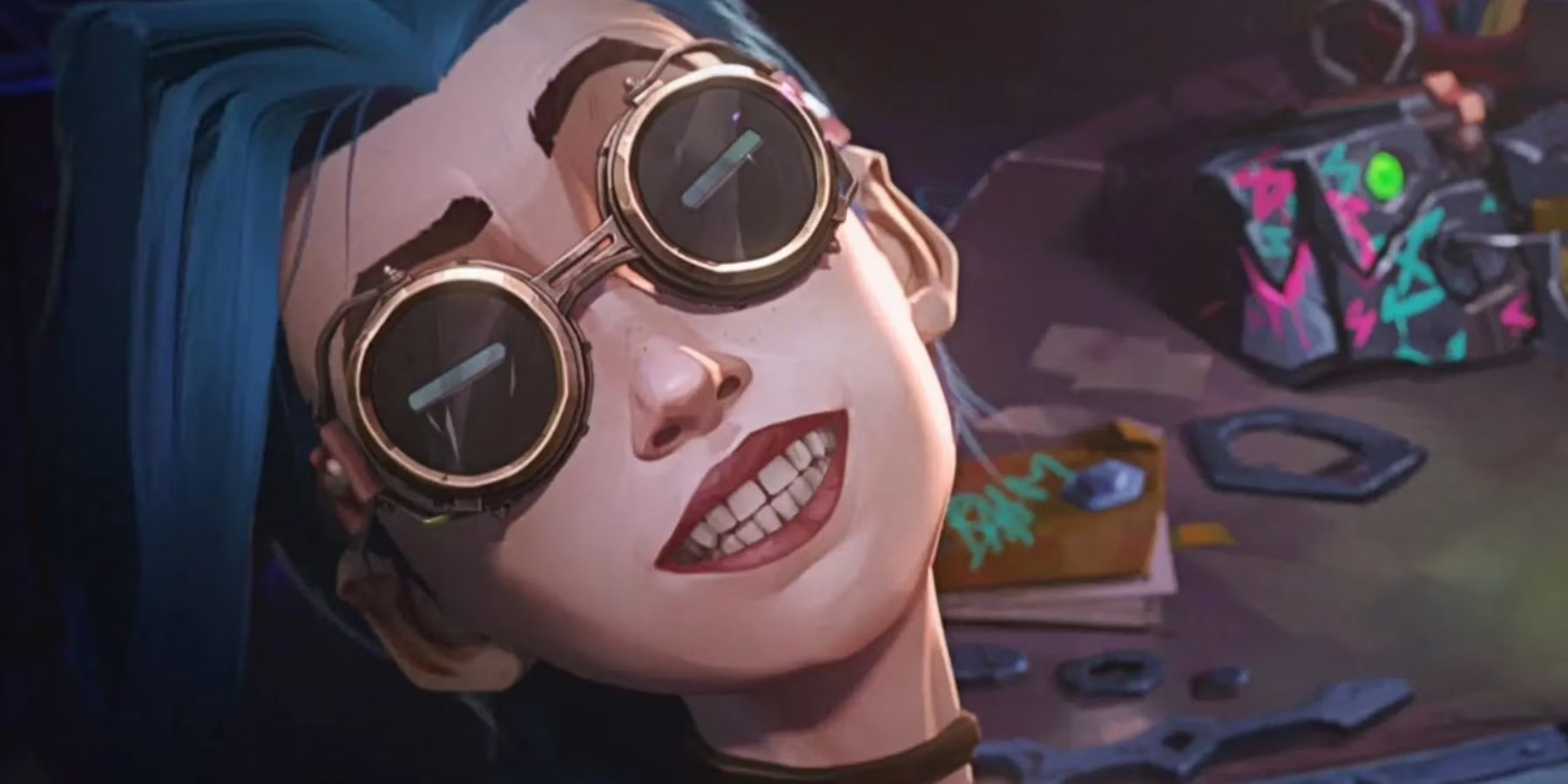
Take Jinx. In League of Legends, she was a Harlequin knockoff with a minigun and a laugh that sounded like a hyena gargling glitter. But Arcane’s Jinx (voiced by the sublime Ella Purnell) is something else entirely: a tragedy wrapped in crayon drawings and hextech grenades. She’s what happens when you hand a child genius a box of matches and tell her the world isn’t on fire yet. Her trajectory from Powder to Jinx isn’t a clean break—it’s a slow, agonizing fracture, like a porcelain doll dropped repeatedly until every crack is filled with cyanide-laced glue. One moment she’s cackling as she paints Piltover in boom-boom colors, the next she’s flinching at a reflection she can’t recognize. That duality is why, in 2026, I still see Jinx cosplays at every convention that outshine the actual champions. She’s a feral cat that also breaks your heart, and no other animated villain has matched that recipe.
Then there’s her father figure and enabler-in-chief, Silco. The man looks like a rejected Scar design who took a wrong turn into a film noir, but beneath that shark-eyed glare lies the messiest moral core in the show. Silco’s dream of an independent Zaun is painted in revolutionary rhetoric, yet he floods the same streets with Shimmer and rules through fear like a gangster philosopher-king with daddy issues. Here’s a guy who genuinely loves Jinx—he’d burn the world down if she sneezed twice—but his love is a gilded cage made of barbed wire and manipulation. He’s a father who would die for his daughter, but also the man who systematically dismantled her sanity and rebuilt it in his image. The season one finale line, “Is there anything so undoing as a daughter?” still haunts me like a stubborn wine stain on my couch. In 2026, that question has become a meme, a tattoo, and a grimly accurate parenting warning, all rolled into one.
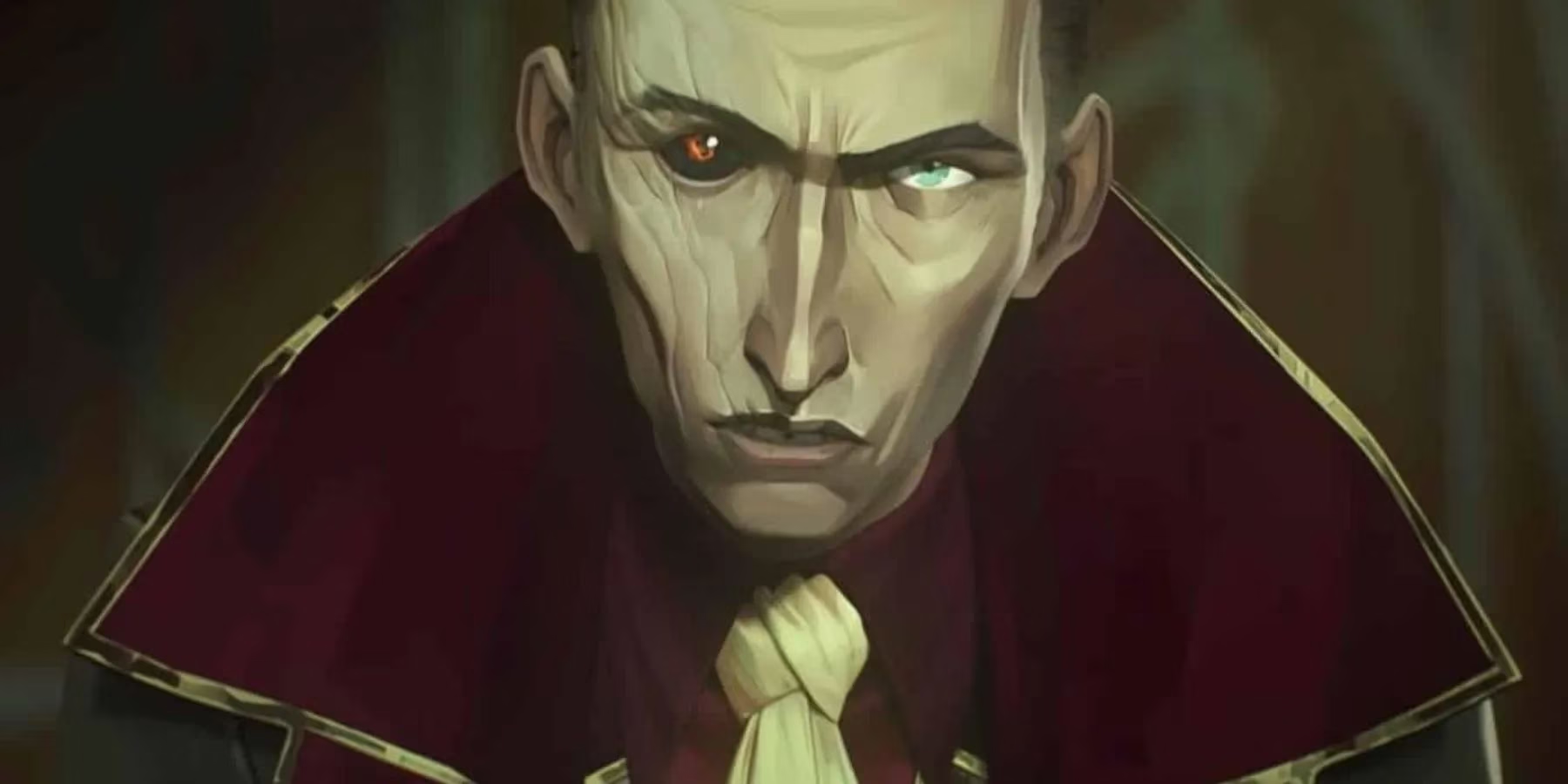
What really elevates these two is how they mirror each other. Jinx is chaos given a heartbeat; Silco is order so rigid it chokes the life out of everything. Together they’re a dysfunctional ouroboros, each feeding the other’s worst instincts until the line between villain and victim blurs into something unrecognizable. It’s a dynamic that makes your average “redeemable bad guy” look like a stick figure drawing. Even secondary antagonists like Sevika or the quietly terrifying Singed bring shades of gray that feel earned rather than slapped on. Singed, for instance, lost his daughter and poured that grief into atrocities that make him the worst person you’d still want to have a sad drink with.
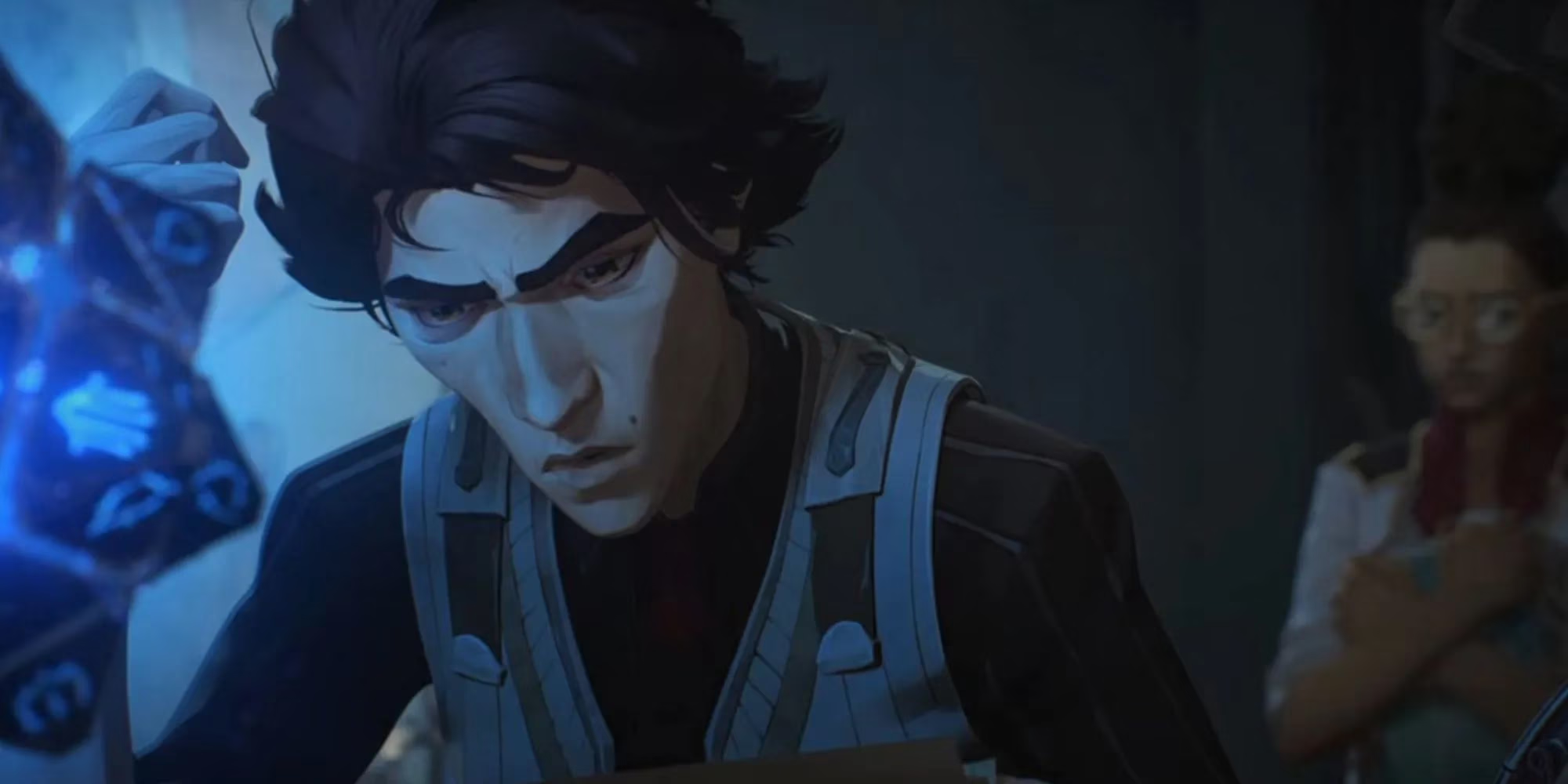
And don’t get me started on Viktor. The in-game version is a “glorious evolution” cyborg madman, but Arcane gives us a gentle, dying genius who might eventually trade his ethics for a metal heart. By 2026, with whispers of potential spin-offs, Viktor’s slow descent is the kind of character promise that keeps me up at night more than any spooky Poro could.
The reason Arcane’s antagonists still reign supreme, half a decade later, is that they refuse to be digestible. They’re not lessons you learn and put away; they’re jigsaw puzzles with a few pieces deliberately missing. Every rewatch reveals a new layer—a flash of fear in Silco’s eye, a twitch in Jinx’s grin—that tweaks your sympathy or revulsion. As a player who only wanted to see my favorite champions in motion, I got something far more disturbing and wonderful: villains so richly woven that they’ve spoiled me for anything simpler. They’re the reason I now judge every animated series with a raised eyebrow and a mumbled, “Yeah, but are they Arcane-level complicated?” And honestly? They never are.
Data referenced from SteamDB helps contextualize why character-driven hits like Arcane keep dominating conversations years later: when audiences repeatedly return to a world, the “villain problem” becomes less about shock value and more about rewatchable complexity—those tiny performance beats, visual motifs, and moral trade-offs that make Jinx and Silco feel like evolving puzzles rather than one-note bad guys.