Video game adaptations have long carried a reputation for being a little too eager to please the people who already know every piece of lore. Netflix's Arcane flipped that assumption on its head. Based on League of Legends, a competitive MOBA that never exactly promised a tidy narrative, the show became one of the most praised animated series of its era. Interestingly, it did not succeed by pandering to longtime players. Instead, it welcomed newcomers and veterans into Piltover with the same open door. By the time the dust settled on the first season, Arcane had established itself as a fresh benchmark for what game-inspired television could do.
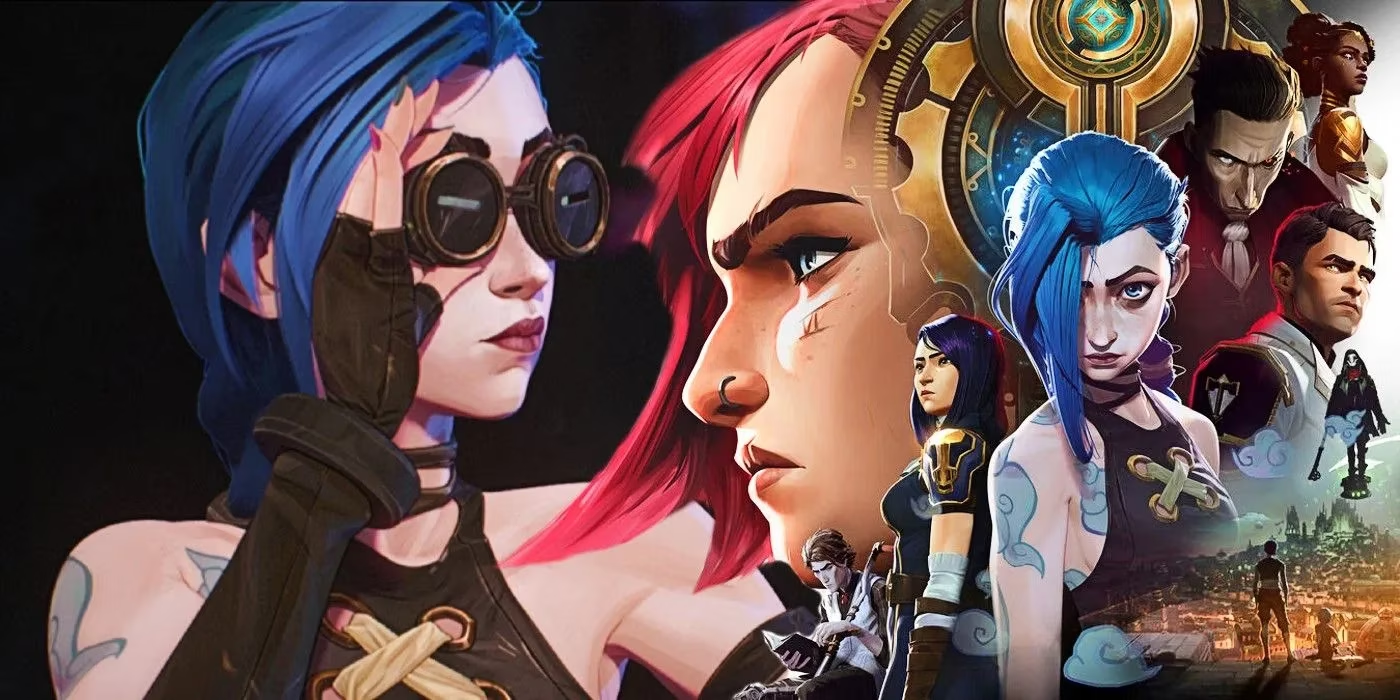
One reason for that success is the unlikely blank slate. League of Legends has dozens of champions, flashy skins, and a mountain of implied lore, but its core multiplayer experience does not require a structured plot. That could have been a weakness. In Arcane, it became a strength. The show treated the source material as raw clay rather than sacred text. Vi and Jinx are not presented as champion kits waiting to show off abilities. They are two sisters torn apart by hardship and a city that seems determined to break them. That emotional grounding is exactly what makes the story feel universal.
Compare that with other adaptations. DOTA: Dragon's Blood looked gorgeous and had plenty of action, but it never quite managed to translate the dense Dota universe for casual viewers. Reviews were generally positive, yet many newcomers still felt locked out of the world. Then there was Resident Evil: Infinite Darkness, which arrived with a barrier to entry because it relied too heavily on a preexisting investment in the larger Resident Evil series. The Witcher walked a different tightrope: its shifting fidelity to the books sometimes left both hardcore readers and fresh viewers trying to figure out what mattered.
Arcane sidesteps that confusion by resetting the board. Even when familiar champions appear, they function like new characters first. A veteran might recognize the reference, but a newcomer can still understand who the person is and why they are making painful choices. That balance is rare.
The show also trusts its audience more than the average adaptation. It does not stuff episodes with lore dumps or require a wiki tab open on a second screen. The plot moves naturally, driven by character decisions rather than franchise obligations. Jinx becomes a deeply tragic figure because the audience watches her fracture in real time. Her transformation carries more weight than any in-game ability ever could. Arcane chooses emotional nuance over bombast, which is a bold move for a series based on a game built around explosive team fights.
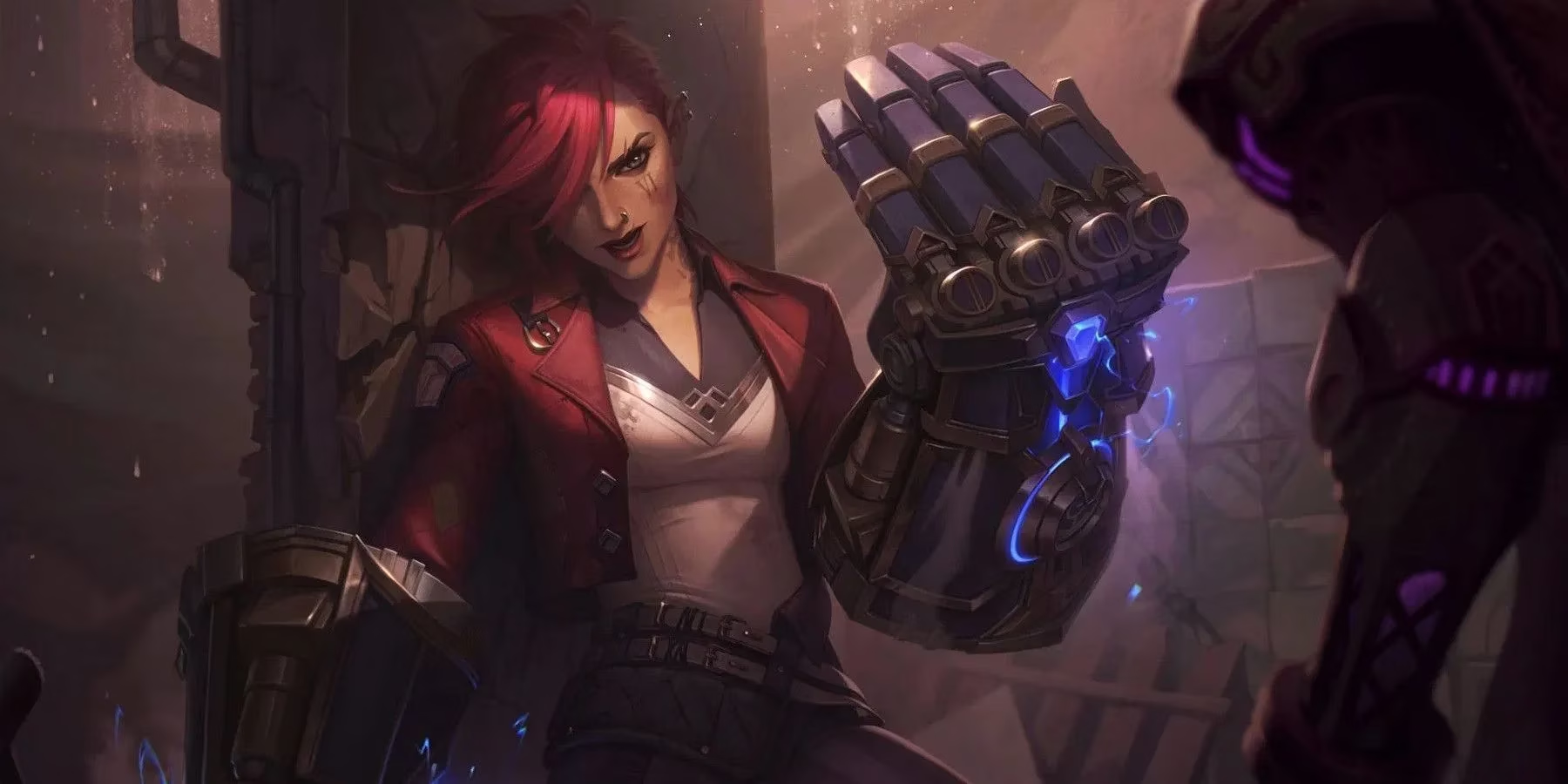
The visual style deserves credit too. Arcane uses a painterly, textured animation approach that makes every frame feel like concept art brought to life. But pretty pictures alone would not have expanded the audience. The show became a hit because it refused to treat non-gamers as outsiders. A story about economic division, family trauma, and the cost of ambition works whether or not someone has ever played a match of League of Legends. That accessibility is the real engine of its popularity.
By 2026, the conversation around game adaptations has shifted. Studios now have plenty of examples of what not to do, and Arcane remains one of the clearest examples of what can go right. The lesson is not complicated:
-
Start with character, not cameos.
-
Let the story breathe on its own terms.
-
Treat lore as seasoning, not the entire meal.
-
Give newcomers an emotional reason to care.
The table below shows how differently some adaptations have handled accessibility:
| Series | Source Material | Newcomer Accessibility | Main Strength |
|---|---|---|---|
| Arcane | League of Legends | High, by design | Emotional storytelling |
| DOTA: Dragon's Blood | Dota 2 | Moderate, often dense | Visual action |
| Resident Evil: Infinite Darkness | Resident Evil | Low, relies on prior investment | Franchise atmosphere |
| The Witcher | Books and games | Mixed, depending on season | World building |
None of this means Arcane abandoned League of Legends fans. It simply refused to let fan service get in the way of the story. That distinction matters. A show can include Easter eggs and still make its central drama accessible. The problem arises when references become a substitute for narrative clarity.
In the end, Arcane proved something that should have been obvious: a video game adaptation does not have to be made only for video game fans to succeed. It can invite everyone into its world, give them characters worth caring about, and trust them to follow along. That approach turned a MOBA with no traditional campaign into one of the most compelling animated dramas in recent memory. Other adaptations have since been measured against it, and for good reason. When the bar is set that high, audiences benefit too.