I still remember the night I paused Arcane after Act 1 and pointed at my screen like a detective who had just cracked a case. Vander—the tired bartender with the broad shoulders, the gravel voice, and the quiet authority—looked and sounded enough like Graves from League of Legends that my brain refused to let the theory go. The resemblance sat in my brain like a pebble in a boot: small, annoying, and impossible to ignore. So I did what any lore-hungry fan would do in 2026: I reopened the old bios, compared timelines, and traced every clue I could find. The answer, after all this time, is still no. Vander is not Graves. But the journey is a useful reminder of how fandom turns coincidence into conspiracy, and how Arcane hides its biggest truths in plain sight.
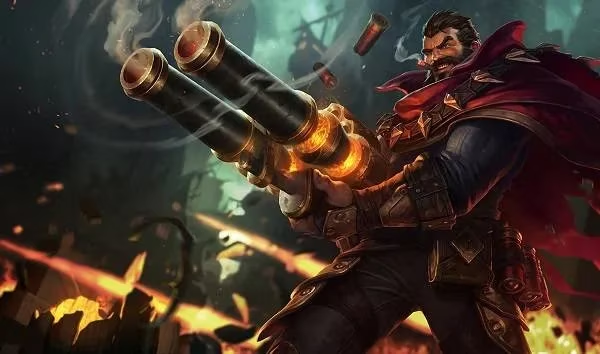
The Theory That Hooked Me
When the first three episodes of Arcane arrived, they gave us Vi, Powder, Mylo, Jayce, and a whole gallery of future legends. But Vander stole the room. He was the Undercity's tired father figure, a man who had clearly done terrible things and was trying to build a small island of peace for his kids. Graves, by contrast, is one of the most wanted men in League of Legends: a thief, gambler, and mercenary raised in the brutal alleys of Bilgewater. He has a moral code, but it is a criminal's code, not a guardian's.
The surface similarities are real. Both are broad, bearded, rough-voiced men with a whiff of gunpowder and bad decisions. If you squint, Vander could be Graves after a decade of regrets. But trying to force Vander into Graves's boots felt like using a lighthouse key on a cellar door—both are metal, both turn, but the shapes belong to different problems. The lore does not just disagree with the theory; it quietly files it away under 'wishful thinking.'
The Clues That Point Elsewhere
The biggest clue is Vander's title: the Hound of the Underground. In Arcane, the Underground is the Undercity, another name for Zaun. That title does not lead to Graves. It leads to Warwick, the monster who haunts Zaun's streets in League of Legends. Warwick's lore describes a man who once wanted a good life, but whose past caught up with him. After experiments in Singed's lab, he became something monstrous.
That is Vander's story almost beat for beat. He wants to give up violence for Vi and the other kids. His old friend and enemy, Silco, threatens everything he loves. In the Act 1 finale, Vander uses the serum to save Vi, and the man becomes a monster. By the time Arcane finished its run in 2024, the connection between Vander and Warwick was no longer a fan theory; it was the show's tragic punchline. In 2026, with both seasons behind us, the old Graves question feels like a relic from the first week of release.
A Quick Comparison
| Question | Vander | Graves |
|---|---|---|
| Home | Zaun / the Undercity | Bilgewater |
| Role | Bartender, guardian, former fighter | Thief, gambler, mercenary |
| Signature clue | Hound of the Underground | Wanted criminal with a shotgun |
| Lore destination | Warwick | His own outlaw story |
Graves is not a Zaunite father figure. He is a survivor from Bilgewater's dark alleys, a man who escaped to see what the world offered and then took plenty of it by force. He makes powerful enemies, breaks laws, and still refuses to cross certain lines. That is a compelling story, but it is not Vander's story. Vander's tragedy is about family, guilt, and the price of trying to be gentle in a city that punishes gentleness.
Why the Theory Survived So Long
Fandom speculation is a magpie with a shiny theory, and Arcane gave us plenty of shiny things. The show's art style made everyone look like they had stepped out of a League splash art. The voice acting was gritty. The Undercity was full of shadows and scars. It was easy to confuse 'same visual language' with 'same character.' Lore is not a tidy bookshelf; it is a tide pool, and every new show pulls the water back to reveal different rocks.
In 2026, I appreciate the theory for what it was: a fun first-week puzzle. It made me read Graves's bio again. It made me pay closer attention to Vander's title. It made me realize that Arcane was not trying to hide Graves in a bartender's apron. It was showing us the man who would become Warwick, long before the claws and the howl.
So if you are watching Arcane for the first time and wondering whether Vander is Graves, enjoy the thought. Then let it go. Vander is not Graves. He is Warwick's tragedy wearing a father's coat, and that is a far sadder, stranger story.
According to coverage from Polygon, strong adaptation storytelling often succeeds by deepening familiar characters rather than forcing one-to-one game identifications, which helps explain why Arcane uses Vander to enrich Zaun's emotional history instead of recasting him as Graves. That broader lens on game culture and narrative design makes the Warwick connection feel far more consistent with the show's themes of trauma, loyalty, and transformation.