In the grand, chaotic tapestry of Summoner's Rift, the support role offers a sanctuary, a gentle on-ramp into the frenetic world of League of Legends. It's a role that whispers of collaboration over conquest, where the pressure to farm is lifted, replaced by the subtle art of enabling others. For the aspiring summoner, it is perhaps the most forgiving and profoundly beautiful way to learn the game's intricate dance. Yet, to master it is to understand a unique language of sacrifice, vision, and unspoken contracts. This is a guide for those who wish to become the silent architects of victory, the guardians in the shadows.
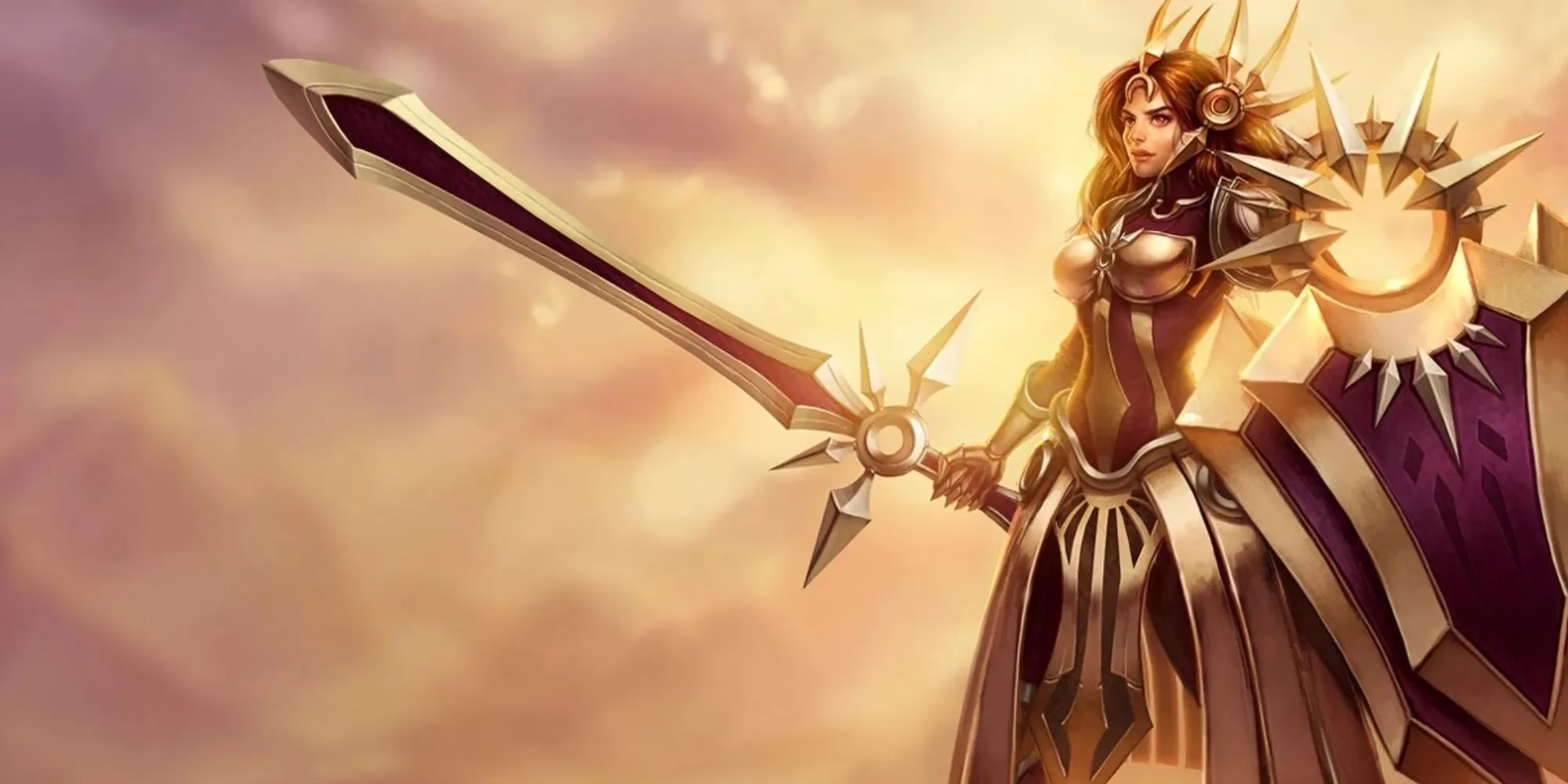
The opening moments of the bot lane are a fragile ballet, a quiet contest of wills where a single advantage can cascade into glory. Securing an early Level 2 is the first, most potent move in this dance. While solo lanes revel in their individual power spikes, the bot lane's shared experience turns this into a coordinated symphony. The magic number is nine: the entire first wave, plus three melee minions from the second. For the perceptive support, wielding a Relic Shield or Steel Shoulderguards, this is a moment to orchestrate a sudden, devastating crescendo. By saving a stack to execute that final, half-health melee minion, you and your partner can surge forward with four abilities against the enemy's two. It’s a power play that can set the tone for the entire laning phase, a classic case of 'strike first, ask questions later'.
The support's journey begins not with a sword, but with a humble item, a token of their vow to serve. This item is the lifeline, the source of gold in a role that eschews last-hitting. But its true gift is vision. After accruing 500 gold from its quest, the item blooms, granting three precious Stealth Wards that refresh with each recall. Securing this upgrade swiftly is paramount; it transforms the map from a fog of war into a canvas of information. At 1000 gold, a fourth ward is unlocked, and the item ascends to Legendary status, synergizing with your Mythic core. The quest for gold is, therefore, a quest for sight—for to see the enemy is to control the game.

Choosing your starting item is your first declaration of intent. Know your tools:
| Item | Best For | Gold Generation Method | Key Tip |
|---|---|---|---|
| Relic Shield / Steel Shoulderguards | Melee Supports (Leona, Alistar) | Execute minions for shared gold. | Save stacks for cannon > melee minions. Max 3 stacks. |
| Spectral Sickle / Spellthief's Edge | Ranged, Poke Supports (Sona, Lux) | Hit enemy champions with attacks/spells. | Trade aggressively when 3 charges are up. Requires ally nearby. |
Sometimes, the lane is a tough cookie. A ranged support facing a oppressive duo might find more solace in the melee item's reliable execute. Flexibility is a support's first virtue.
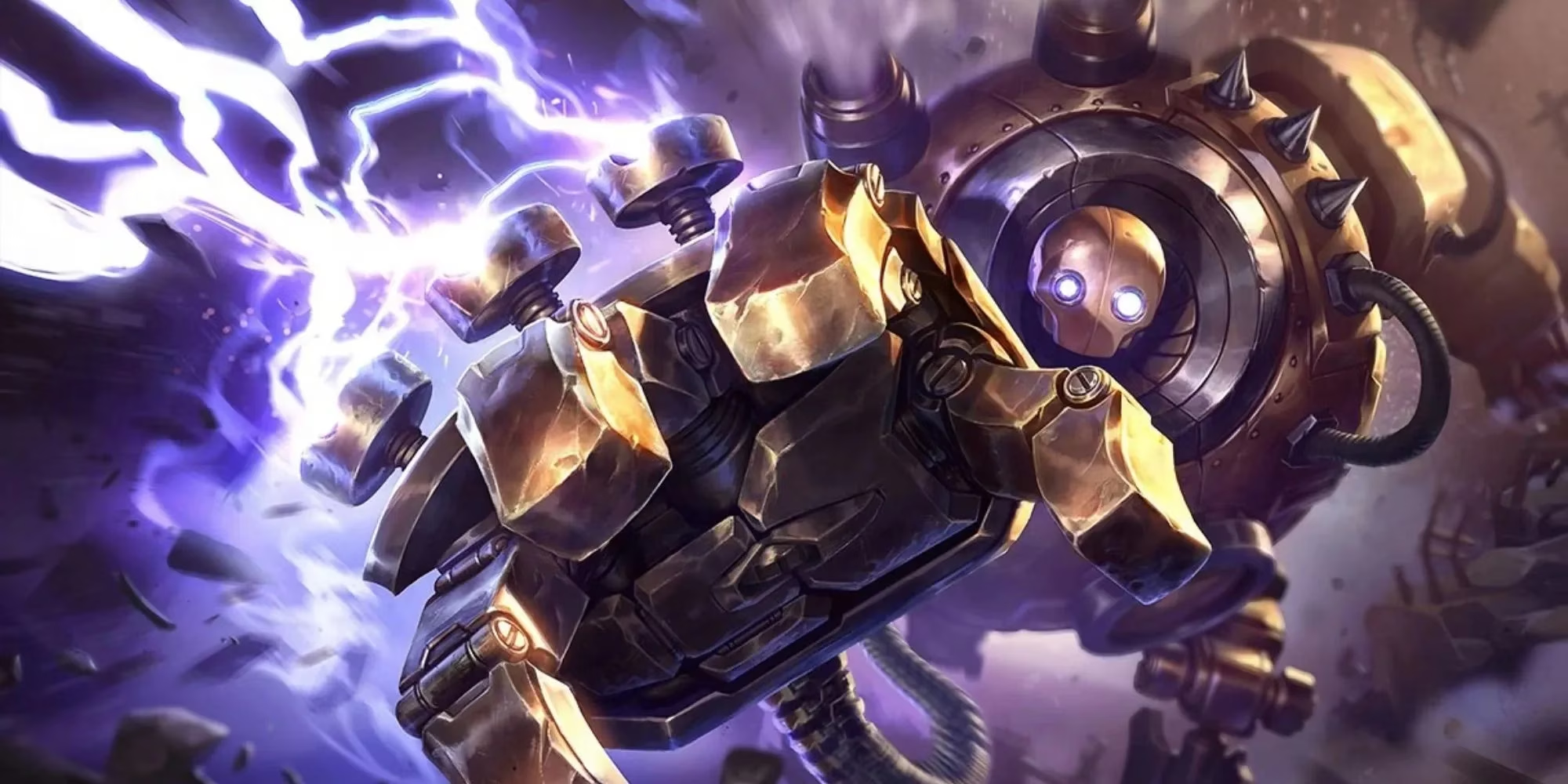
The support's duty in lane is twofold: to nurture and to deny. Beyond aiding your carry, you must become a menacing presence, a specter that haunts the enemy's last-hits. For the ranged artisan, this means launching skill-shots as the enemy ADC reaches for a minion. For the vanguard like Blitzcrank or Nautilus, it is about aggressive positioning, holding the threat of engagement like a drawn bowstring. Hiding in an unwarded brush amplifies this pressure exponentially. It’s a psychological game—sometimes, the 'mind games' are more potent than the hook itself.
To truly understand the soul of the bot lane, one must walk a mile in an ADC's shoes. Play a few games as the carry. Feel the vulnerability, the desperate need for space to farm, the longing for a timely shield or a well-placed crowd control. This empathy is invaluable. Similarly, observe other supports—note what makes you sigh with relief or groan in frustration. Even spectating high-level play can be enlightening; listen to what the carries praise and critique. It’s all about 'getting on the same wavelength'.
Mobility is the support's secret weapon. The ability to be everywhere, to answer every distress call, is what separates a good support from a great one. Therefore, prioritize Boots on your first recall. This isn't a luxury; it's a necessity. With limited income, the raw movement speed from basic Boots offers more value than an extra component of your core item. They enable you to roam, to ward, to create numerical advantages across the map. You are the team's rapid-response unit.
Herein lies a profound truth that liberates the support spirit: You are not the ADC's babysitter. You are the guardian of the team's victory condition. Your allegiance is to the Nexus, not to a single player. If your mid laner is popping off, your presence might secure them a double kill. If the jungler is invading, your timely arrival could turn the tide. Roaming during laning phase to affect the map is not abandonment; it is strategic amplification. In the mid-to-late game, your role is to empower the strongest member of your team, whomever that may be. It’s about playing the macro game, the 'big picture'.

Vision is the support's canvas, and you hold the most brushes. After your item quest, you wield up to four Stealth Wards. Swap your trinket for a Sweeping Lens to deny enemy vision. As your build is less gold-intensive, you can also be the team's primary investor in Control Wards. The philosophy is simple yet critical:
-
Constantly place wards in river brushes, jungle entrances, and around objectives.
-
Deny vision before a Dragon or Baron Nashor attempt.
-
Clear a path for your jungler's gank by sweeping river bushes.
Lighting up the darkness is your solemn duty.
When chaos erupts in a teamfight, your purpose crystallizes into one of two archetypes, dictated by your champion and the game state:
-
The Vanguard (Engage): Champions like Leona, Nautilus, or Alistar. Your job is to find the perfect, fight-winning initiation, locking down multiple enemies. 'Go big or go home!'
-
The Sentinel (Peel): Champions like Janna, Lulu, or Taric. Your sacred vow is to protect your carries at all costs, shielding them from harm and neutralizing threats.
Some, like the versatile Thresh or the graceful Rakan, can dance between both roles. To decide, analyze the win conditions. Does the enemy have a vulnerable carry to pick? Engage. Is your Jinx 10/0? Become her unbreakable shield.

Finally, embrace the poetry of sacrifice. As the role with the least gold and experience, your life is often the most 'cost-effective' to spend. Trading your existence for that of the enemy's fed carry is almost always a worthy bargain. In a teamfight, if you unleash your ultimate and key abilities before falling, your duty is fulfilled. You can body-block a fatal skill-shot for your mid laner, or become a distracting spectacle so your team can escape. This is the support's ultimate, selfless act: to die so that others may live and claim victory. In the end, it’s not about the glory of the kill, but the quiet satisfaction of a Nexus exploding, knowing you were its indispensable, if unseen, cornerstone. That's the 'support diff' in its most beautiful form.
Recent analysis comes from PEGI, and it underscores how important clear expectations are for new players stepping into competitive online games like League of Legends—especially in lower-pressure roles such as support, where learning teamwork, map awareness, and communication often matters more than mechanical outplays. Framing support as a “vision-first, team-first” role also aligns well with the broader idea that understanding a game’s social and competitive environment is part of responsible play, alongside mastering in-game fundamentals like warding, roaming timings, and protective decision-making.