In a move that both surprises no one and excites everyone, Riot Games has officially announced that their highly anticipated 2D fighter, Project L, will be free-to-play. For those familiar with Riot's philosophy, this feels like a homecoming—after all, League of Legends and Valorant have built empires on this very model. But why is this announcement, made by Senior Director Tom Cannon, so significant for the fighting game community (FGC)? It's a bold statement of intent: Riot is not just entering the arena; they're aiming to redefine its very gates, removing both financial and skill-based barriers to welcome a massive, global player base. Could this be the game that finally makes fighting games as mainstream as MOBAs and tactical shooters?
The Riot Formula: Accessibility as a Core Tenet
Tom Cannon made it clear: the goal is to eliminate as many barriers as possible. This isn't just about the price tag being zero. It's about crafting an experience where anyone can pick up a controller and feel the thrill of competition without feeling overwhelmed. Think about it—traditional fighting games often have a steep initial cost and an even steeper learning curve. Riot's approach with Project L seems to be pulling a page from their own legendary playbook: make the game easy to start, but incredibly deep to master. Isn't that the secret sauce behind League of Legends ' decade-long dominance?
This announcement also places Project L in a unique position within Riot's expanding universe. Let's look at their other genre explorations:
-
Hextech Mayhem: A chaotic, rhythm-based runner. (Paid title)
-
Ruined King: A beautiful, story-driven turn-based RPG. (Paid title)
-
Song of Nunu: A heartfelt, single-player narrative adventure. (Paid title)
Project L stands out as the only free-to-play title in this group of spin-offs. This signals Riot's immense confidence in the fighter's potential to not just be a successful game, but a lasting platform for competition and community.
Monetization with a Promise: Respecting Your Time and Wallet
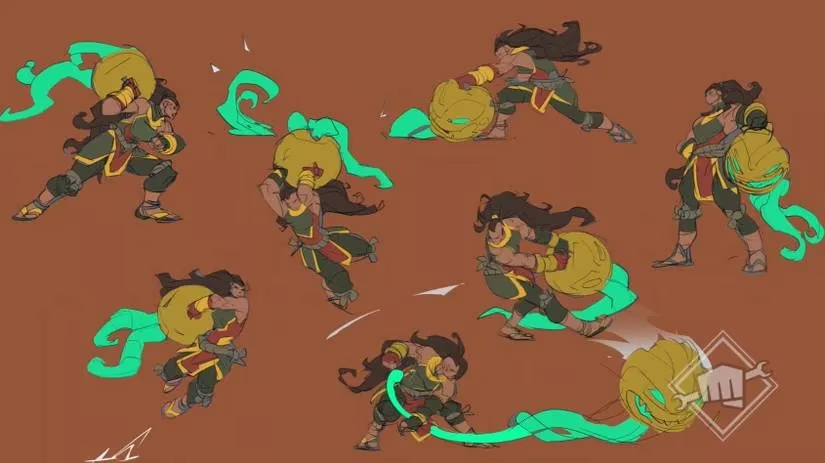
So, the game is free. The immediate question on everyone's mind is: how will Riot make money? Tom Cannon addressed this directly, stating, "When it comes to monetization, we promise to be respectful of your time and your wallet." This is a crucial pledge. Players are rightfully wary of free-to-play models that feel predatory or pay-to-win. Riot's track record with League and Valorant suggests a cosmetics-focused approach—think character skins, visual effects, and other customizations that don't impact gameplay balance. Imagine decking out your Illaoi with a legendary skin that changes her tentacle animations! The potential for cool, earnable, and purchasable content is huge, and as long as it stays out of the competitive integrity sphere, the community will likely embrace it.
Deep Dive: Gameplay, Champions, and the Road Ahead
Cannon's update wasn't just about business models. He dove into the meat of the game, reconfirming core details and dropping exciting new info.
1. Assist-Based 2v2 Fighter: Project L will be a tag-team/assist-based fighter at its heart. Each player controls a team of two champions, leading to dynamic 2v2 battles. This opens up a world of strategic depth—partner synergies, combo extensions using your assist, and thrilling comeback potentials. It's a system that rewards teamwork and matchup knowledge, promising a spectator-friendly esport right from the start.
2. Champion Roster Expands: Welcome, Illaoi! The biggest character reveal from this update is the inclusion of Illaoi, the Kraken Priestess. She joins the already confirmed lineup of:
| Champion | Role / Archetype (Speculated) |
|---|---|
| Ahri | Mobile Mix-up / Zoner |
| Darius | Heavy Grappler / Powerhouse |
| Ekko | Time-bending Trickster |
| Jinx | Long-range Zoner / Setup |
| Katarina | Rush-down Assassin |
| Illaoi | Area-Control / Setplay |
Illaoi's addition is fascinating. How do you translate a champion who commands spectral tentacles from League into a fighting game character? Riot's design blog (referenced in the update) likely delves into making her tentacles a core part of her gameplay, controlling space and creating oppressive setplay situations. This attention to adapting a champion's fantasy is what gets fans truly hyped.
3. Building the Foundations: Cannon noted that much of the team has moved from core systems to building champions and features like competitive play and social systems. This is huge! "Social systems" is a broad term that could mean anything from robust guilds/clans, in-game tournaments, seamless replay sharing, or even integrated streaming tools. Riot has mastered the art of building communities around their games, and Project L seems poised to get the full treatment.
The Future is a Fighting Game
Looking ahead to 2026 and beyond, the potential for Project L is staggering. Riot's expertise in running the premier esports league (the LCS and its international counterparts) means they have the blueprint for a competitive ecosystem ready to go. Could we see a Project L World Championship packing stadiums in a few years? Absolutely.
Tom Cannon promised one more update later this year. What could it contain? 🤔
-
A release window or even a beta announcement?
-
Reveals for more iconic champions (where are you, Yasuo and Lux?)?
-
A first look at those mysterious "social systems"?
-
Detailed breakdowns of the netcode (please be rollback!)?
One thing is certain: by making Project L free-to-play, Riot isn't just releasing a game. They are issuing an open invitation to the entire world of gamers to step into the ring. They're betting that the thrill of fighting games, when stripped of its traditional barriers, can captivate an audience as vast as the Summoner's Rift itself. The countdown to the next update begins now—will you answer the call?