I still remember the exact moment I first piloted Renata Glasc back in early 2022. The loading screen splashed her imposing silhouette, a Chem-Baroness straight out of Zaun, clad in purple and chrome with that unsettlingly calm expression. It was February, and League of Legends had just introduced a champion that promised to redefine what an enchanter could be. She wasn’t about shielding and gentle healing; she was about commanding allies to fight beyond death, forcing them into a frantic final stand. The Bailout ability on her W felt like a drug – I’d wander into skirmishes, slap it on my carry, and watch them turn into an unstoppable terror at zero health, only to revive with a chunk of life if they managed to secure a takedown. By day two, her win rate had already leaped to 48 percent, and whispers of an overtuned release rippled through the community. I felt a mix of exhilaration and dread because I knew nerfs were coming, and they hit faster than a Hextech rocket.
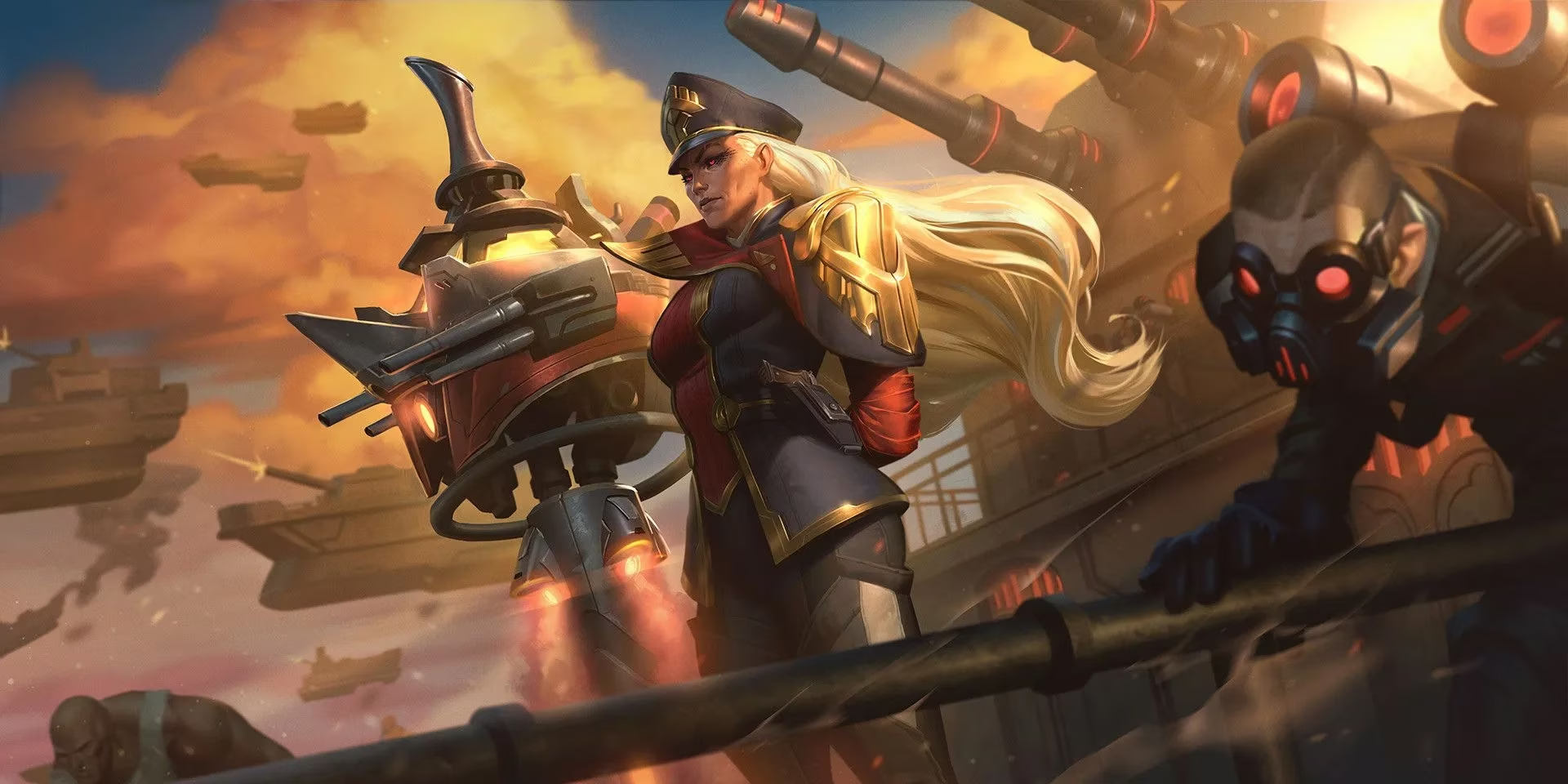
In less than a week, Riot dropped a hotfix that carved deeply into her kit. I logged in one afternoon to find the Chem-Baroness significantly scaled back. The change list was concise but brutal, targeting the very things that made her feel so oppressive to play against. The most dramatic adjustments centered around Bailout. The cooldown jumped up considerably, meaning I could no longer weave it into every single trade. The ally burn-out window shriveled, so my teammates had to explode with aggression immediately or perish permanently. And the resurrection health? Slashed from 35% down to a mere 20% of their maximum life. I vividly remember a failed dive shortly after the hotfix – my ADC clawed back to life with a sliver of health, only to be sneezed on by a minion. The era of forgiving, low-counterplay Bailouts was over.
Beyond the W, the nerfs touched other parts of her silhouette. The passive, Leverage, had its percent-health damage per mark scaled down when allies followed up on my attacks. It still rewarded coordinated focus fire, but the numbers no longer melted tanks with absurd efficiency. The final tap was a 0.5 shave off her armor growth. On paper, it seemed minor, but in those fiesta-laden bot lanes, every point of armor mattered. I started noticing how easily a Lucian or Miss Fortune could chunk me if I stepped up recklessly. It nudged Renata players toward a more calculated, back-line positioning style, reinforcing her identity as a controller rather than a frontline enchanter.
What fascinated me then, and still does in 2026, is how those early nerfs didn’t gut her thematic fantasy. Even with the shorter death delusion and lower revival health, Bailout remained a uniquely sinister tool. I’d cast it on an ally who was already doomed and whisper “earn your second life.” The ramping attack speed and move speed toward enemies persisted, so the ability still screamed “fight or die.” The hotfix simply forced my bot lane partner and me to communicate better. We couldn’t mindlessly brute-force fights; we had to set up a guaranteed return on the investment. That design tightened her gameplay loop, making her one of the most skill-expressive champions in the support class. Many enchanters feel passive, but Renata always felt like a chess master, pushing pawns into a desperate checkmate.
Looking back from 2026, that frantic launch week set the tone for her entire balance trajectory. After the hotfix, she settled into a healthy 50-51% win rate in skilled hands, and her presence in professional play became a staple. I’ve watched her pop up in worlds semifinals and in LCK drafts, often paired with hypercarries like Zeri or Aphelios who could exploit the Bailout window. Over the years, she’s received small nudges – a slight cooldown refund here, a base mana buff there – but the core constraints from that first hotfix have stood the test of time. The 20% revival threshold, in particular, became iconic. It’s high enough to reward a kill-secure but low enough that a single stray spell can punish mispositioning.
Today, fourteen seasons after her debut, Renata Glasc remains a masterclass in champion tuning. I occasionally revisit patch histories and smile at how that one 12.4 hotfix defined her identity. Developers often struggle with released champions that dominate day one, but this case showed that a few precise number tweaks – cooldown, buff duration, and a stat adjustment – can preserve a champion’s soul while removing the oppressive edge. The Chem-Baroness still commands the underbelly of the Rift, and when I hear her voice line “I prefer people when they’re more useful,” I know exactly how to make my allies useful without breaking the game.