It’s easy to lose track of just how much there is to do in League of Legends these days. Between climbing the ranked ladder, chasing event passes, and dabbling in alternate game modes, the experience can feel like a full-time hobby. For me, the introduction of Challenges back in 2022 was one of those rare additions that completely reshaped how I interact with the game. Now, in 2026, the system has matured into a massive trophy case of over 350 challenges, with even deeper integration into your profile, match lobbies, and loading screens. What started as a curious new tab has become a permanent part of my summoner identity.
When Riot first unveiled Challenges, I remember thinking it might just be another set of achievements that a handful of completionists would chase. Fast-forward four years, and I can’t imagine my League client without the crystal-progression glow beneath my icon. The feature originally shipped with 300 challenges, each tied to specific game modes and designed to reward players who explored everything the Rift (and beyond) had to offer. Today, seasonal additions, limited-time Clash tasks, and even Arena-exclusive feats have pushed that number well past the initial mark, making the system feel alive and ever-evolving.
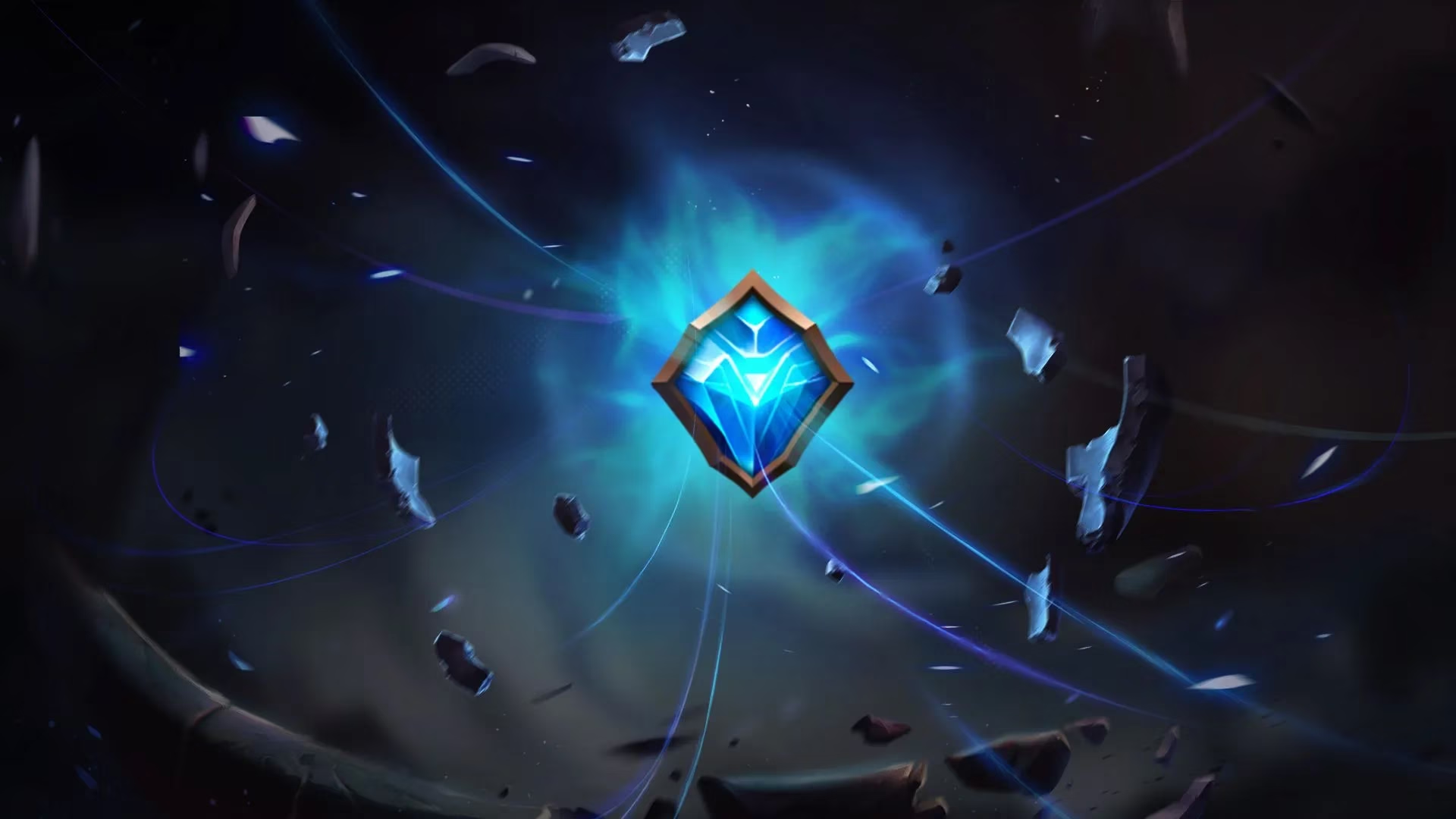
Diving Into the Challenges Crystal and Five Categories
Opening the Challenges tab reveals a massive crystal on the left side of the client. This crystal is your overall progression indicator, moving through ranks from Iron all the way up to Challenger. It’s the same ranking hierarchy you know from solo queue, but applied to your mastery across all five categories. Each category has its own bar beneath the crystal, showing exactly where your strengths lie. Over the years, I’ve learned that focusing on one or two categories can skyrocket your overall rank, but the most impressive profiles are those with balanced, deep coloration across all five.
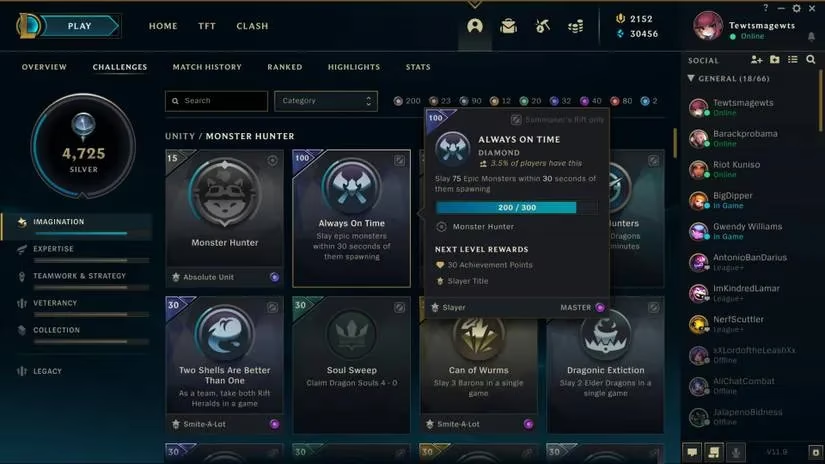
Let me break down what each of these categories means and how they’ve shaped my playstyle:
- Imagination 🧠
This bucket rewards innovative and off-meta plays. Whether it’s executing a perfect backdoor, landing multi-man Bard ults, or pulling off unconventional builds in ARAM, Imagination challenges celebrate creativity. I’ve found myself intentionally trying weird strategies just to bump this bar, and it’s made the game infinitely more fun.
- Expertise 🏆
If you take pride in mechanically outplaying your opponents, this is your home. Challenges here involve high-damage games, multi-kills, sniping objectives, and dominating your lane opponents. Expertise is where my competitive side gets satisfied. It pushes me to refine micro-play and consistently perform at a high level, even in normal games.
- Teamwork & Strategy 🤝
Collaboration is king in this category. Wombo-combo teamfight wins, coordinated objective setups, and high assist ratios all contribute here. I’ve noticed that players who duo or play in flex stacks often have an edge in this category, but solo queue sweatlords like me can still earn points by being the teammate who actually pings and rotates.
- Veterancy 🎖️
This is the grinders’ paradise. Lifetime kills, total gold earned, minions slain, games played—if it can be accumulated over an entire account’s history, it feeds into Veterancy. I love that this category respects the sheer hours you’ve poured into the game. Even when I’m having a bad week, my veterancy bars keep ticking upward, reminding me that I’m still an old guard on the Rift.
- Collection 💎
As the name suggests, this revolves around skins, chromas, icons, and loot engagement. Unlocking cosmetics, mastering eternals, and even opening chests push this category forward. It’s a clever way to make us feel rewarded for the cosmetic side of the client. My completionist brain has definitely spent more mythic essence than I should admit just to see that Collection bar move.
The beauty of the system is that progress in any category contributes to your overall crystal. Even if you’re a Collection-focused player who rarely touches ranked, you can still achieve an impressive crystal tier. Conversely, the most dedicated Challenger-crystal holders often need to excel across all five areas, which demands a truly varied League of Legends lifestyle.
How to Earn Points and Climb the Challenge Ranks
Each individual challenge comes with its own card. When you open a challenge detail, you’ll see the specific task (e.g., "Get 5 solo kills in an ARAM game" or "Destroy 3 structures before 20 minutes in a Normal/Ranked Summoner's Rift game"), the required game mode, and the points it awards toward its category and the crystal. Crucially, challenges aren’t one-and-done. They have multiple tiers—Iron, Bronze, Silver, Gold, Platinum, Diamond, Master, Grandmaster, and Challenger—just like the ranked system. You complete the Iron requirement, then the Bronze, and so on. That means even the simplest-looking challenge can be a long-term goal.
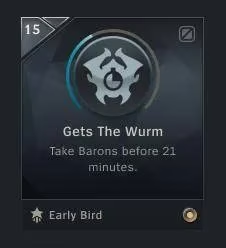
What I appreciate most about the tiered structure is that it never feels like you’re truly "finished." In 2026, many legacy challenges have had their caps raised, and new challenges drop with every major event. For example, recent additions include sub-categories for the 2v2v2v2 Arena mode, pushing Expertise and Imagination in fresh ways. Seasonal splits also bring exclusive limited-time challenges that, once completed, permanently boost your crystal. Missing a split might mean missing a small chunk of prestige, but the system still respects your long-term dedication.
Showing Off Your Achievements
All this grinding wouldn’t be half as satisfying without public recognition, and Riot nailed the exhibition aspect. In loading screens and matchmaking lobbies, your challenges rank icon appears next to your summoner name. Titles earned from specific challenge milestones—like "Jungle Tyrant," "Fountain Diver," or the highly coveted "Grandmaster Tactician"—show directly beneath your name on your summoner card. And right below your profile avatar, your crystal glows, telling everyone at a glance how deep your mastery runs.

This visual feedback has reshaped lobby dynamics. Gone are the days when rank borders were the only thing people judged. Now, a shiny Master-tier crystal combined with a rare title often draws more respect than a Diamond border. I’ve made friends simply because they noticed my "Visionary" title and asked how to earn it. It’s become a conversation starter, a badge of honor that transcends the solo queue grind.
Gathering Momentum in 2026
The Challenges system hasn’t stagnated. Over the past four years, quality-of-life improvements have been added: better sorting and filtering within the tab, a "next-up" widget on the home screen, and even a Challenges recap at the end of each season. The crystal now also plays a role in determining your eligibility for certain ranked‑adjacent cosmetics, tying the whole ecosystem together. Riot has kept the feature fresh without overcomplicating it, and that’s why I still check my progress after every play session.
Whether you’re a casual ARAM enthusiast, a skin collector, or a veteran who has been playing since Season 2, there’s a place for you in the Challenges universe. My advice as someone who has earned a Grandmaster crystal: start by identifying two categories that naturally match your playstyle, go hard on their high-tier challenges, and let the spillover points carry your other bars. The sense of progression is addictive, and the drip-feed of titles makes every session feel like a step closer to your next identity on the Rift.
League of Legends remains free to play on PC, and all challenge progression is purely cosmetic—there’s no pay-to-win element here. So dive in, open that Challenges tab, and let your crystal tell the story of your unique journey through Runeterra.