It’s 2026, and as a long-time player who’s seen countless expansions, I have to say, the shadowy tendrils of the Darkin still have a grip on Legends of Runeterra that’s both thrilling and slightly terrifying. Remember the initial buzz back in 2022 with the 'Darkin Saga: Awakening'? Well, fast forward to now, and that saga has evolved, deepened, and frankly, gotten a whole lot more stylish. The core of what made that expansion a hit—the menacing vibe of the Shadow Isles, the introduction of iconic champions, and those brilliant new mechanics—has been refined and expanded upon in the years since. It’s like the developers took that fantastic foundation and said, 'Hold my Nexus.'
The Ever-Evolving Champion Roster: From Cultists to Cosmic Warriors
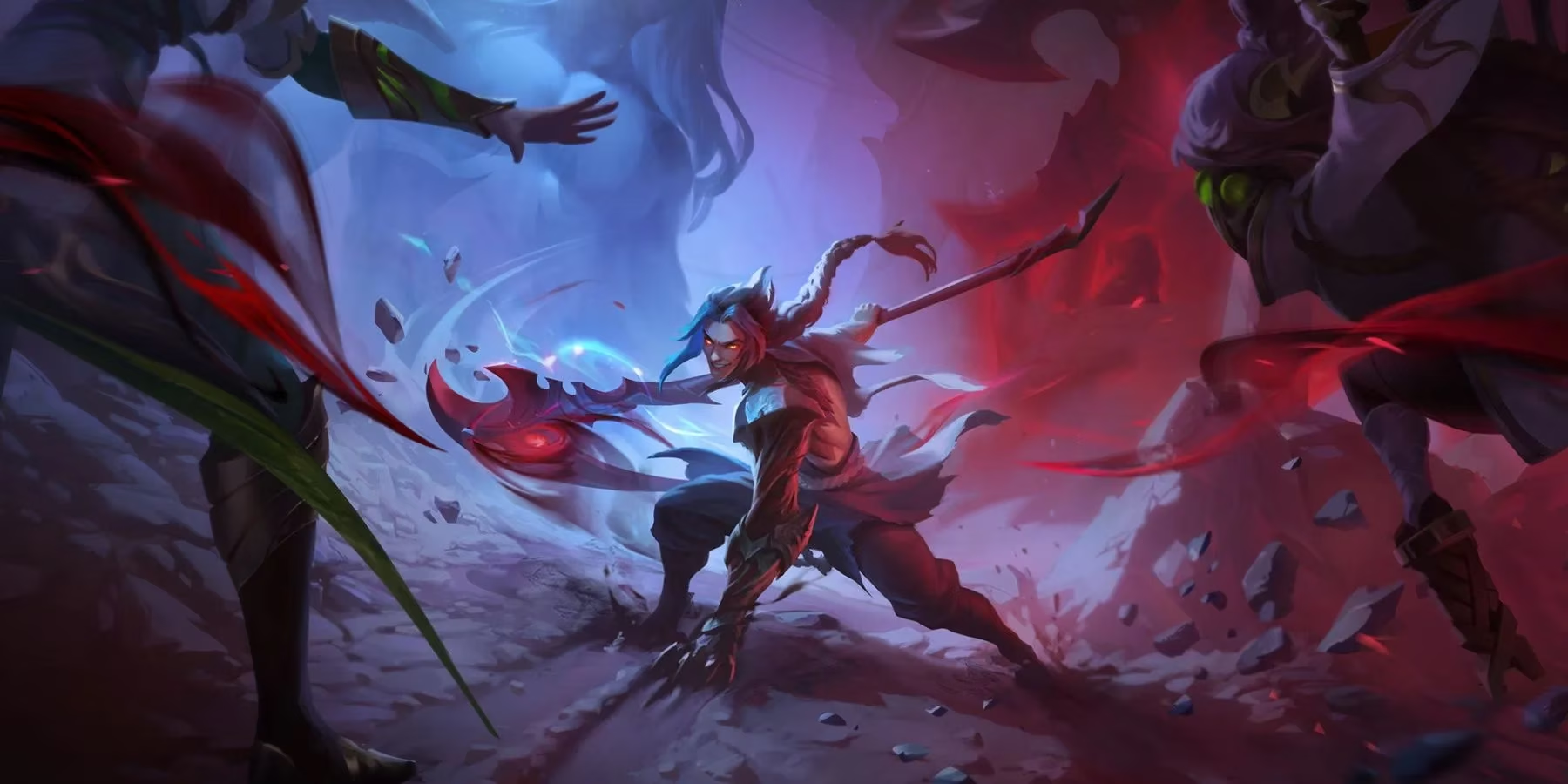
The heart of any LoR expansion is, of course, the champions. The 'Awakening' update was a masterclass in introducing fan-favorites with unique twists. Kayn and Jax weren't just new cards; they were gameplay philosophies. Kayn's Cultist mechanic, where summoning three of his devoted followers would literally draw the edgy shadow warrior onto your board, created this fantastic narrative tension during matches. You weren't just playing units; you were conducting a dark ritual right there on the digital battlefield. Jax, the Grandmaster at Arms, broke the game's regional rules with his Weaponmaster cards, allowing for deck-building creativity we hadn't seen before. It was a declaration: the meta was no longer bound by geography.
Looking back from 2026, these concepts were just the beginning. The Weaponmaster and Cultist archetypes have spawned entire lineages of supporting cards and synergies. We've seen champions from later sets interact with these mechanics in wild ways. Imagine a Demacian Weaponmaster or a Piltover Cultist—the possibilities have kept the meta fresh and unpredictable.
Game-Changing Mechanics: Where Equipment is King (or Darkin)
If the champions were the stars, the new keywords were the revolutionary stage they performed on. Let's break down the game-changers:
-
Equipment Cards: This wasn't just a power boost; it was a resource management mini-game. The fact that your fancy sword or cursed axe returned to hand when the unit died added a strategic layer. Do you equip your key attacker, or hold it back fearing removal? The once-per-round restriction made every decision count.
-
Auto-Equip: This keyword was pure elegance. It streamlined gameplay, letting you focus on your grand strategy instead of micromanaging gear. Units with this ability felt instantly powerful and thematic.
-
Forge & Improvise: These two keywords worked in beautiful harmony. Forge was all about investment, slowly buffing your weapon into a monster. Improvise was the flexible counterpart, ensuring no ally was ever left unarmed. Together, they created a dynamic 'arms race' within a single match.
| Keyword | Core Function | Why It's Still Awesome in 2026 |
|---|---|---|
| Equipment | Grants stats/effects, returns to hand on death. | The foundation for entire artifact-based control decks. |
| Auto-Equip | Automatically attaches Equipment from hand/field. | Enables explosive, surprise turns that can swing games. |
| Forge | Permanently increases an Equipment's stats. | Defines slow-burn, value-oriented strategies. |
| Improvise | Creates a random Equipment for an unequipped ally. | Provides crucial consistency and adaptability. |
Aesthetic Corruption: Skins That Tell a Story
Riot didn't just stop at gameplay. They made sure our eyes were feasting too. The 'Corrupted' skins were a stroke of genius. Pantheon, Taric, Diana, and Leona—paragons of their respective ideals—twisted by Darkin influence. Their new card art wasn't just a palette swap; it told a story of fall and corruption. And Zoe's skin? With new visual effects and animations, playing her felt like unleashing chaotic, malevolent mischief. It set a new standard for cosmetic depth in the game.
The boards based on Kayn and Rhaast were more than just pretty backgrounds. They were immersive environments. Playing on the Rhaast board with its pulsing red tones and ominous whispers genuinely made my aggressive plays feel more... vindictive. These cosmetics proved that atmosphere is a powerful tool, even in a card game.
Legacy and Lore: LoR's Place in a Growing Universe
Reflecting from 2026, the Darkin expansion was a pivotal moment. It showcased how Legends of Runeterra could be more than a card game spinoff; it was a vital, living pillar of the League of Legends universe. While we've enjoyed Project L's launch as a stellar free-to-play fighter and eagerly await more news on Arcane Season 2, LoR has consistently been the place where lore deepens and characters get to shine in new ways.
The 'Darkin Saga: Awakening' brought a massive and diverse slice of Runeterra's roster to the table with mechanical depth and stunning style. It reminded us why we fell in love with this world. The strategies it introduced are still being explored and refined today, proving that the best updates aren't just about new cards—they're about new ways to think, play, and immerse yourself in the game. So here's to the Darkin, the corruptors, the weapon-wielders, and the endless, beautiful complexity they brought to our favorite digital card battleground. Now, if you'll excuse me, I have a Cultist ritual to finish. 😉