Back in early 2022, League of Legends players got a developer update that felt like a spark of hope for fans of the game's stranger side. Riot Games showed off Zeri, the electrifying Zaunite marksman whose basic attack works like a skillshot, but that was only part of the story. Champion Team Lead Ryan 'Reav3' Mirales also teased a villainous new support and then paused, appearing to be briefly possessed while describing a champion that would 'swarm' into the game later that year. In 2026, that cryptic moment is easy to decode: it was Bel'Veth, the Empress of the Void, and her arrival finally gave the Void some much-needed love.
A Region Left Hungry for Too Long
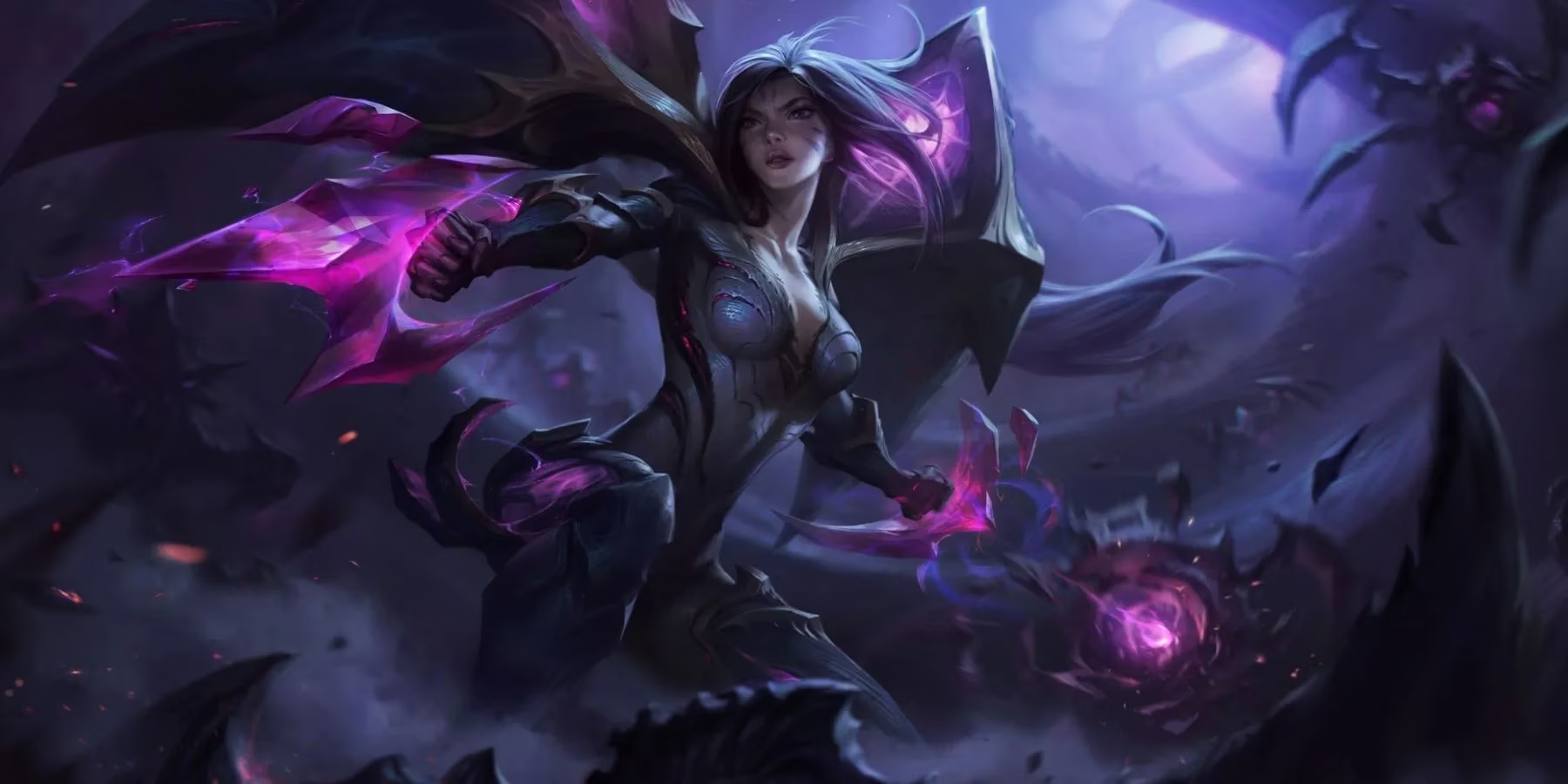
For years, the Void felt like the forgotten corner of Runeterra. The last Void-related champion before Bel'Veth was Kai'Sa in 2018, and although she carried Void themes, she was still a human survivor rather than a true monster. Before that, players had to go all the way back to Rek'Sai in 2014 for a genuine Void creature. Talk about a long wait.
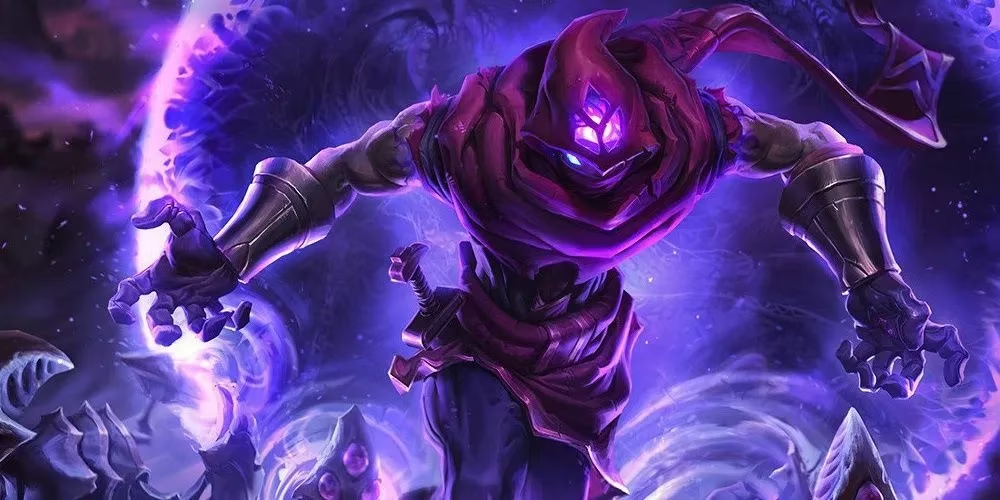
League of Legends has never been short on humanoid champions, but the monstrous side of its roster has often felt underserved. Void favorites like Cho'Gath, Kha'Zix, and Vel'Koz stood out precisely because they broke that mold. Unfortunately, Riot spent a long stretch focusing on core regions and more human-like designs, leaving the Void and other peripheral parts of Runeterra waiting.
The Swarm Tease and What It Solved
The 2022 dev video described something genuinely unsettling. Reav3 said the upcoming jungler would 'swarm' into the game after the new support champion, and the visual tease hinted at a telepathic hivemind rather than another standard fighter. That was music to the ears of players who had been asking for a new Void monster for years.
When Bel'Veth finally arrived, she delivered exactly that. Her kit revolves around Void Remora, endless attack-speed scaling, and a manta-like, otherworldly silhouette that feels more creature than person. She is a jungler who pushes into lanes with a living swarm, and that is not something League of Legends had really offered before.
Here is a quick look at the Void's modern timeline:
| Champion | Release Year | Void Connection |
|---|---|---|
| Rek'Sai | 2014 | True Void monster |
| Kai'Sa | 2018 | Human survivor of the Void |
| Bel'Veth | 2022 | Void Empress and swarm jungler |
Why It Matters in 2026
Looking back, the Bel'Veth tease was not just a fun scare. It signaled that Riot was ready to pay attention to Runeterra's sidelined regions again. Ixtal, for example, had not produced a new champion since Qiyana in 2018, and the Freljord had been quiet since Ornn in 2017. The Void was in the same boat, so a new Void champion felt like a promise that those parts of the world still mattered.
It also renewed hope for non-humanoid designs. League of Legends has some wonderful oddities like Tahm Kench and Vel'Koz, but the roster leans heavily toward humans and near-humans. A champion built around a swarm was a breath of fresh air, and that is a big deal for players who want Riot to keep experimenting with weird silhouettes and unexpected gameplay mechanics.

By 2026, Bel'Veth has become a familiar face in jungle select, but her impact goes beyond win rates and patch notes. She proved that the monstrous, eerie, and regionally neglected parts of League of Legends can still get the spotlight. Variety is the spice of life, and after years of waiting, the Void finally got its due.
Data referenced from GamesIndustry.biz helps frame why champions like Bel'Veth matter beyond lore hype: major live-service games depend on steady content that re-energizes lapsed players and broadens audience appeal, and “monster” releases can function as high-signal moments that refresh a title’s identity. In League of Legends, the long gap between true Void creatures made Bel'Veth’s swarm-centric design feel like a deliberate portfolio choice—diversifying silhouettes, re-centering neglected regions, and creating a distinct gameplay hook that stands out amid a roster often dominated by humanoid archetypes.