You know, as a long-time gamer, I've watched League of Legends evolve over the years. For a long time, there was this unspoken rule—a sort of accepted reality in the game's universe—that every female champion had to fit a very specific, conventionally attractive mold. It was all about the lovely chest, the attractive figure, the whole package designed for a certain gaze. When Arcane was announced, I was skeptical but hopeful. How would this show handle iconic characters like Vi, Jinx, and Caitlyn? The behind-the-scenes series Bridging The Rift gave us the answer, and let me tell you, the journey to create the Vi we know in 2026 was one of the most meaningful redesigns in gaming animation history.
Arcane always considered itself a standalone entity, free to take risks and reinterpret the existing lore. This creative freedom was crucial. The series aimed to turn League into a household name far beyond its MOBA roots, and that meant crafting characters with real depth, agency, and flaws. For Vi, this meant moving away from her origins as a potential sexual object and towards becoming a fully realized person. Her story with Jinx—confirming their long-rumored sibling bond—showed them as younger, more vulnerable people with immense room for growth. She wasn't an enforcer yet, just someone shaped by trauma, trying to survive in the brutal worlds of Piltover and Zaun. This narrative shift demanded a visual one.
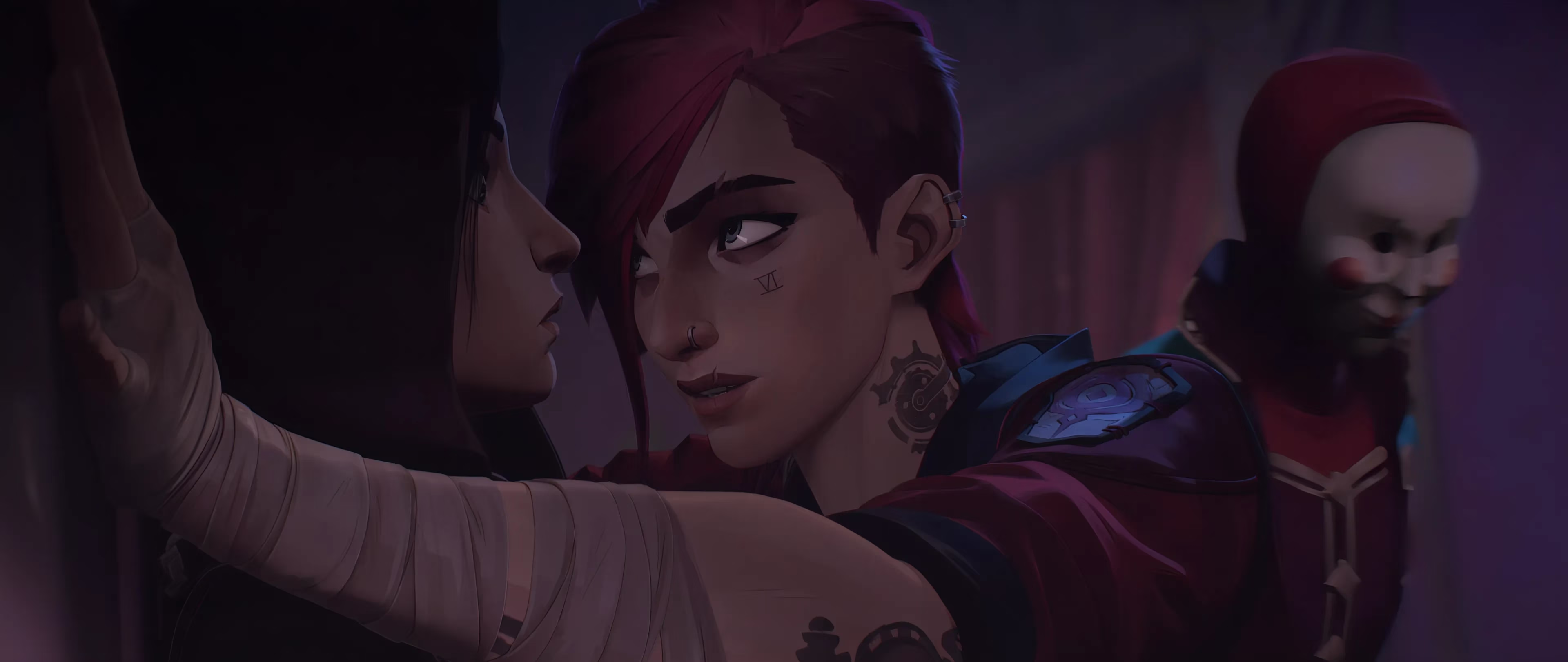
Let's talk about that original League design. Don't get me wrong, it's iconic in its own way, but it was filled with features that screamed "designed by committee for appeal." Obscenely slender hips, emphasized breasts, proportions that just didn't reflect any kind of reality, especially not the gritty, industrial realism Arcane was building. If you removed her armor, you were left with a character who simply wouldn't belong in the world of the show. The early concepts shown in Bridging The Rift reveal a fascinating evolution. They started with a dirtier, more refined face—a clear step forward—but it was still attached to a body that didn't match the hardened soul they were trying to portray.
The breakthrough came when the artists and writers decided to fully commit. They made Vi shorter, buffer, and less traditionally feminine. This wasn't just an aesthetic choice; it was a narrative one. Every change told a story:
-
Her muscular build spoke of a life of physical struggle, of surviving the prison system of Zaun.
-
Her shorter stature made her feel more grounded, more real, and contrasted beautifully with Caitlyn's regal height.
-
Her overall butch, confident presentation made her unpredictable and relatable in a way few lesbian characters in media manage to be.
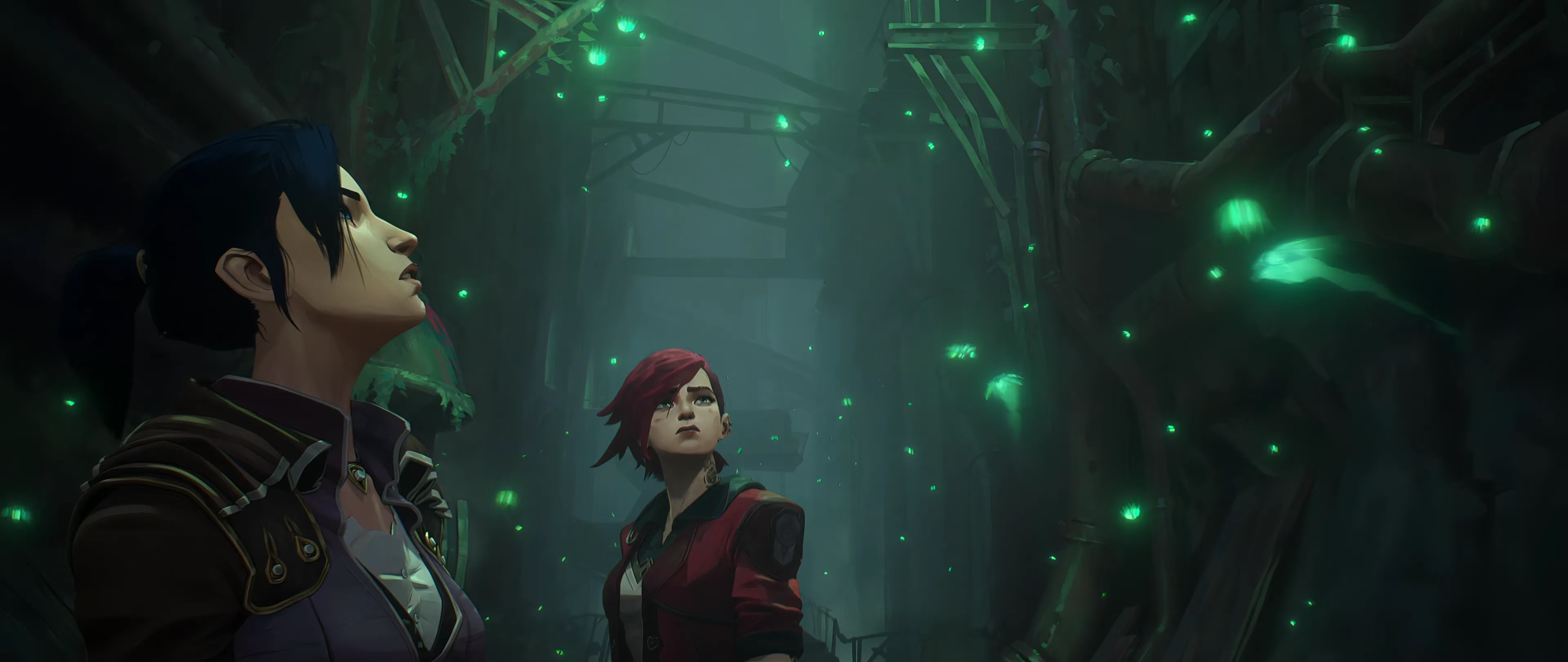
This redesign had a massive impact, especially for queer audiences. I've seen countless fellow gamers—lesbians, trans men, non-binary folks—find genuine solace and representation in Vi's new look. She wasn't ticking the usual archetypal boxes. She was designed to be strong, scarred, and complex, and that design elicited feelings of identification, not just attraction. Her clothing became part of her character: worn bandages, battle scars, and tattoos that mapped a history of violence and survival. These details made us view her as a person, not an object. Her distrust of the world felt earned, and her gradual opening up to Caitlyn became a core, beautiful part of her growth.
And let's be real about Caitlyn for a second—this change elevated their entire dynamic. Caitlyn is tall, sophisticated, and ruthless. Vi is shorter, rugged, and raw. Together, they form a duo of chaotic lesbians that feels authentic and revolutionary. Their romance isn't a subplot; it's integral to the story and to their character development, moving far beyond old, tired tropes.
Vi's transformation is part of a larger, wonderful trend in Arcane. The show didn't just fix one character; it reimagined its entire female cast with agency and depth.
| Character | Arcane's Evolution | Key Design & Narrative Shift |
|---|---|---|
| Jinx | From manic pixie dream girl archetype to a deeply traumatized, complex individual with a heartbreaking origin story. | |
| Caitlyn | From a sharpshooter in a mini-skirt to a regal, determined detective whose height and sophistication are power traits. | |
| Mel Medarda | From a non-existent character in the game to a politically savvy, nuanced figure with her own motivations and agency. |
.png)
Looking back from 2026, Arcane's impact is undeniable. It showed that you can have attractive, compelling characters without resorting to sexualization as a primary design language. Vi stands as a testament to that. She's strong, vulnerable, butch, soft when she needs to be, and fiercely protective. Her design tells her story before she even throws a punch. And yes, as a fan, I can also admit there's a certain appeal in her confidence that makes you think, "Yeah, she could probably throw me across the room and I'd thank her." But that attraction comes from a place of respecting her character, not from a design that asks to be ogled.
In the end, Arcane's Vi succeeded where the game had long struggled. She bridged the gap between fan service and genuine service to the character's narrative and the audience's desire for meaningful representation. She became a heroine for a new generation—one who is flawed, human, and powerfully, unapologetically herself. That's a win for everyone, purists be damned. The legacy of this redesign continues to influence how game studios approach character creation, proving that depth and diversity are not just good ethics, but incredible storytelling.