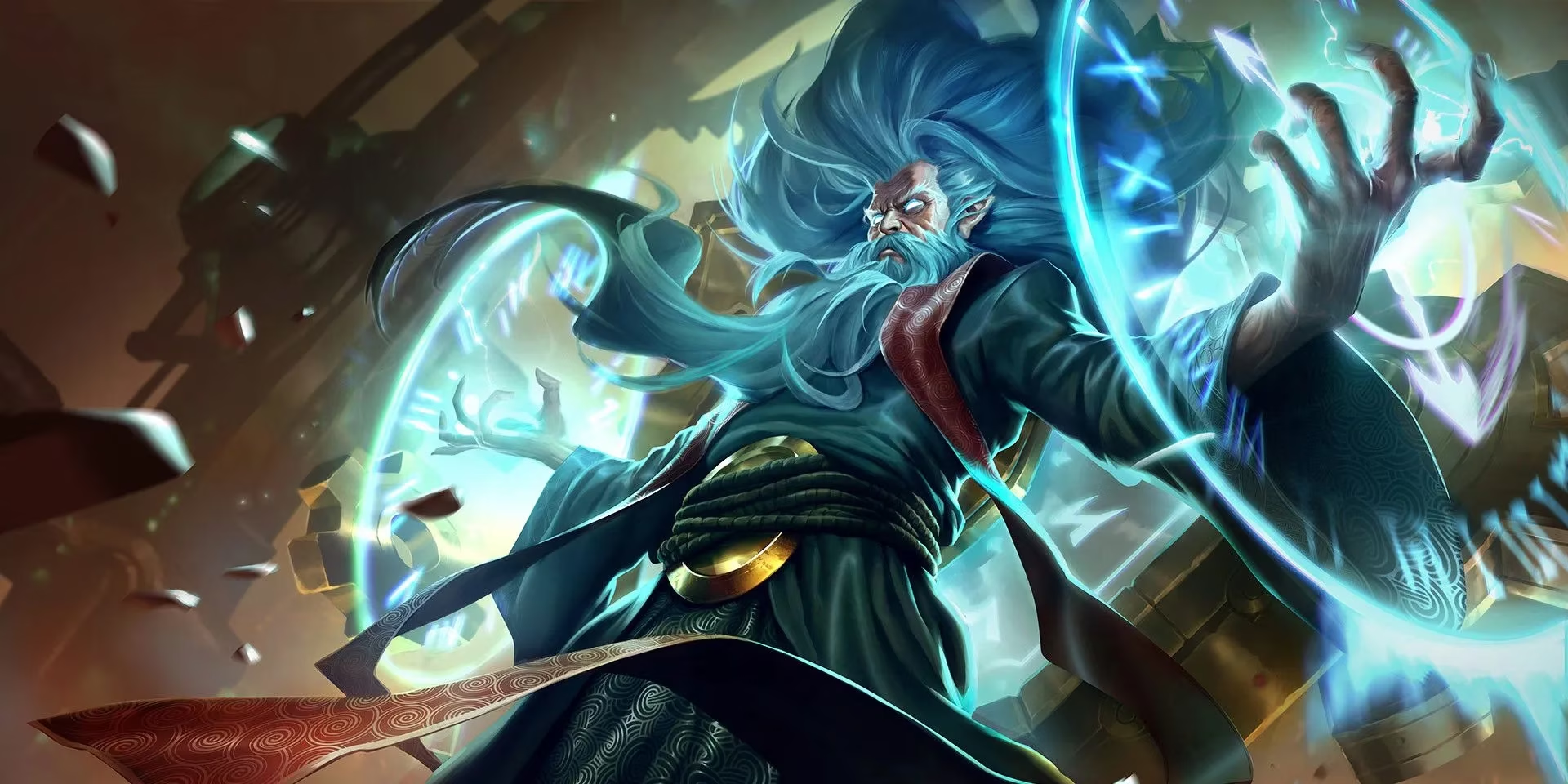
I remember the season when every step felt like a waltz on shattered glass. The Rift hummed with a dangerous electricity—a single misclick, a fraction of a second's hesitation, and your champion would dissolve into gray screen before you could even process what tore you apart. We whispered about it in pick‑ban lobbies, we cursed it in all‑chat, and eventually even the architects at Riot Games heard the truth in our frustrations: there was simply too much damage. Back then, in what now feels like a fever dream from the early 2020s, League of Legends had become a game of instantaneous deletion. Teamfights ended in the blink of an eye, assassins ruled every lane, and the notion of a tank standing resilient in the frontline felt almost quaint. Then came the promise—the Champion Durability Update—heralded by patch 12.10. An entire roster of over 150 champions was about to be drenched in a shower of raw toughness. The question that echoed through the community was as simple as it was profound: could we learn to fight when no one falls so easily?
Have you ever stopped to wonder what it truly means to be durable? Not just to survive, but to endure long enough to let your craft unfold? That was the soul of Riot’s grand experiment. They didn't just tweak a stat here or a number there; they reached into the very marrow of every champion, every rune page, and every jungle monster, infusing them with bonus health, armor, and magic resistance. Suddenly, the champions we thought we knew became strangers wrapped in thicker flesh. An assassin’s combo no longer guaranteed a kill in one breath. A mage’s burst left a sliver of life where before there was none. A support could actually peel without becoming a martyr in the first volley. The update arrived somewhat suddenly—like a summer storm—and it promised to watch us closely over the coming weeks. Riot knew they were striking at the heart of the game’s pacing, and they were prepared to listen. The question lingered: would this gift of survivability forge stronger bonds between allies, or would it simply prolong the agony of inevitable defeat?
The answer, I found, bloomed in the chaos of the first few matches. Where once I could rely on a swift Talon rotation to surgically remove a stray carry, now I had to coordinate. I had to weave my damage with my jungler’s cc, my support’s exhaust, my top laner’s zone pressure. Kills became rarer, more precious. A solo flash‑ignite play that used to be a highlight reel now often left an opponent limping to safety while I stood foolishly outnumbered. It forced a conversation—no, a negotiation—between all five of us. Did you see that health bar? Did you notice the shield? We need to stack our cooldowns. The update didn’t just give champions more effective hit points; it gave us time. Time to make mistakes, time to reposition, time to actually use that Zhonya’s Hourglass instead of dying with it off cooldown. Time, as Zilean might say, we were not used to having. And with that stretched time, the true masters of the Rift began to emerge—not those who could execute the fastest, but those who could dance the longest.
But what did this do to the map objectives? Think about the dragon pit, once a short, bloody affair. Before the durability shift, a team could sneak a cloud drake in seconds, or turn a baron into a gamble of instant death. Now, with everyone sturdier, objectives demanded commitment. Teams had to posture, poke, and probe for weaknesses that weren’t immediately obvious. A single baron call could swing back and forth for forty seconds, a symphony of leashes and frontline swaps. Inhibitors stood prouder, turrets bit harder against divers who could now survive the initial laser but still needed to plan an exit. Riot even promised to keep a close eye on sustain and map flow, and they did. Over the seasons that followed, healing and shielding found a new equilibrium; grievous wounds items became less of a mandatory tax and more of a tactical choice. The game breathed deeper, and so did we.
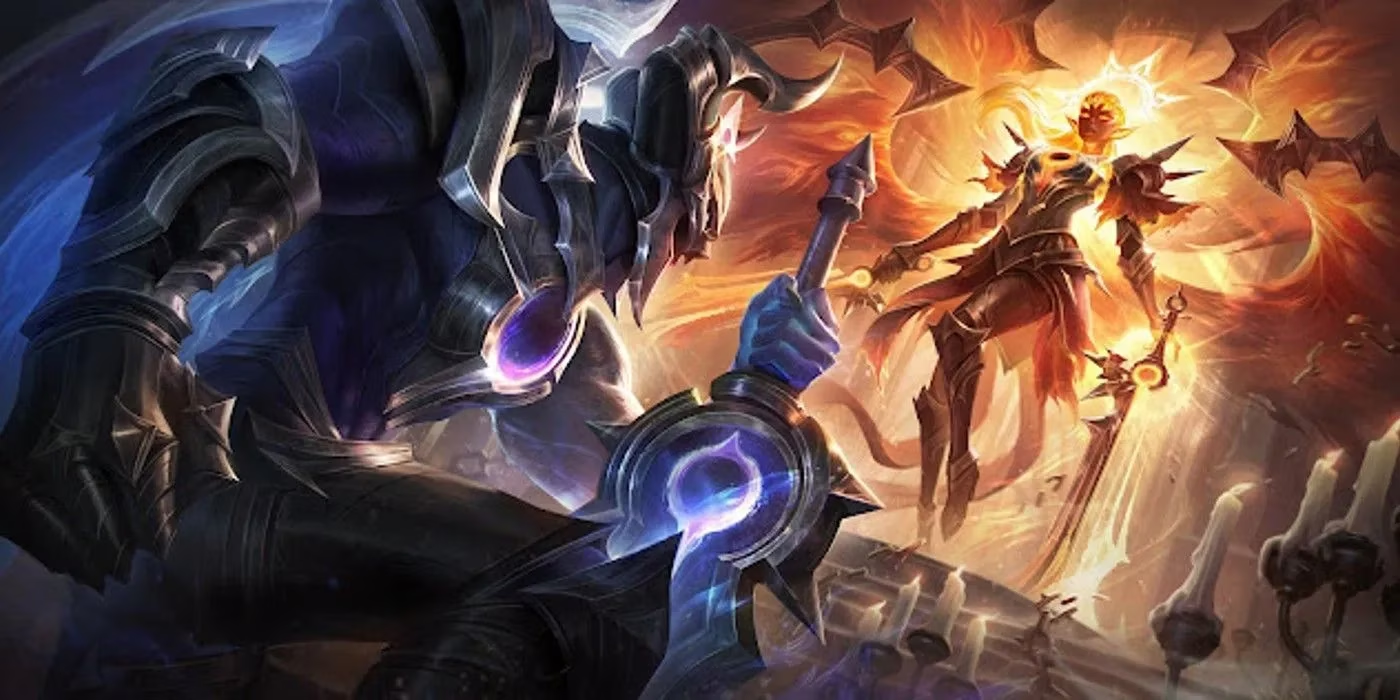
Looking back from 2026, the Solar and Lunar Eclipse skins that graced the store around that era now feel prophetic. They weren’t just cosmetic paragons of duality—they mirrored the eternal battle between burst and endurance. Leona’s eclipse swords illustrated the sunset of one era and the dawn of another. The durability update wasn’t a simple pendulum swing; it was a fundamental re‑tuning of the game’s heartbeat. Newer players, who once might have uninstalled after their tenth death in fifteen minutes, found a foothold. They could contribute, they could make mistakes without instantly being punished into oblivion. Veterans like me had to unlearn years of muscle memory. That one‑shot mentality had to be buried. Instead, we cultivated patience. Teamfights transformed into layered narratives: engage, disengage, re‑engage, a flash to survive, a clutch heal, a second rotation of spells that would never have been on cooldown before. We learned that true mastery isn’t measured in kills alone, but in the seconds you keep your carries alive, in the zoning you perform simply by existing with a fat health bar, in the threat of what you might do if given one more second.
Yet, no change grows without its thorns. Did the meta become too tanky? Some cried that the soul of League was in its high‑risk, high‑reward skirmishes, and that the update had muddied the waters. Assassin mains felt their identity slip; they had to evolve into skirmishers who dipped in and out multiple times, weaving auto attacks between cooldowns. Mages had to invest in more penetration than before, or discover joy in extended trade patterns that showcased their zone control. Tanks grinned—their time had finally arrived, not as walking cc bots that evaporated, but as unkillable juggernauts who dictated the pace. Riot watched, as they said they would, and through the patches that followed, subtle knobs were turned. Base stats shifted, itemization opened up, and a new class of “durable carry” emerged. The balance team’s vigilance turned a potentially seismic disruption into a new normal that felt, after a while, inevitable.
I can’t help but ask: has our patience grown too? Playing a 40‑minute slugfest where both teams respect each other’s tankiness has taught me more about vision control, wave management, and objective setup than a hundred death‑sprint games ever could. The Champion Durability Update gave birth to a generation of players who understand that brute force isn’t the only language of war. You need patience, rhythm, and the ability to listen—to your allies, to the rhythm of enemy cooldowns, to the faint heartbeat of a dragon that’s about to spawn. Perhaps that’s why, even now, we look back at patch 12.10 not with nostalgia for a simpler time, but with gratitude for the complexity it sowed. The Rift became a place where stories could be told within a single fight, where a comeback wasn’t just a theoretical miracle but a tangible possibility built on layered resistances and timely shields.
Make no mistake: the game is still lethal. A misstep into a five‑man wombo combo will still send you to the fountain. But now you have agency. You have a chance to respond. The update taught us that survival is a skill in itself, as noble as mechanics or macro play. It demanded we work together—not just to kill, but to protect. It told solo queue heroes that the sun of their individual glory had set, and a new lunar age of collaborative endurance was rising. In the end, the League of Legends I play today, here in 2026, still bears the mark of that era. Every champion’s health bar is a monument to that single, courageous decision to give us all more time. And I, for one, have never felt more alive in those extra precious seconds.