As a longtime League of Legends player and an obsessive Arcane rewatcher, I have spent many nights in 2026 revisiting how Riot's animated series both honored and reshaped Runeterra's lore. The show delivered answers I had wanted for years, but it also left me with new inconsistencies that are just as enjoyable to untangle. Some of those early gaps were deliberately closed in season two, while others still simmer in the margins. I want to walk through the answered questions and the contradictions that stand out to me now that the full two-season arc has settled.
| Status | Topic |
|---|---|
| Answered | Jinx and Vi are sisters |
| Answered | Viktor and Jayce's deep connection |
| Answered | Vi's real name and gauntlets |
| Answered | Jayce's rise to represent Piltover |
| Inconsistency | Ekko's absent Z-Drive in season one |
| Inconsistency | Hextech's compressed origins |
| Inconsistency | Camille's place in Piltover |
| Inconsistency | Heimerdinger's Yordle appearance |
| Inconsistency | Warwick's rewritten backstory |
Answers That Finally Landed
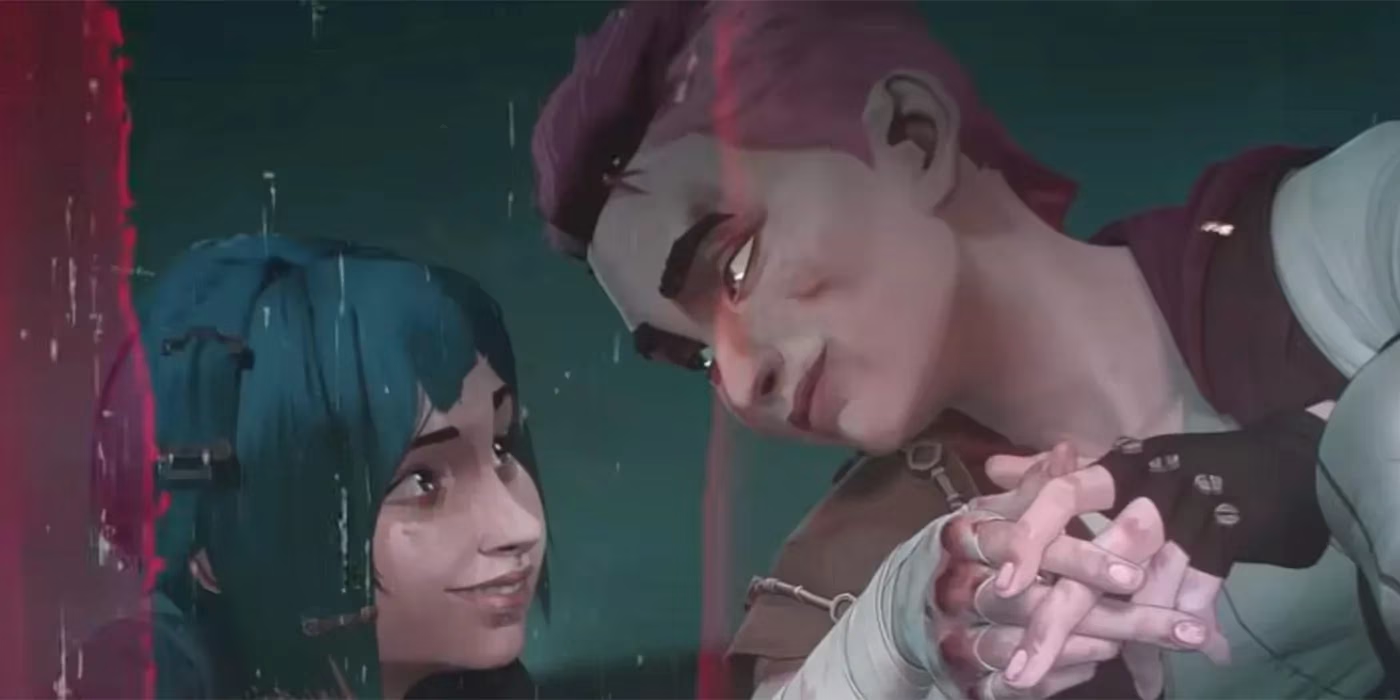
For years, voice lines like Jinx's 'you think I'm crazy? You should see my sister' kept fans guessing. Arcane confirmed that Violet and Powder are sisters, orphaned during the bridge uprising and carried off by Vander. This confirmation anchored the entire show. By season two, their bond, grief, and sisterly conflict became the most emotionally charged thread in the story. As a fan, seeing that connection made official felt like a long-awaited payoff rather than a simple retcon.
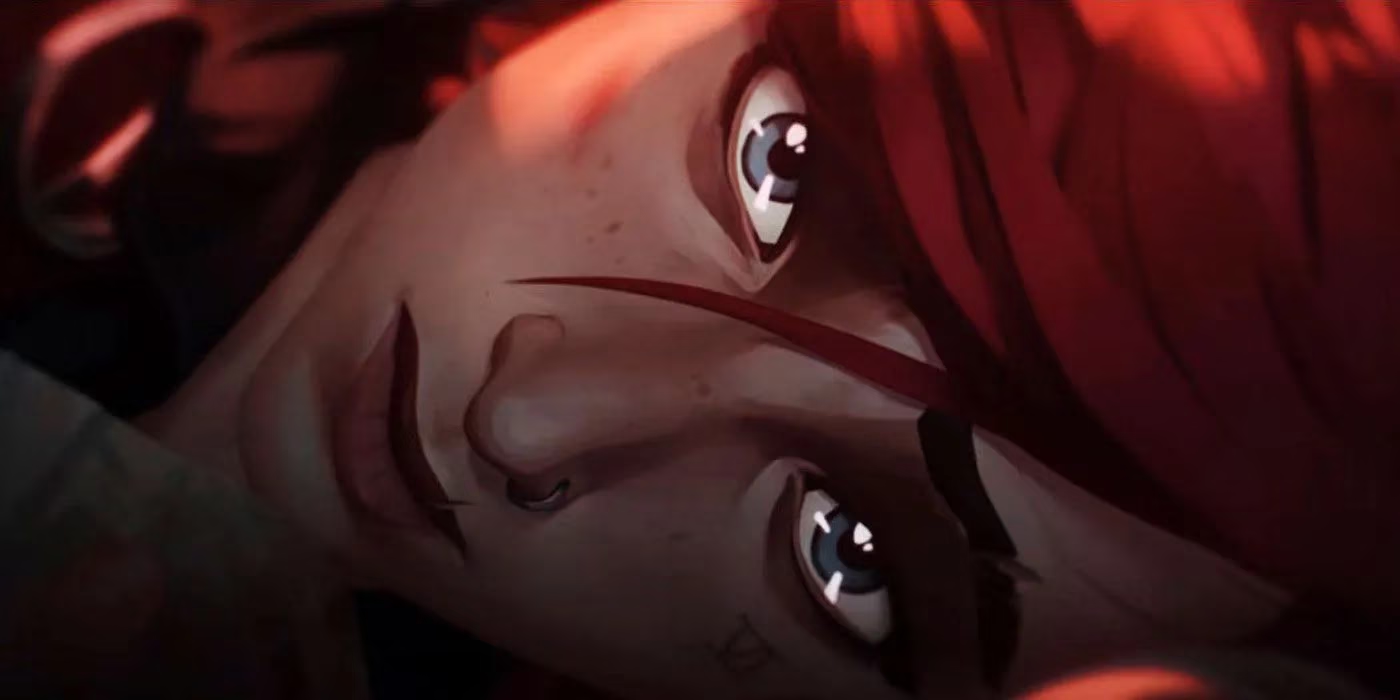
Vi's name also received a grounded explanation. Before Arcane, it was easy to assume the VI tattoo on her face gave her the name, but the series revealed that her full name is Violet and Vi is simply a nickname. The tattoo was added later in prison, which makes the whole identity feel more lived-in and gritty. I appreciate this kind of mundane realism because it grounds Vi in a world that still feels tactile and human.
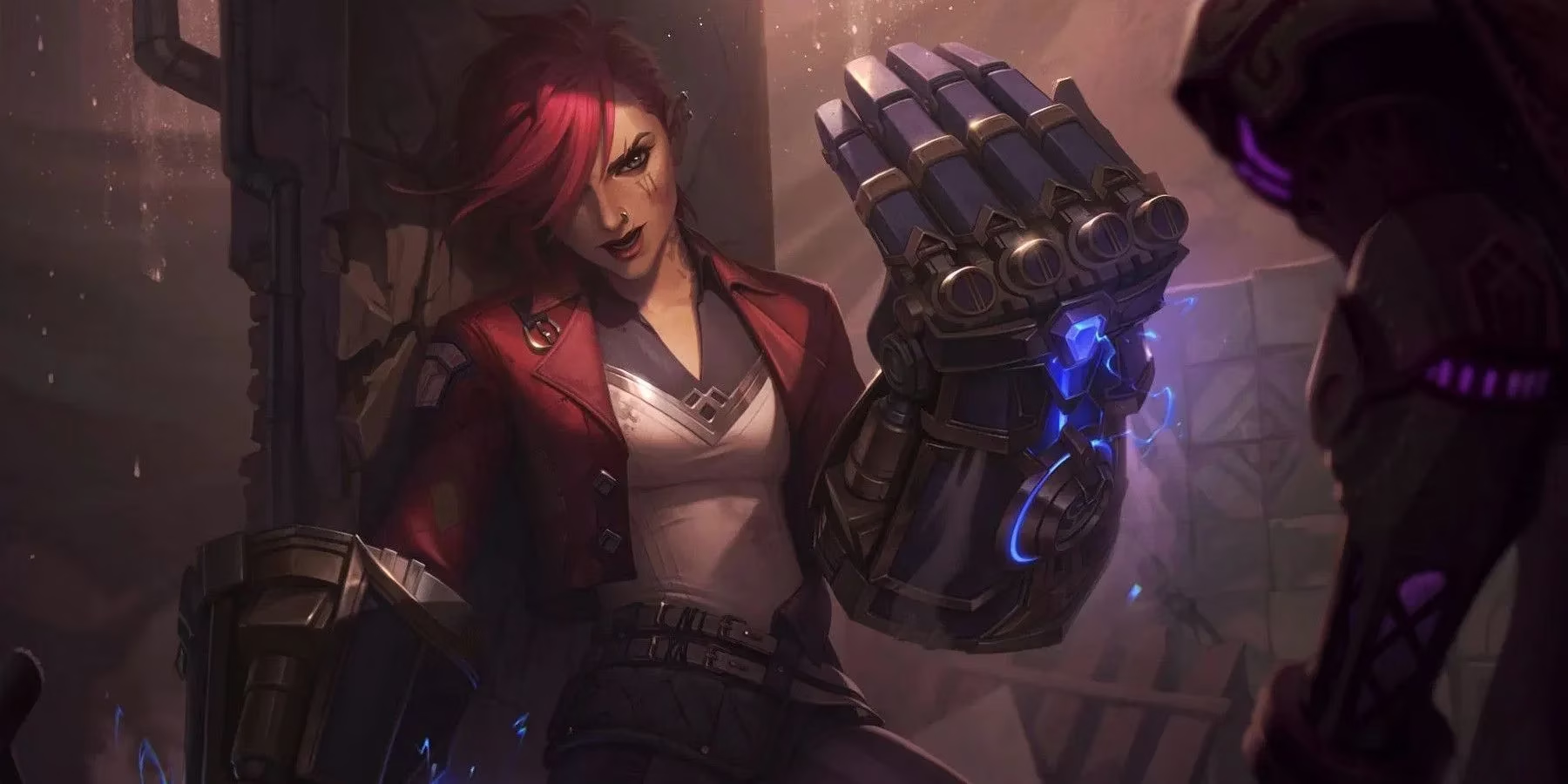
Vi's Atlas Gauntlets received a similarly satisfying origin. The show revealed that Jayce and Viktor originally demonstrated the gloves as potential mining technology. Vi then took them up during the raid on Silco's shimmer factories, and Jayce let her keep them rather than fight to get them back. That small character beat explains why her signature weapon became permanent. Season two repairs and refits the gauntlets, but their industrial origin still holds up nicely.
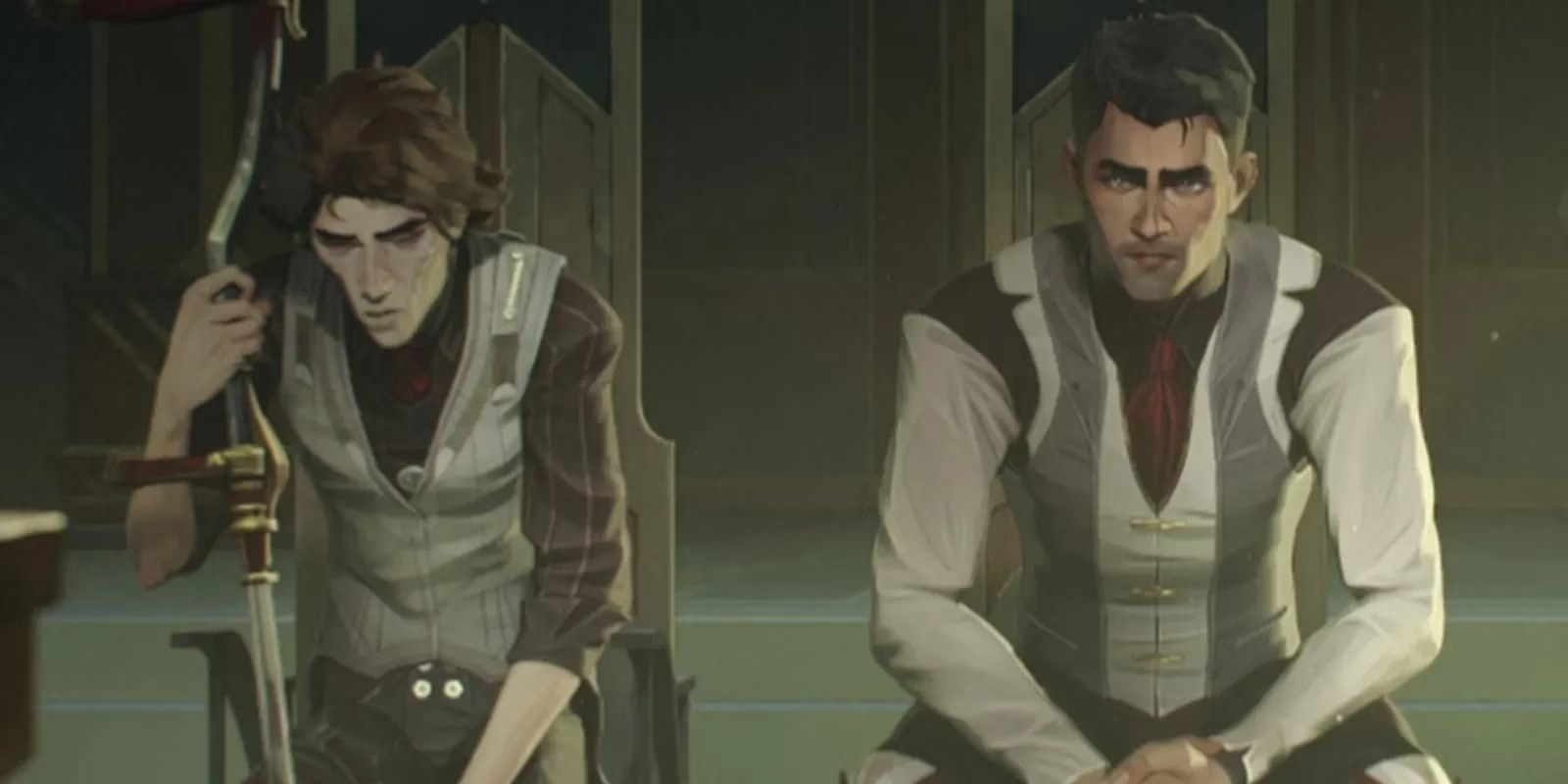
The old League of Legends lore often cast Jayce as the hero and Viktor as a fairly generic villain. Arcane changed that by making them friends and colleagues, both idealistic and eventually doomed. Their clashes feel tragic because the show builds real common ground between them. By season two, that philosophical fracture becomes cosmic and destructive, which retroactively makes their eventual battle feel inevitable rather than forced. For me, this is one of the best lore answers the show provides.
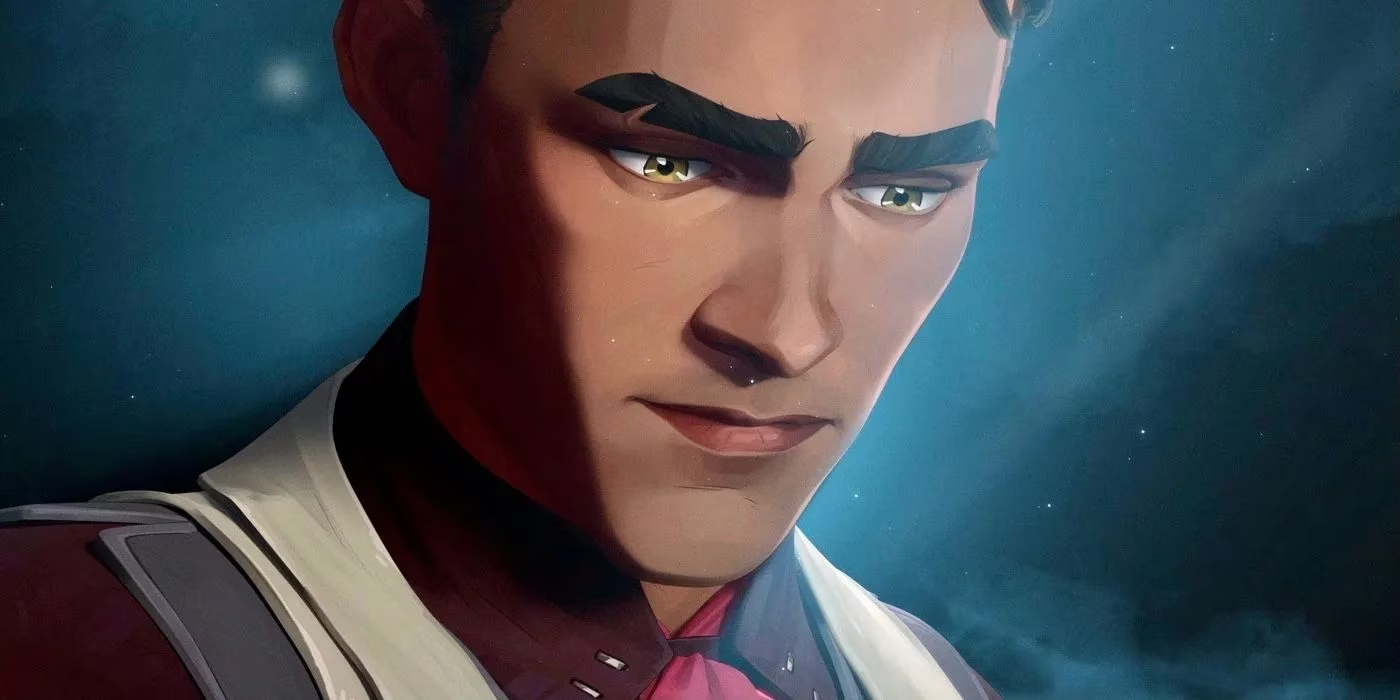
Jayce's rise to represent Piltover was also never fully explored in the game. Arcane fills that gap by showing Mel's manipulation and Jayce's own reluctance. By the end of season one he stands at the center of the Council of Piltover, seen by both Piltover and Zaun as a leader. Season two then shatters that symbolism, showing how brittle Piltover's ideals become under pressure. This answer turned into a powerful deconstruction of leadership and legacy.
Inconsistencies and Season Two Shifts
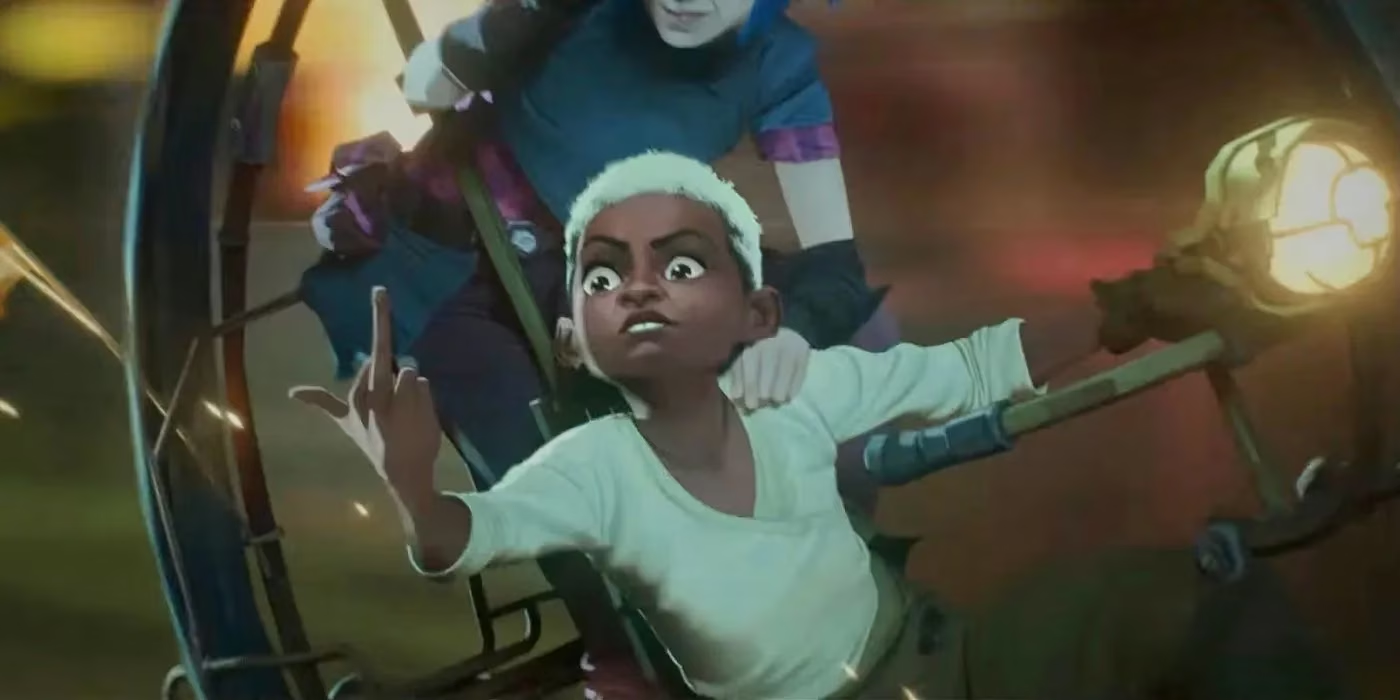
In season one, Ekko never uses the Z-Drive, which felt like a glaring omission to anyone familiar with his title as 'the boy who shattered time'. He is clearly a gifted engineer, and even Heimerdinger respects him, but his signature time-bending ability stayed offscreen. Season two finally resolves this by sending Ekko to an alternate timeline, where he and Heimerdinger build the Z-Drive together. He then uses it in the final battle to rewind and reach Jinx. What looked like an inconsistency became a delayed payoff, though on rewatch the first-season absence is still noticeable.
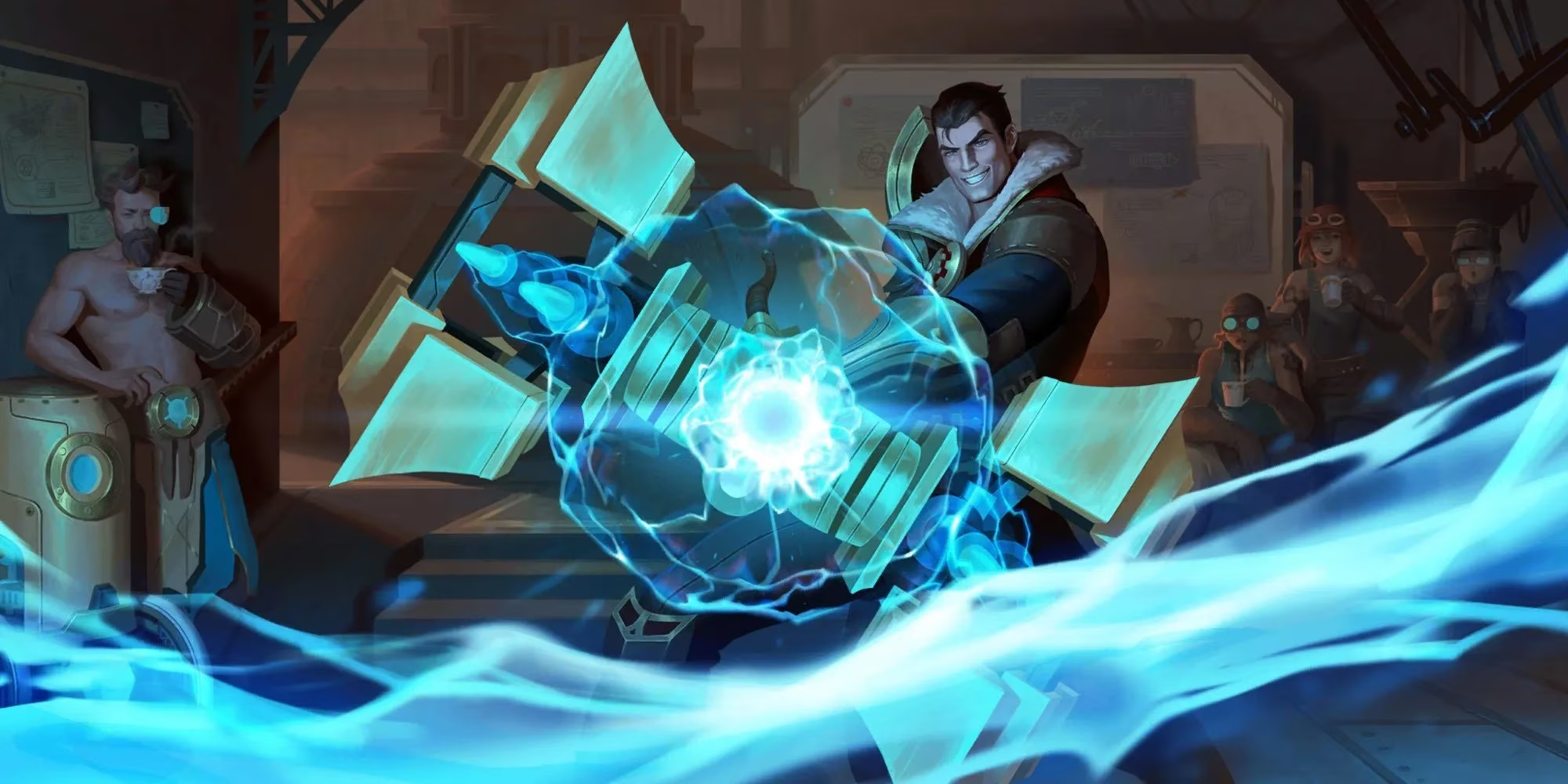
Hextech's origin remains one of the bigger lore tensions. Arcane makes Hextech a joint venture between Jayce and Viktor that emerges in less than a decade. That is elegant for drama, but it raises questions about where the Hextech crystals come from and how two people alone made such massive strides so quickly. Season two introduces wild runes and the anomaly, showing that Hextech has consequences neither inventor anticipated, but the crystal supply chain still feels hazy to me. It reads more like a story convenience than a deliberate mystery.
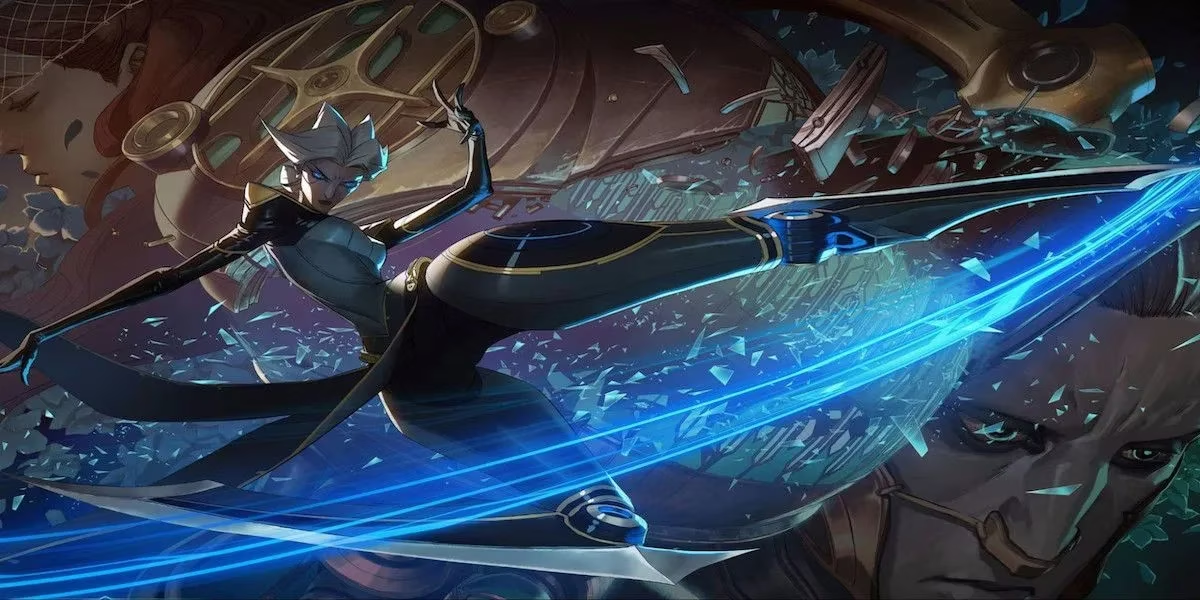
Camille is the most obvious structural problem. Her backstory depends on Hextech existing long enough to keep her young for decades, but Arcane compresses Hextech to only a few years. That makes her traditional lore impossible. Even after two seasons, she does not appear. I suspect the writers simply left her out to avoid the contradiction, or they may reimagine her later. As a fan, I would rather have her absence than a forced explanation that breaks the show's timeline.
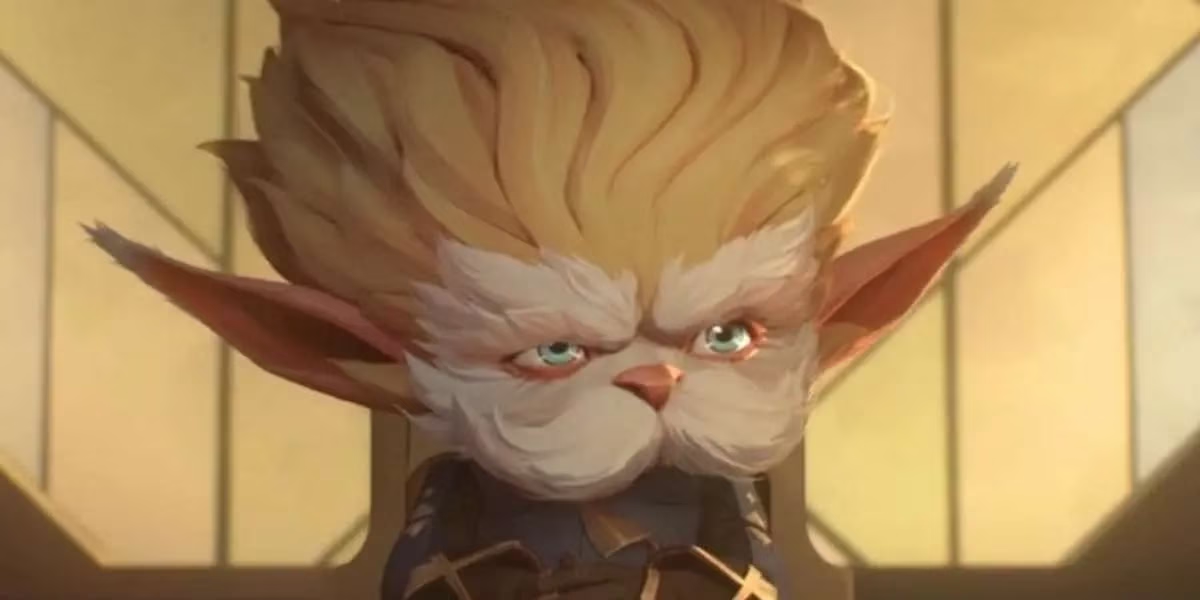
Heimerdinger raises a smaller but persistent inconsistency. Yordles usually use something called glamour to appear human, but Heimerdinger is visibly furry and is even called a 'furball'. Piltover may simply be an exception where Yordles live openly, but the show never addresses this directly. Season two sends him to an alternate universe, yet the glamour question remains unanswered in the main timeline. I find that gap less damaging than the Camille issue, but it still stands out when comparing the show to older lore.
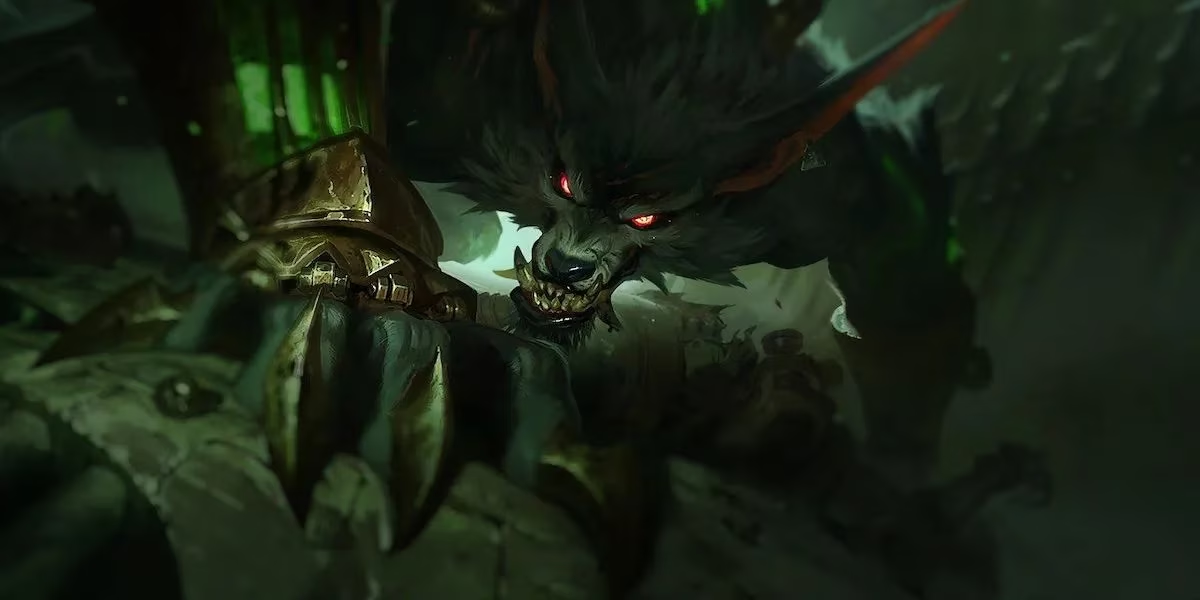
The popular theory that Vander became Warwick was confirmed in season two. This massively rewrites Warwick's old backstory, because Vander was never a willing test subject for Singed. He was killed saving Vi and then resurrected through Singed's shimmer and chemical experiments. The fall, the stabbing, and the transformation combine into a different origin. I find this retcon more tragic and more connected to the show's emotional core, even if it conflicts with the game's earlier bio.
Looking back from 2026, I think Arcane is less concerned with preserving every game biography than with building a coherent, emotionally devastating story. Some inconsistencies are simply compressed timelines and omitted champions, while others are cleverly repurposed by season two. The answered questions gave the characters depth, and the remaining contradictions give fans like me something to argue about until the next chapter arrives.