In the luminous constellation of modern animation, a new star blazed with unprecedented brilliance as 2026 dawned. Arcane, the symphonic collaboration between Netflix and Riot Games, ascended to a hallowed pedestal, its name forever etched alongside the greats. The show, a meticulously crafted portal into the strife-torn duality of Piltover and Zaun, claimed the Emmy Award for Outstanding Animated Program, a victory that resonated like a perfectly tuned hextech crystal through the industry. This accolade was not merely a trophy; it was a seismic event, the first time a streaming series had ever breached that particular fortress of tradition. For its creators, who hailed from the vibrant, often-underestimated realm of video games, the win was a validation that felt as profound and unexpected as discovering a shimmering vein of precious ore beneath the city's grimy foundations. The world had not just watched their story; it had embraced it, allowing the complex souls of Vi, Jinx, and Silco to take root in the global imagination.
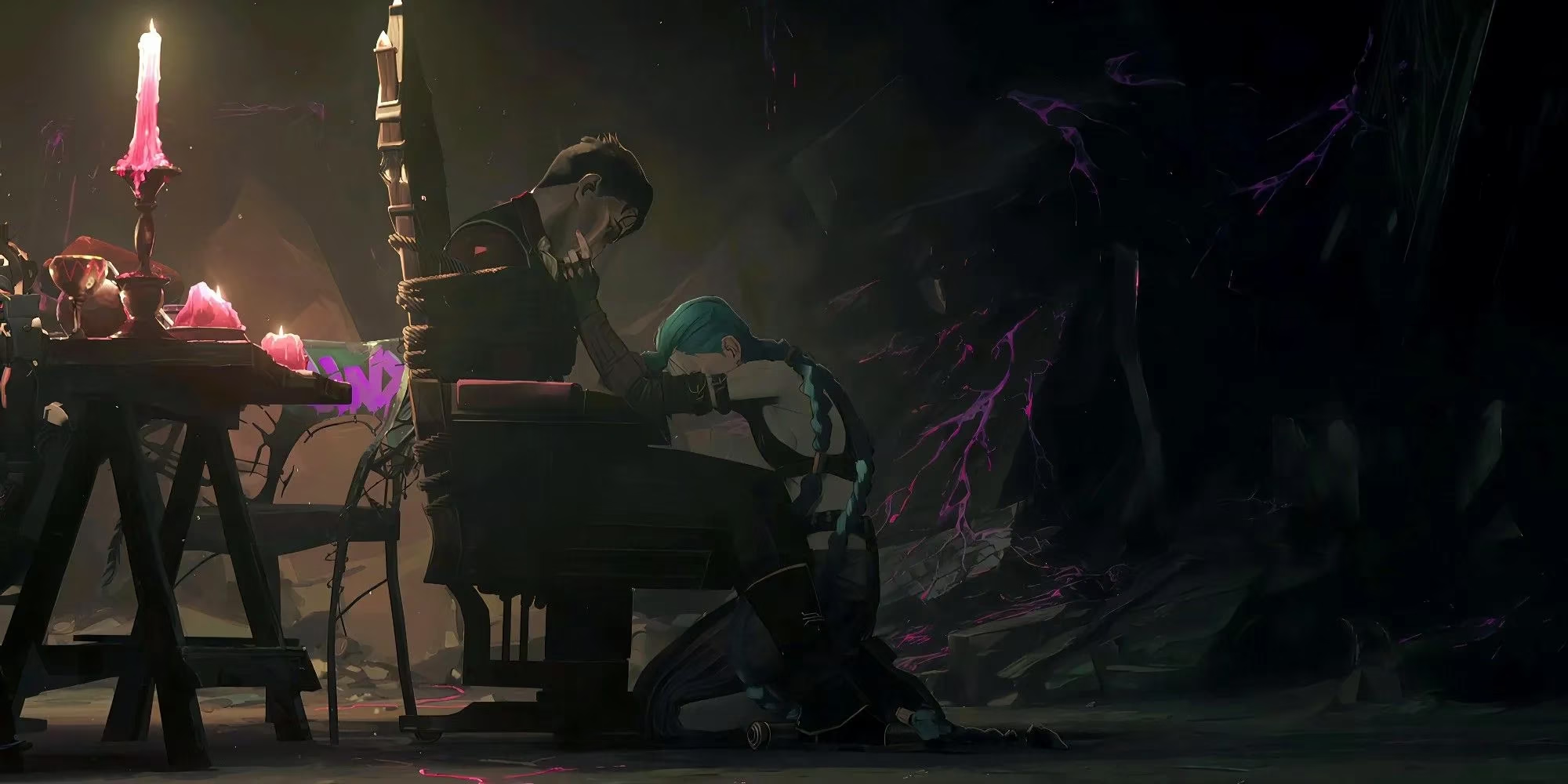
The path to the Emmy stage was a gauntlet of legends. Arcane stood shoulder-to-shoulder with animated titans—the interdimensional cynicism of Rick and Morty, the enduring satire of The Simpsons, the cozy chaos of Bob's Burgers, and the multiversal might of Marvel's What If...?. Yet, the judges' decision affirmed what millions of viewers already sensed: Arcane was not just another entry in the category. It was a paradigm shift, a show that treated every frame as a painter's canvas and every narrative beat as a composer's note. Its animation was a character in itself, a living, breathing entity where brushstrokes of oil paint seemed to bleed into digital code, creating a world that felt both hauntingly tangible and dreamily impressionistic. The painstaking detail—from the glint of a gear in Jayce's workshop to the melancholic haze of the Zaunite lanes—was not mere decoration. It was the story's silent narrator, pushing the medium forward with the quiet, relentless force of a river carving through stone.
The Heart of the Triumph: Voices from the Bridge
The celebration echoed from the award stage to the far reaches of social media, a chorus of gratitude and shared accomplishment. Co-creator Christian Linke, accepting the award, voiced a sentiment that resonated deeply with the team's origins: "It's a big deal for us as we come from video games." This victory was a bridge, meticulously constructed by Fortiche Productions' artists and Riot's storytellers, connecting two passionate creative continents. The cast, whose voices gave flesh and fury to the characters, joined the chorus. Hailee Steinfeld, the embodiment of Vi's tempered steel and vulnerable heart, exclaimed, "This is incredible. Congratulations to my Arcane family. So lucky to be a part of this show." This familial bond, palpable in the show's cohesion, was the true engine of its success.
A Legacy Cemented and a Future Forged
By 2026, Arcane' legacy is not measured solely by its Emmy. Its trophy case, glittering with awards from the Annie Awards to the Hollywood Critics Association TV Awards, tells a story of consistent, peer-recognized excellence. Yet, its most enduring impact may be how it reshaped perception. It proved that a narrative born in the competitive crucible of League of Legends could achieve universal emotional depth, its characters becoming as discussed and dissected as any in prestige television. The documentary Bridging the Rift offered a rear-view mirror, revealing the years of doubt, iteration, and fervent belief that shaped the series. But all eyes are now fixed firmly on the horizon. Season 2 simmers in production, a promised return to the twin cities where revolution hangs in the air like the chemical fog of the Undercity. The wait is a shared anticipation, a collective holding of breath to see where the scars of the past will lead Piltover and Zaun next.
In the end, Arcane's Emmy victory is a testament to a rare alchemy. It is the perfect storm where a game developer's mythos met a studio's painterly obsession, resulting in a series that feels less like a television show and more like a fabled tapestry discovered in a forgotten archive, its threads woven with magic, machinery, and human folly. It stands as a beacon, proving that the most compelling stories can emerge from the most unexpected origins, glowing with a light that guides the future of animation itself.