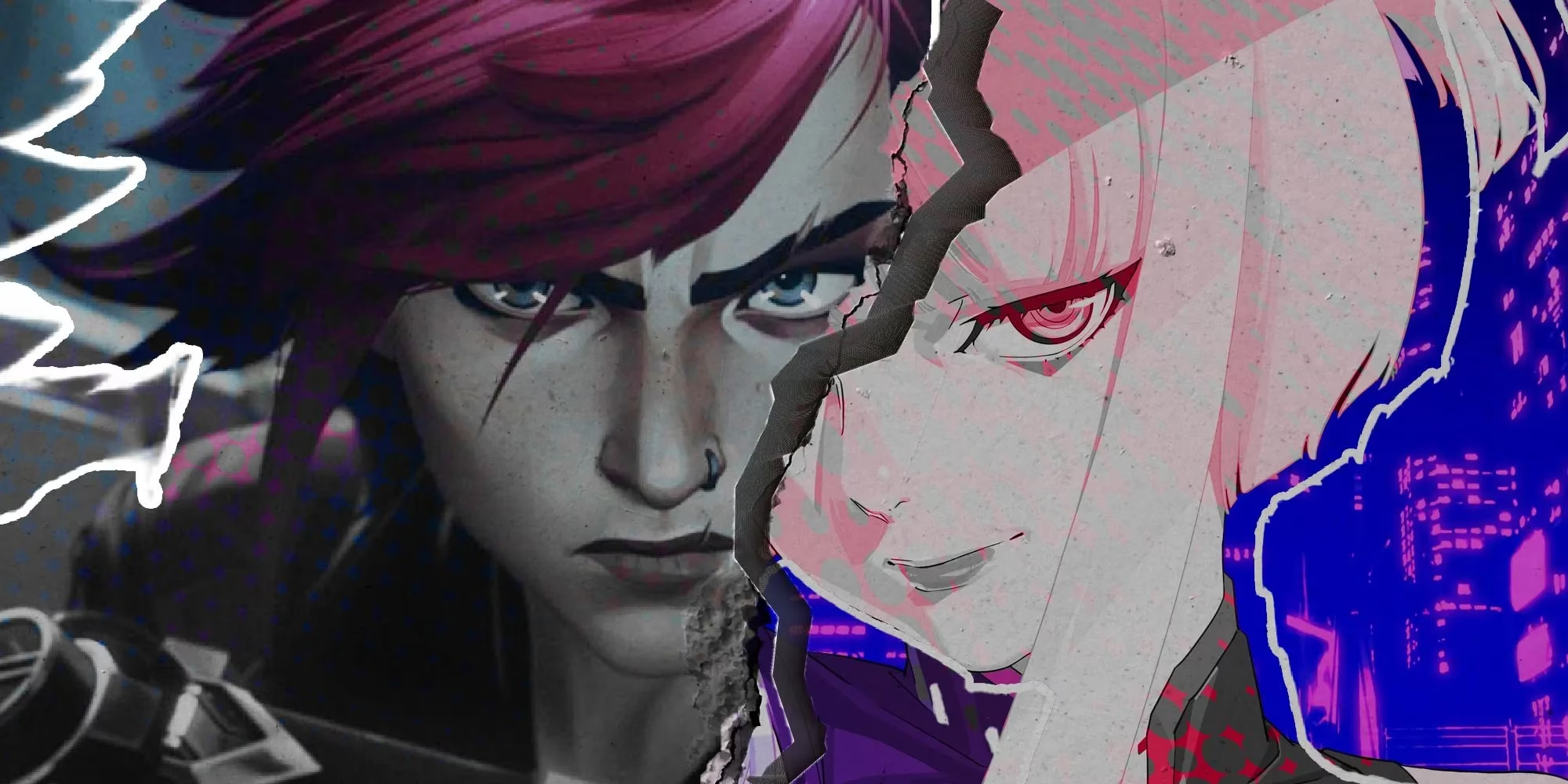
In the shimmering digital arena of the 2026 Game Awards, a new champion is poised to be crowned. The inaugural category of Best Adaptation has set the stage for a spectacular clash of titans, where five contenders born from the vibrant worlds of video games now vie for glory on the silver and streaming screens. Among them, two luminous stars burn with particular intensity, their light casting long shadows and igniting passionate debates across the fandom. This isn't just a competition; it's a poetic showdown between two distinct visions of what it means to bring a game's soul to life.
The Contenders: A Symphony of Adaptation
First, let's meet the full ensemble cast nominated for this historic award. Each represents a unique translation from controller to narrative:
| Nominee | Based On | Medium | Streaming Home |
|---|---|---|---|
| Arcane | League of Legends | Animated Series | Netflix |
| Cyberpunk: Edgerunners | Cyberpunk 2077 | Anime Series | Netflix |
| The Cuphead Show! | Cuphead | Animated Series | Netflix |
| Sonic the Hedgehog 2 | Sonic the Hedgehog | Live-Action Film | Cinemas |
| Uncharted | Uncharted | Live-Action Film | Cinemas |
While Sonic 2 and Uncharted brought blockbuster spectacle, and The Cuphead Show! charmed with its vintage whimsy, the collective heart of the conversation—and, let's be real, the fiercest fan debates—has always pulsed around Arcane and Cyberpunk: Edgerunners. It’s like watching two master painters, one using oils and the other neon acrylics, try to capture the same elusive feeling of a beloved memory.
Arcane: The Painterly Masterpiece
Since its debut, Arcane didn't just arrive; it descended, a fully-formed phenomenon that redefined what an adaptation could be. Forged in the collaborative fires of Riot Games and the French animation studio Fortiche, the series became a gateway, whispering that no prior knowledge of League of Legends was required to be utterly ensnared. Its world of Piltover and Zaun breathed with a gritty, painterly texture—every frame a canvas where light bled through smoke and emotion was etched into every brushstroke of character animation. The accolades, including three Emmy awards, were not just recognition; they were a love letter to its artistry.
The show’s soul, however, lived in its people. Characters like Vi and Caitlyn didn't just interact; their chemistry sparked a thousand fanarts and a symphony of "shipping" fervor that the creators themselves smiled upon. It built a world so tangible you could almost smell the oil and ozone, proving that the best adaptations aren't translations, but evolutions.
Cyberpunk: Edgerunners: The Neon-Soaked Heartbeat
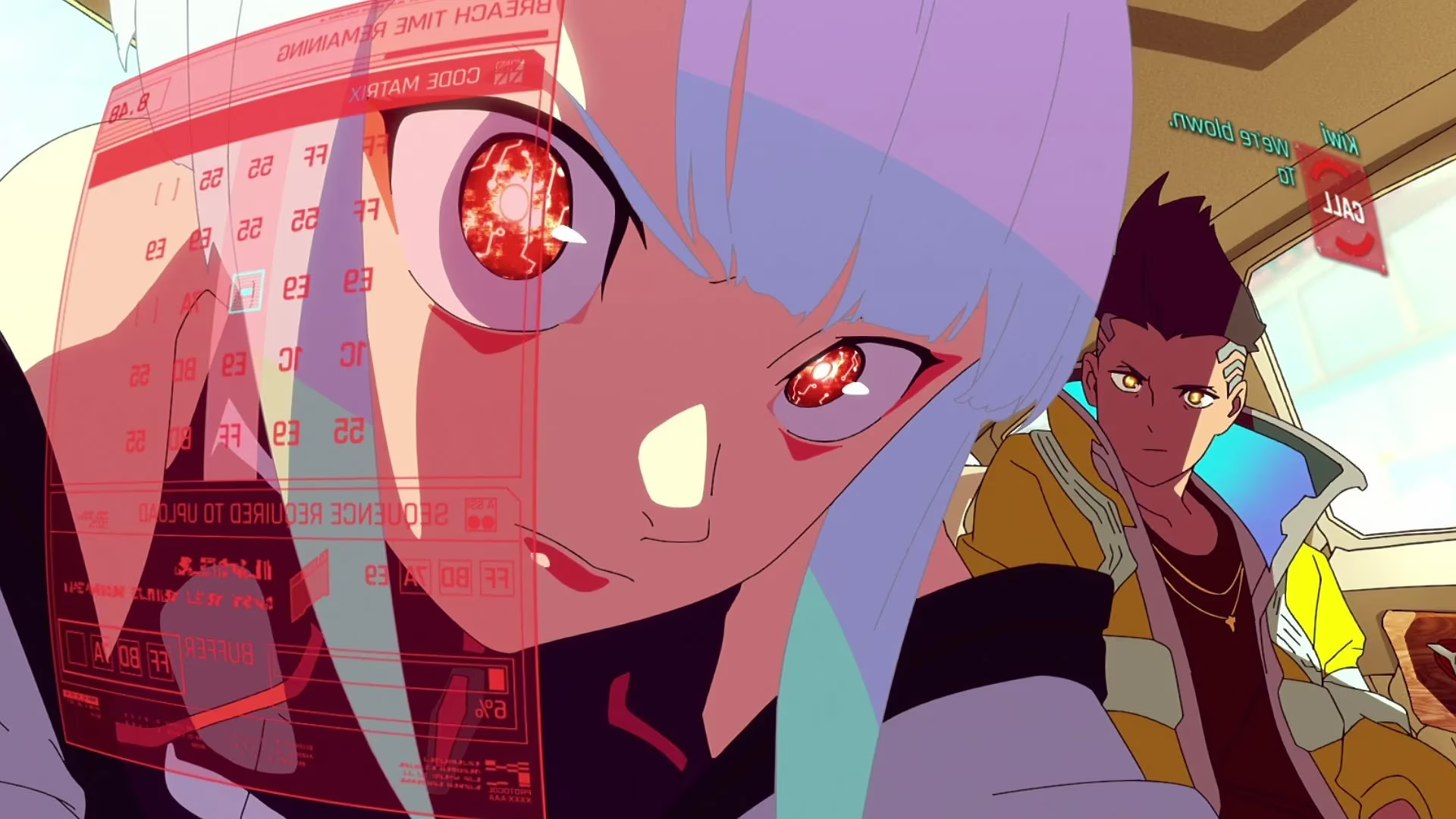
And then, there was the neon pulse of Cyberpunk: Edgerunners. Where Arcane painted with careful strokes, Edgerunners screamed onto the screen with the frenetic, unapologetic energy of Studio Trigger, guided by CD Projekt Red. It was a shot of adrenaline straight to the heart of Night City. Its success was so visceral it performed a miracle many thought impossible: it breathed new, frantic life back into Cyberpunk 2077 itself, sending player counts and sales soaring like a rocket into the orbital stations. Talk about a glow-up!
Its adaptation was more than narrative; it was embodiment. Fans argued passionately that it didn't just tell a story in the world of Cyberpunk—it felt like the game. It adapted the glitching HUDs, the chrome-limbed street samurai, the very mechanics and grit of its source material into its DNA. The anime fed back into the game, with official content updates, while the modding community, bless their chaotic hearts, took that inspiration and ran wild with it.
The Fan Forges: Where Passion Ignites Debate
In the digital taverns of Reddit, the duel rages on, a testament to how deeply both shows have carved their names into the culture. Over at the Cyberpunk subreddit, admiration flows both ways, wrapped in respectful rivalry. One fan mused, "Edgerunners was excellent. Arcane was a masterpiece though." Another countered, digging into the core question: "When talking about adaptation Edgerunners wins. It adapted game mechanics, locations, and people organically."
The same spark flew in the Arcane forums. Supporters hailed its unique, multi-season storytelling canvas and unparalleled animation style as a once-in-a-generation feat. Yet, even there, a quiet nod was given to Edgerunners for its raw, authentic absorption of its video game essence. It’s the classic debate: is the greater adaptation the one that builds a majestic cathedral beside the original game, or the one that moves directly into its house and rearranges the furniture to throw the ultimate party?
And the Winner Is...
As the 2026 Game Awards approach, the air crackles with anticipation. The smart credits, the critical consensus, and the sheer cultural footprint lean towards Arcane taking the trophy. It’s the show that transcended, drawing in audiences who'd never touched a MOBA, enchanting them with its Shakespearean drama and visual poetry. It would be a stunning, earth-shaking twist if it didn't win... but in the world of adaptations, where dreams are rendered in pixels and paint, surprises are the only constant.
In the end, both series are victorious. They stand as twin pillars proving that the soul of a game is not bound by its code. It can be reimagined as a tragic, beautiful symphony or as a frenzied, glorious riot of neon and chrome. They’ve opened the door, and now we all wait, breath held, to see what worlds step through next. 🌃✨
As detailed in reporting from Rock Paper Shotgun, the “Best Adaptation” debate around Arcane versus Cyberpunk: Edgerunners often comes down to two different yardsticks: prestige TV craft versus how directly a show reproduces the feel of its game-world. Read through that lens, Arcane tends to be praised for character-driven drama and a distinct, painterly visual identity that stands on its own, while Edgerunners is frequently held up as a rarer kind of tie-in that channels a game’s textures—Night City’s style, violence, and tech-fetish grit—so convincingly it can send audiences straight back to the controller.