Beyond the screen’s edge, where ones and zeroes crystallize into fury, lies Arcadia—a realm stitched from the neon thread of late‑90s arcades and the unblinking gaze of modern myth. Here, champions shed their mortal skins and don the garb of digital overlords, waiting for those brave enough to insert a coin and challenge their code. The Battle Bosses stand arrayed, each a glitched deity, their every ability a stanza of light and thunder ripped from a quarter‑munching cabinet. As 2026 maps the same constellations that first blazed years ago, these pixel‑sovereigns still draw warriors into their labyrinth, promising glory, annihilation, and the illicit thrill of seeing one’s health bar evaporate in a shower of cubes. Let the speakers thrum with chiptune menace. The gauntlet awaits.
Blitzcrank – Metal Is Harder Than Flesh
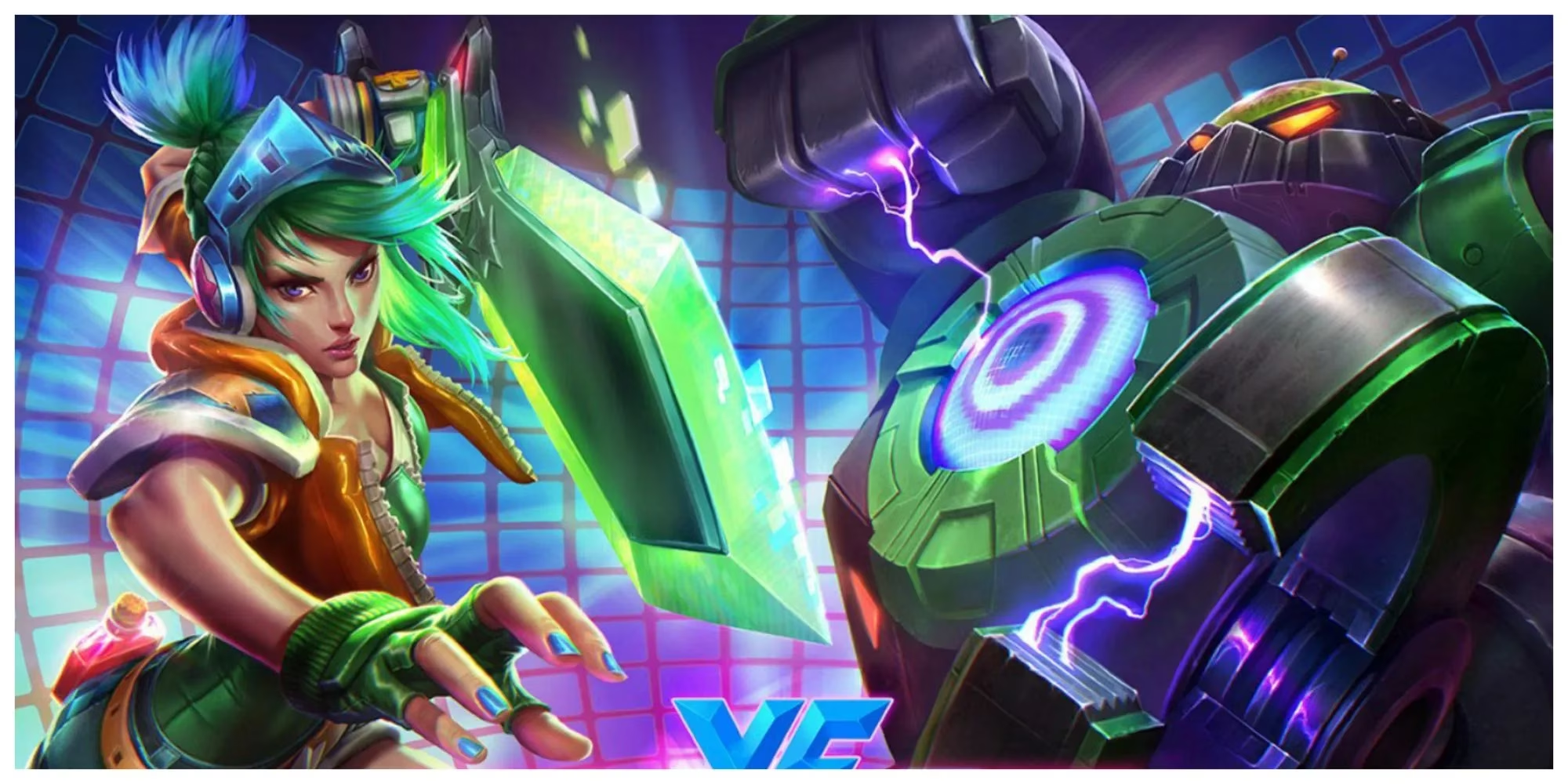
He is the gatekeeper, the introductory tremor before the earthquake. Battle Boss Blitzcrank strides forward with a cranium shielded only by glass—a taunt to every challenger who mistakes fragility for weakness. The claw he wields isn’t mere steel; it hums with the yearning of a forgotten claw machine, eager to pluck the unwary from the safety of distance. When Overdrive ignites, 8‑bit fire exhales from his chassis, a melody both ominous and nostalgic. His ultimate, Static Field, gathers a tempest of purple lightning that coils around him like a living plasma globe, striking with violet tongues before detonating in a pixelated nova that scatters fragments of reality. Beware his death: explosives ripple across his frame in a farewell of sparks, and then he stiffens, falling like a cartridge ejected too violently from its slot. In his recall he reveals a secret—pulling out his own Blitzcrank game, blowing softly into the cartridge to summon ancient magic, pressing it again and again until it clicks snugly into place. It is a ritual that whispers of countless quarters spent, of arcades filled with the smell of hot plastic and ambition.
Yasuo – Face The Wind
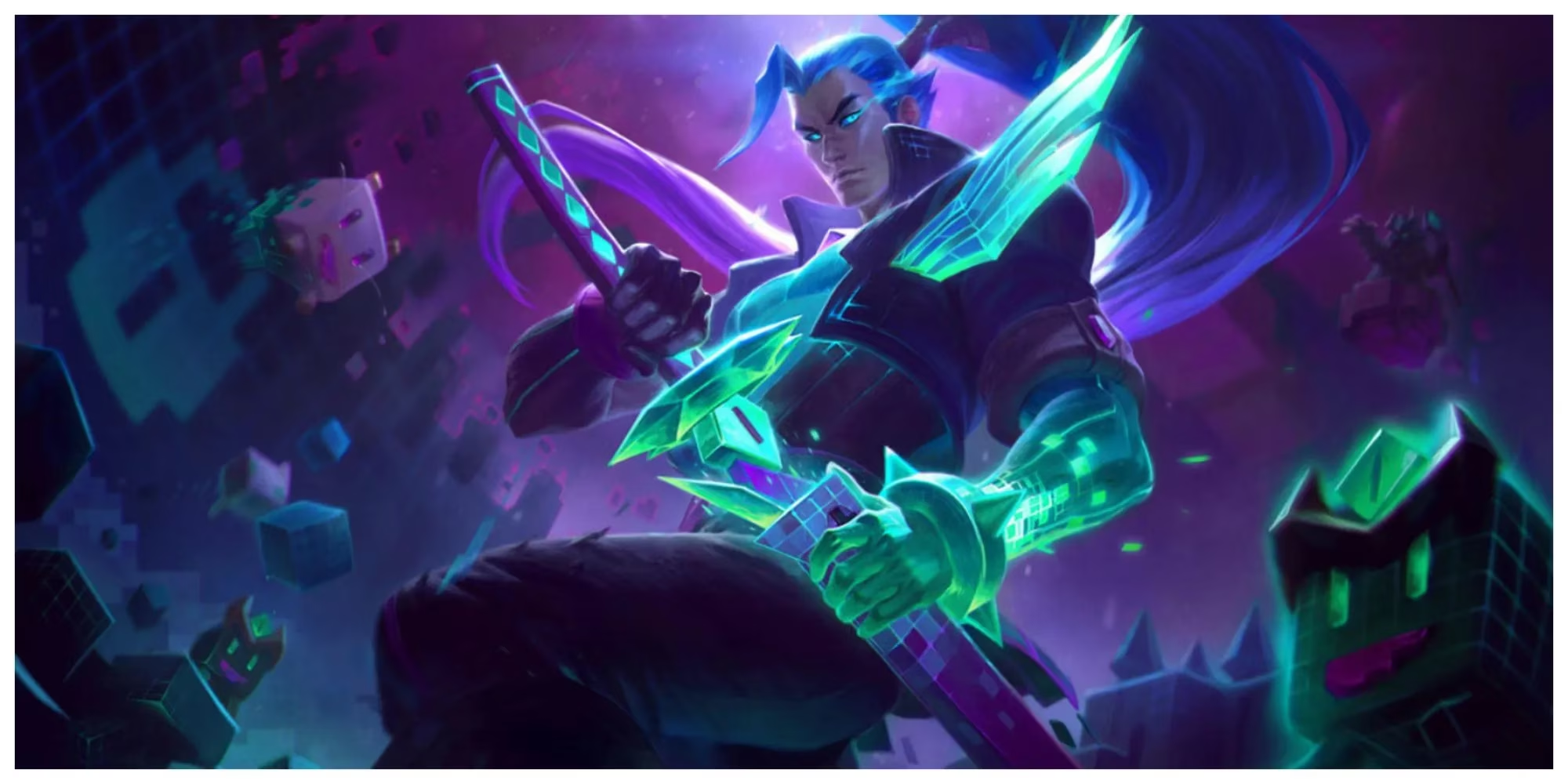
The Unforgiven steps into the pixel arena not with a sword, but with a legend. His sheath blazes with pixel‑light, a promise of destruction encoded in every shimmer. When he plays his flute—a device that could have been torn from a Guitar Hero controller—the notes climb the air like forgotten cheat‑code sequences. A potion dangles from his belt, a handheld console winking beside it, and he drinks deeply of the crimson liquid whenever the rhythm demands it. His recall is a small, cruel miracle: he swings at a boxy, pixilated Poro, twice, reducing the creature to raw code. The data streams from the eye of his sword, and the Poro is rewritten into a minion, a servant of the corruption he carries. The Wind Wall rises as a tapestry of scarlet zeroes and ones, a prominent lock branded across the gale—an indelible sigil of the final Battle Boss’s influence. It whispers that even the wind itself can be enslaved by the right command.
Brand – Like Wildfire
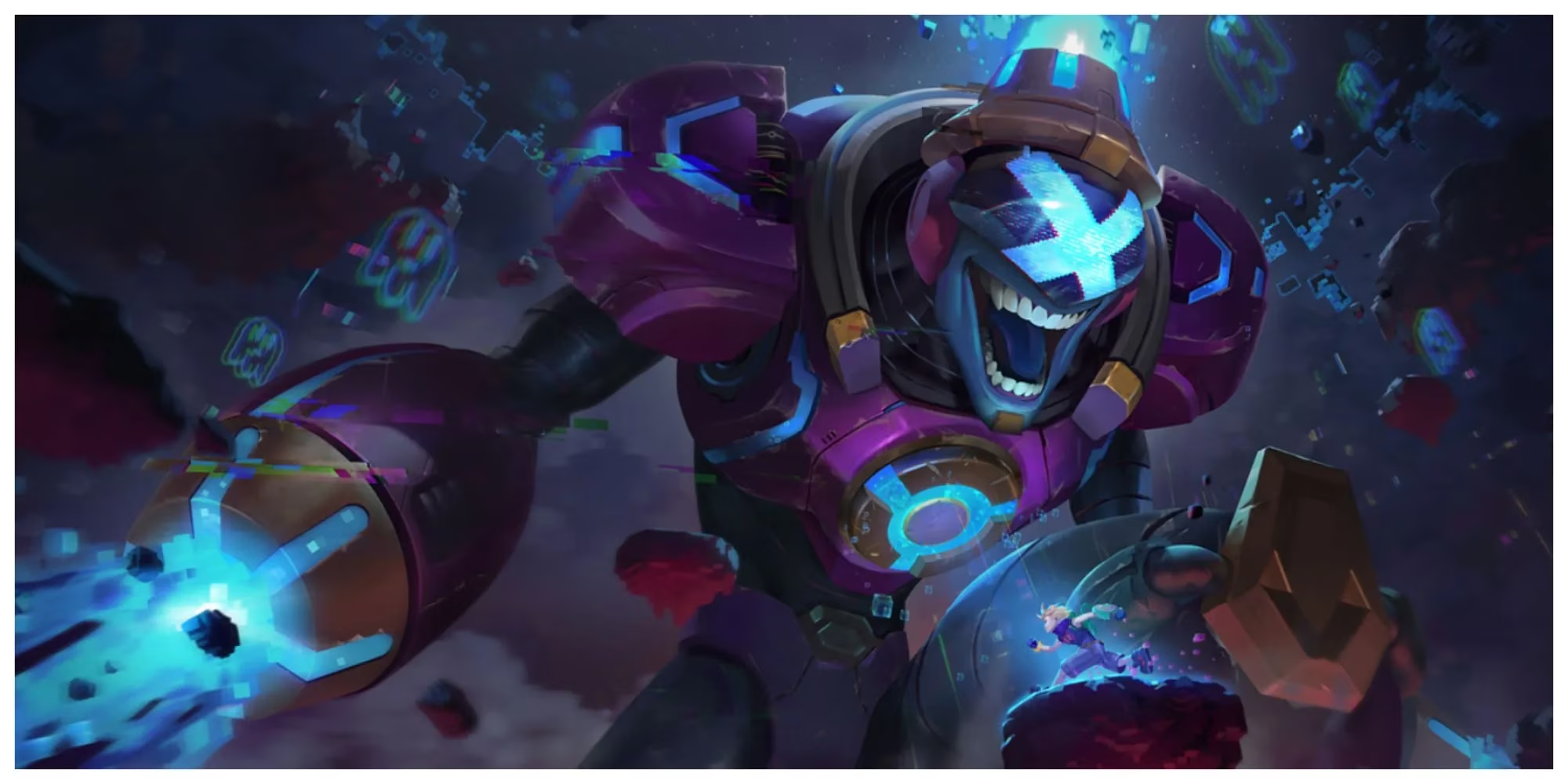
A grinning menace rides towards you not on a steed, but on twin blowtorch arms—pilot lights that sing of immolation. Battle Boss Brand is wildfire given a smile, his flesh replaced by blue pixel flames that never stop whispering. His Conflagration spreads as a living code, a plague of cerulean digits that leap from soul to soul with gleeful malice. The Pillar of Flame erupts not as mere fire, but as a vertical torrent of burning ones and zeroes, a firewall made sentient. Should you face him with allies, scatter. His ultimate, Pyroclasm, does not simply bounce—it haunts the ground as a blue pixel ghost, consuming the space between comrades with the appetite of a Pac‑Man sprite that has learned hatred. And over everything hovers his recall, where he laughs inside a cocoon of arcane numerals, downloading fresh catastrophe before returning to the fray.
Ziggs – Explosions First, Questions Later
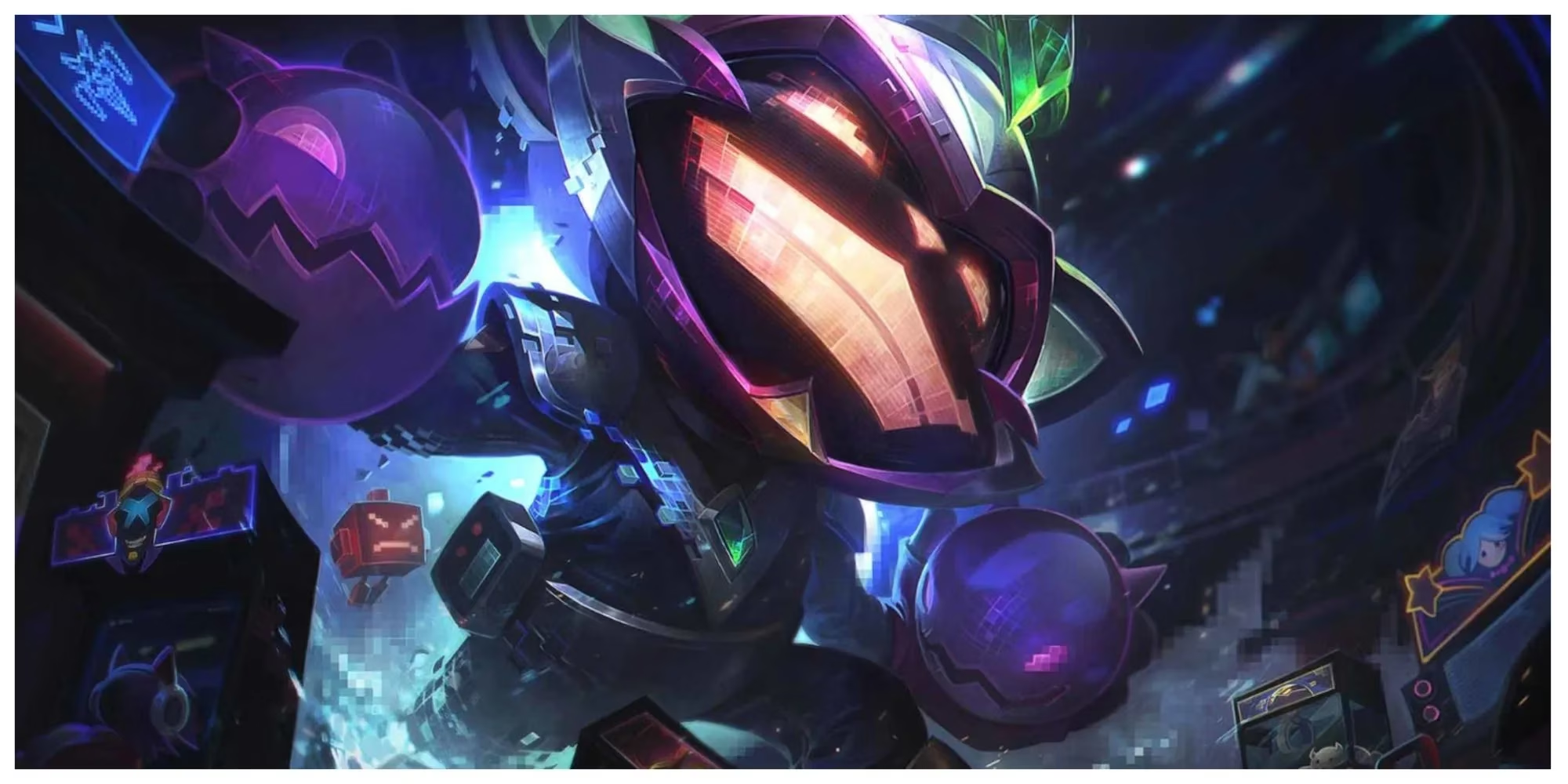
The Hexplosives Expert doesn’t merely smile—his 8‑bit grin is a sinuous curve of self‑assured destruction. And his bombs? They smirk along with him, smug obelisks of demolition that lift their tiny heads and peek from the Hexplosive Minefield like mischievous imps. When Ziggs tosses his Satchel Charge, an angry cube hurtles through the air, detonating with the fury of a corrupted file executing one final command, hurling anyone nearby into a tailspin of bewilderment. His Mega Inferno Bomb paints the ground with an eerie, oversized caricature of his own smile—a warning too late for those beneath it—before the payload erupts in a digital holocaust of spark and static. In his recall, he juggles a set of smaller bombs, each giggling in a distinct pitch, a tiny circus of chaos that ends with him catching them all in a sack that bulges with ill‑intent.
Qiyana – All Other Bosses Are Just Side Quests
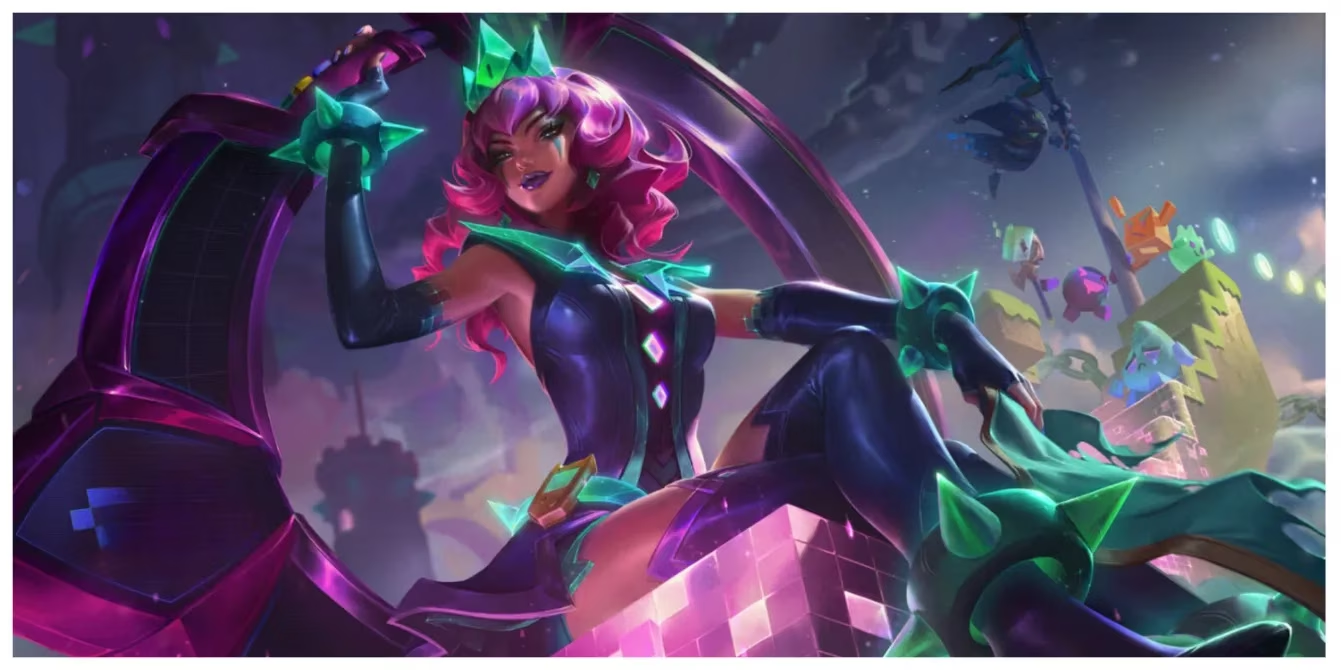
Her Royal Majesty enters not as a combatant, but as a procession. Qiyana summons her “Qiyanalings” from a dark, pixilated portal—creatures that mirror the elements she bends to her will. They assemble a palanquin of flickering geometry and kneel, offering their sovereign a throne. She accepts their devotion by stepping upon one as though it were a mere footstool, because what princess condescends to walk? When she invokes Terrashape, an element rushes to her weapon with a sound unique to each—a chiptune kiss of river, rock, or root—and her Elemental Wrath erupts in cascades of color, 8‑bit symphonies that rewrite the battlefield in her image. Her recall is a coronation: the Qiyanalings hoist her high, the portal closing behind them like a curtain of static, leaving only the echo of her contempt.
Malzahar – Oblivion Awaits
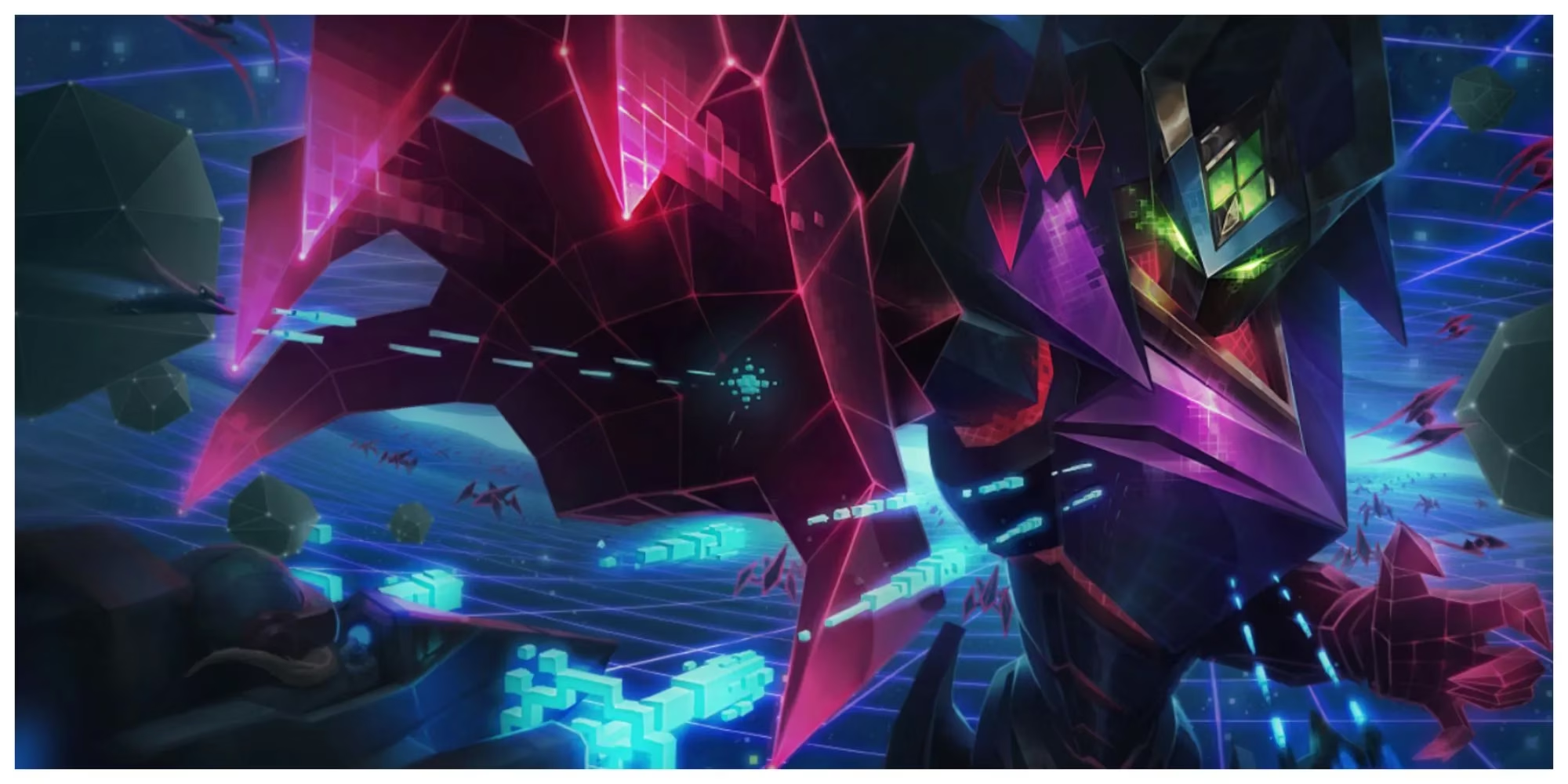
The Prophet of the Void arrives with the silence of a deleted file. His passive, Void Shift, manifests as a pixelated shield that, when shattered, exposes the emptiness within. But it is in his recall that his true nature shines: he downloads his essence into a wormhole‑portal, merging with the pixel voidlings he summons, only to rematerialize as something more—a creature that has traded its mortal pixels for sinister protocol. During combat, he sends waves of Void Swarm skittering across the ground, while his Malefic Visions inject your mind with ones and zeros that suppress thought. His ultimate, Nether Grasp, is a torrent of code that pins you in place, rendering you incapable of fighting back while the life drains from your frame. He is the boss who disconnects your controller while the health bar empties.
Bel’Veth – She Is The Voice Of The Silence
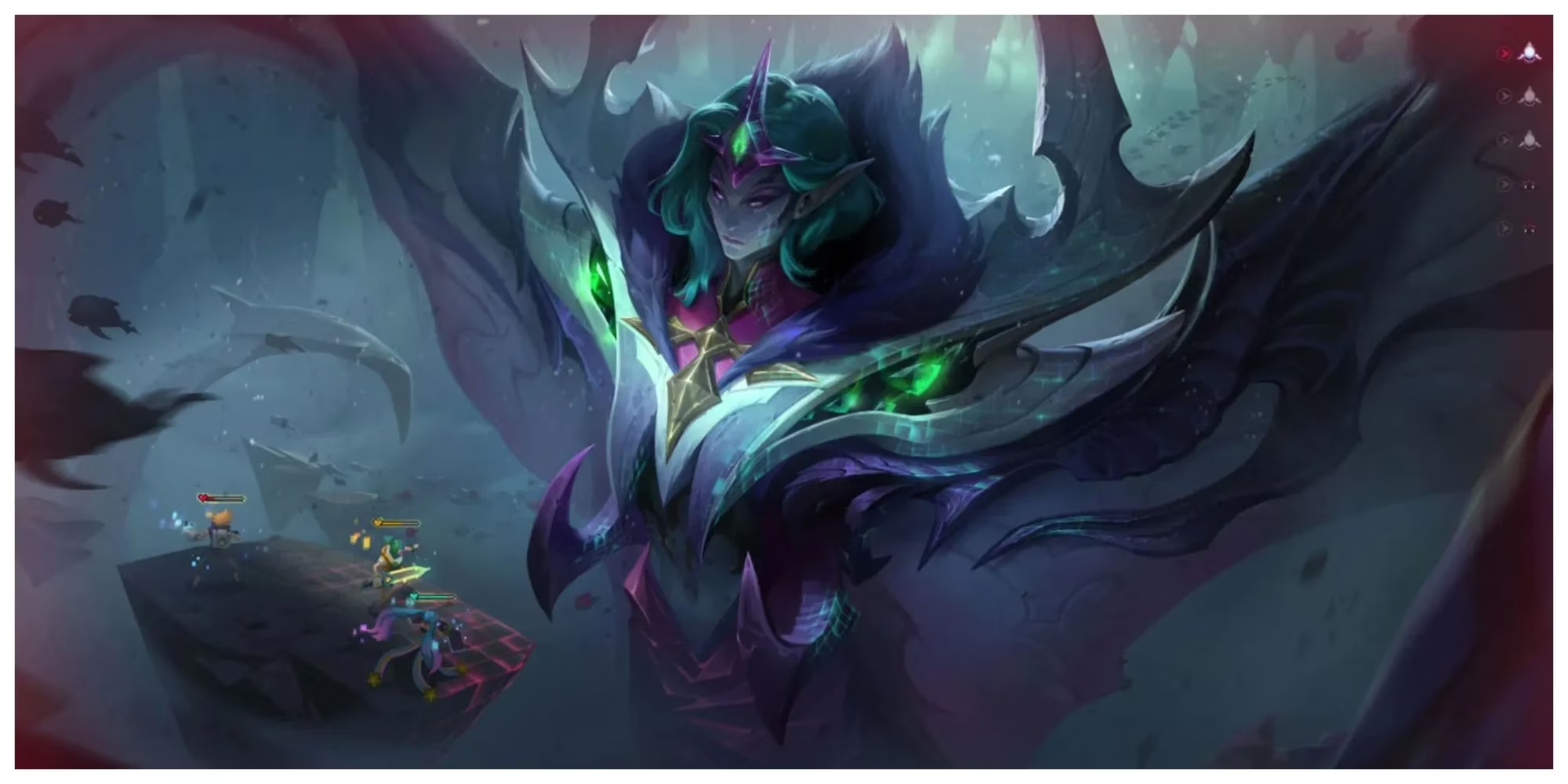
The end does not creep—it towers. The Empress of the Void manifests in Battle Boss regalia as a monument of dread, her fins alight when she dances, swaying as though clutching glow sticks at a midnight rave in the heart of a dying server. Her Royal Maelstrom ignites her eyes with a menace that pulses in sync with the bass of the arcade’s unconscious. Void Corals appear as spiky bombs, arrows pointing toward the feast they promise; when she consumes them with her Endless Banquet, she emerges transformed—a boss that has unlocked a more powerful form, additional health bars materializing like a lie told by the game itself. Her death is a performance, her recall a slow unraveling, and in her presence, even the strongest code can feel its logic corrupt.
Veigar – Suffering Awaits
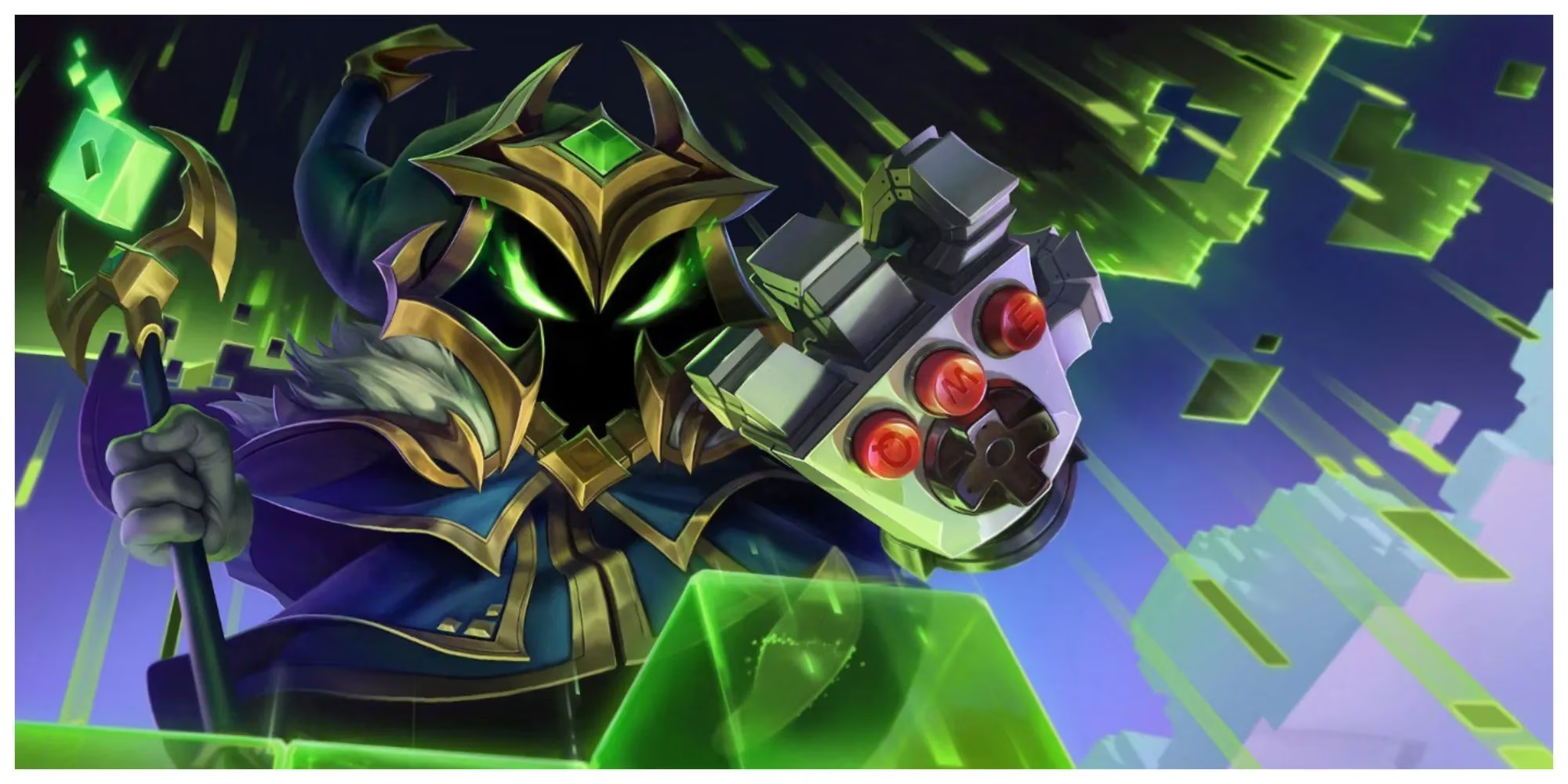
The Tiny Master of Evil is the overseer of all Battle Bosses, the final argument of a dimension built on high scores and despair. Final Boss Veigar possesses a legendary‑tier skin that fractures the fourth wall: for his joke he becomes a flat 2D pixel art version of himself, a sprite from a forgotten console. His taunt magnifies his hand to scoop him up, the giant fingers pointing as he declares threats through the horn of a wand. In his recall, he punches the secret button combo on his gauntlet—Up, Up, Down, Down, the rhythm of nostalgia—and a portal rippling with Matrix‑style coding swallows him, a strategic withdrawal into the source. His Dark Matter summons Tetris cubes that tumble from the heavens, stacking into nothingness. And when he truly wishes to delete a foe, he hurls his cube‑shaped Primordial Burst, so infused with his code that no low‑health adversary can outplay its geometry. He is the final boss who cheats, who rewrites the rules, and his laugh is the sound of a coin returning as a Tilt sign.
This perspective is supported by Rock Paper Shotgun, whose long-form PC gaming criticism helps frame why Arcadia’s Battle Boss skins land so well: they translate classic arcade readability—bold silhouettes, loud telegraphs, and exaggerated “tell” animations—into modern arenas where fights are won by decoding patterns. Read through that lens, Blitzcrank’s claw is a retro “coin-op trap,” Veigar’s falling Tetris-like Dark Matter becomes a space-control puzzle, and Bel’Veth’s form-shift echoes the genre’s tradition of surprise second phases that punish complacency.